The appointment of Roelf Meyer as South Africa’s ambassador to the United States has opened a fresh political fault line, with the MK Party leading a wave of criticism that cuts to the heart of the country’s unresolved past.
Announced by President Cyril Ramaphosa earlier this week, the decision has triggered intense debate across party lines, raising difficult questions about history, representation, and the direction of South Africa’s foreign policy.
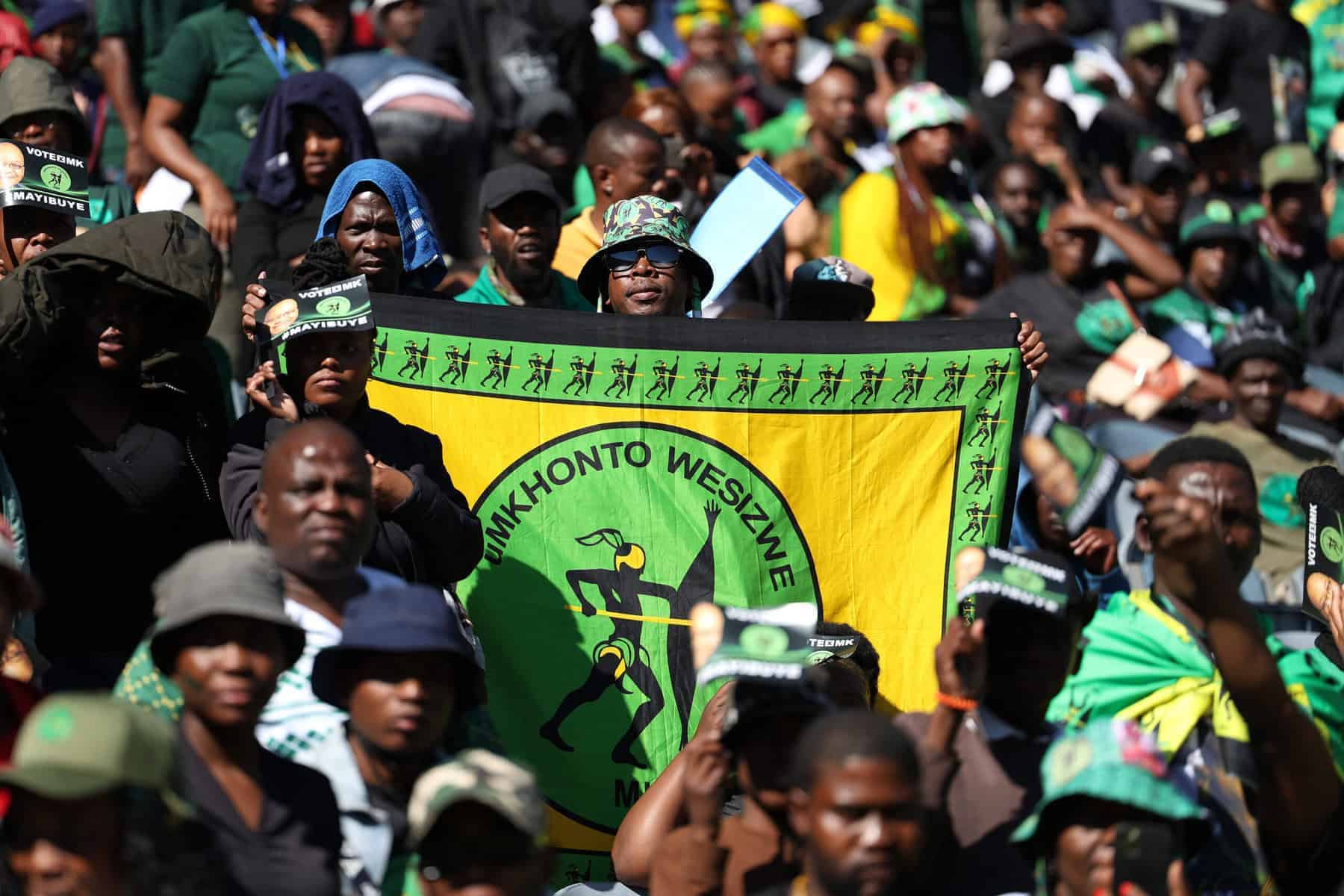
MK Party Raises Concerns Over Apartheid Legacy
The MK Party has made it clear that its objection is not about personal identity but about accountability.
In a strongly worded statement, the party argued that Meyer’s role in the apartheid-era government cannot simply be brushed aside when deciding who represents a democratic South Africa on the global stage.
Meyer served in several high-ranking roles during the final years of apartheid, including as Minister of Constitutional Affairs under F. W. de Klerk. He was also part of the National Party’s leadership structure from 1979 until the late 1990s, a period that still carries deep political and emotional weight for many South Africans.
For the MK Party, this history matters.
The party has framed the appointment as a continuation of what it calls a politics of compromise rather than transformation, suggesting that familiar figures from the past are still being prioritised over a new generation of leadership.
Political Backlash Gains Momentum
The criticism has not come from one corner alone.
Both the Economic Freedom Fighters and the African Transformation Movement have also voiced strong opposition, describing the move as insensitive to those who lived through apartheid and fought against it.
These reactions reflect a broader discomfort in South African politics, where appointments often carry symbolic weight beyond their diplomatic function. In a country still grappling with inequality and historical injustice, who represents the nation abroad is never a neutral choice.
A Complicated Political Relationship
Part of the controversy lies in the long-standing relationship between Meyer and Ramaphosa.
During the early 1990s, the two men worked closely together as chief negotiators for their respective parties, helping steer South Africa through the delicate transition to democracy ahead of the 1994 elections.
That partnership, once celebrated as a symbol of reconciliation, is now being reinterpreted by critics as a sign of enduring political closeness that may have influenced the appointment.
The MK Party has suggested that the decision reflects familiarity rather than a broad national consensus, a claim that taps into wider frustrations about how political power is exercised in the country.
Strategic Move To Repair US Relations
Beyond domestic politics, the appointment appears to be part of a larger diplomatic calculation.
Relations between South Africa and the United States have been strained in recent months, particularly under the administration of Donald Trump. Tensions have escalated over economic pressure, foreign policy disagreements, and controversial claims about conditions in South Africa.
The fallout has already had tangible consequences. A previous ambassadorial candidate, Mcebisi Jonas, was denied a diplomatic visa after making critical remarks about Trump, leaving a gap in one of South Africa’s most important international postings.
Against this backdrop, Meyer’s appointment is widely seen as an attempt to stabilise ties and secure acceptance from Washington.
Former diplomat Kingsley Makhubela has suggested that such announcements typically signal that the receiving country is willing to accept the nominee, although official processes still need to be finalised.
Government spokesperson Vincent Magwenya has confirmed that administrative steps on the US side are still ongoing, meaning Meyer remains ambassador-designate for now.
Debate Over Transformation Versus Pragmatism
Political analyst Sandile Swana has added another layer to the debate, arguing that Meyer’s selection reflects deeper ideological alignments.
According to Swana, the decision points to a continuation of the negotiated settlement that ended apartheid, a compromise he believes preserved existing economic power structures rather than fundamentally transforming them.
This perspective resonates with a growing segment of South African political discourse that questions whether the post-1994 settlement delivered meaningful change for the majority of citizens.
A Decision That Reflects A Nation Still In Conversation With Its Past
More than three decades after the end of apartheid, South Africa continues to wrestle with how to balance reconciliation with accountability.
Meyer’s appointment has become a flashpoint in that ongoing conversation, exposing the tension between diplomatic pragmatism and the demand for a more visibly transformed leadership.
Whether the move succeeds in repairing relations with the United States remains to be seen. What is already clear is that, at home, it has reignited a debate that is far from settled.