News
US intervention heightens South Africa’s genocide case against Israel
US intervention heightens South Africa’s genocide case against Israel
Washington steps in, intensifying the ICJ showdown
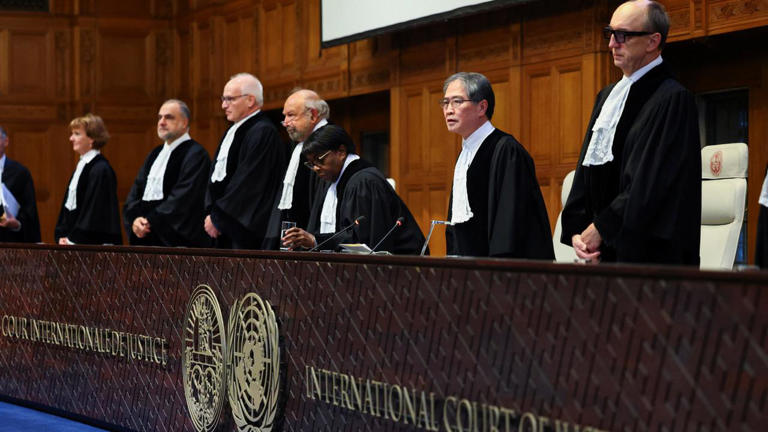
South Africa’s landmark genocide case against Israel at the International Court of Justice (ICJ) has entered a new phase of high-stakes diplomacy after the United States formally intervened to defend its ally.
The move signals Washington’s determination to influence proceedings, despite Pretoria’s steadfast commitment to holding Israel accountable for its actions in Gaza. Analysts say the US intervention transforms the legal battle into a global geopolitical confrontation.
Independent political analyst Goodenough Mashego described the intervention as a predictable move by Israel to leverage its influence on Washington. “The US and Israel likely hoped South Africa would withdraw under pressure. Israel delayed its response, perhaps expecting Pretoria to back down. The US filing aims to prevent any finding of genocide against Israel,” Mashego said.
Legal focus: interpreting the Genocide Convention
The US declaration of intervention, submitted under Article 63 of the ICJ Statute, allows a treaty party to provide its interpretation of the Genocide Convention. In an 11-page statement, Washington rejected South Africa’s allegations, arguing that Israel lacked the “specific intent” required to legally constitute genocide.
The filing also contended that civilian casualties in urban warfare, including in Gaza, do not automatically signal genocidal intent. Washington further claimed that South Africa’s case sought to “delegitimise the State of Israel” and forms part of a broader campaign against the country.
Mashego noted that South Africa’s legal team relies on evidence of genocidal intent, citing the UN Human Rights Committee’s findings regarding Gaza. He said, “There is overwhelming evidence that genocide intent existed. The ICJ ruling could be pivotal in setting a global legal standard.”
Western allies reassess positions amid Gaza conflict
The case has prompted shifts in international alignments. Countries that previously supported Israel’s right to self-defence including Germany, Canada, France, and Australia, have reconsidered their stance after Israel intensified attacks and blocked humanitarian aid in Gaza. Between 2024 and 2025, several of these nations formally recognised Palestine as a sovereign state.
Political analyst Dirk Kotzé noted a parallel between US actions at the ICJ and its military strategy in the Middle East. “The war against Iran wasn’t America’s war, but Washington fought on Israel’s behalf. The ICJ intervention mirrors that logic: supporting Israel against South Africa in a legal arena,” he said.
High-stakes ruling expected later this year
Observers expect the ICJ to issue a ruling during the second half of 2026. Any judgment could have far-reaching implications for international law, particularly in defining genocidal intent in modern conflicts.
For South Africa, the case represents both a legal and moral assertion on the world stage a test of international accountability, diplomacy, and the nation’s willingness to stand up against perceived injustice in Gaza.
As the ICJ proceedings continue, the global community is watching closely, aware that the outcome may shape not only the Israel-Palestine conflict but the very interpretation of genocide under international law.