News
Mashatile outlines B-BBEE review to shift focus to real economic impact
As South Africa marked another round of parliamentary debate this week, a familiar but critical issue returned to the centre of national conversation. Economic transformation, and how it is measured, remains one of the country’s most contested and important challenges.
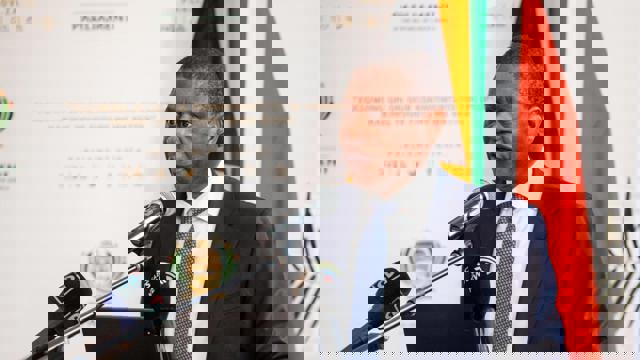
Deputy President Paul Mashatile has now outlined a plan to review Broad-Based Black Economic Empowerment, signalling a potential shift in how the policy is applied and evaluated.
A two-phase rethink of B-BBEE
The review will unfold in two parts, starting with a closer look at the rules that govern how B-BBEE is implemented. This includes regulations, codes of good conduct, and guidelines that shape how businesses comply with the framework.
This phase will be led by Trade, Industry and Competition Minister Parks Tau and his department, focusing on refining the current system.
The second phase will move into Parliament, where lawmakers will consider more substantial changes to the legislation itself.
According to Mashatile, the aim is not to scrap the policy but to strengthen it. He made it clear that abandoning B-BBEE is not on the table, describing it as a necessary tool for achieving economic equality in South Africa.
From ticking boxes to real outcomes
A key theme emerging from the review is a move away from simple compliance.
For years, critics have argued that the system has allowed companies to meet requirements on paper without delivering meaningful change. The new approach aims to focus on measurable outcomes, ensuring that empowerment translates into real participation in the economy.
This includes stronger oversight, with support from the B-BBEE Commission and other bodies tasked with ensuring accountability.
Opening the floor to public input
Another important part of the process will be public participation.
Mashatile confirmed that hearings will be held to allow South Africans, including political parties, to submit their ideas. This follows questions raised in Parliament about whether alternative proposals, such as those put forward by opposition parties, would be considered.
His response was clear. All contributions will be heard, although only those deemed practical will be taken forward.
Addressing long-standing challenges
Beyond policy language, the discussion also touched on the real-world barriers faced by Black-owned businesses.
Access to markets, funding, and procurement opportunities remains uneven. Mashatile indicated that future efforts will focus more directly on programmes that empower businesses in practical ways, rather than simply ensuring they meet compliance requirements.
This includes revisiting concerns raised by the B-BBEE Commission, while avoiding an overemphasis on paperwork that does not translate into meaningful change.
Tackling fronting and shallow ownership
One of the more persistent problems highlighted during the discussion is fronting.
This refers to situations where companies appear compliant on paper but do not genuinely include Black ownership or participation. Mashatile acknowledged that this remains a serious issue, pointing out that some individuals are listed as stakeholders without having real influence or benefit.
The shift in focus aims to address this by encouraging deeper involvement in business, from ownership to decision-making.
Building businesses, not just shares
There is also a broader ambition behind the review.
Rather than limiting empowerment to small shareholding percentages, the goal is to support Black South Africans in building and owning businesses at scale. That includes developing new enterprises and supporting young entrepreneurs, rather than positioning empowerment as a passive stake in existing companies.
It is a message that resonates in a country where unemployment and inequality remain pressing concerns.
A policy at a crossroads
The review of B-BBEE comes at a time when debates around transformation are intensifying.
For some, the policy remains essential to addressing historical inequality. For others, the question is whether its current form delivers the results it promises.
What Mashatile’s announcement signals is not an end to the debate, but a shift in how it might be approached.
If the process succeeds, it could redefine what economic empowerment looks like in South Africa, moving from compliance-driven systems to outcomes that are visible, measurable, and meaningful in everyday life.
Follow Joburg ETC on Facebook, Twitter, TikT
For more News in Johannesburg, visit joburgetc.com
Source: IOL
Featured Image: EWN