News
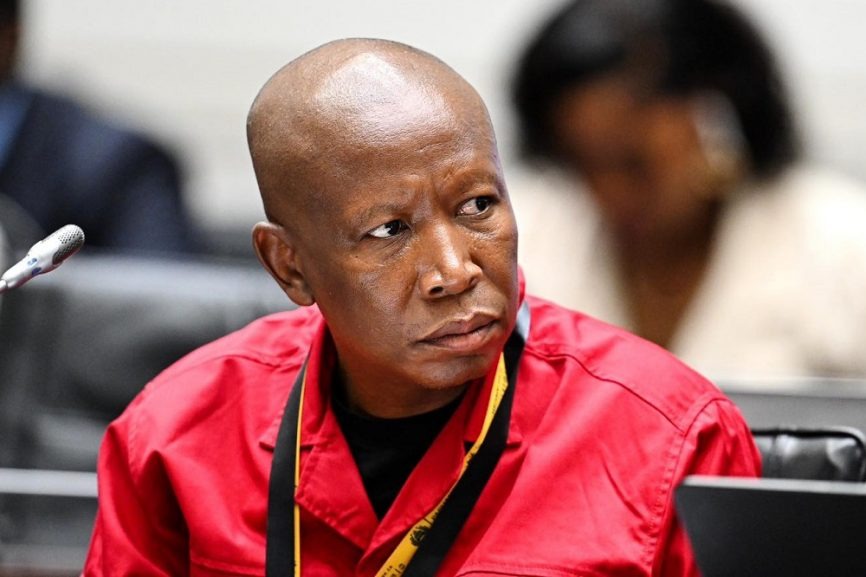
Malema fires back at Mkhwanazi as tensions spill into public view
Malema fires back at Mkhwanazi as tensions spill into public view
South African politics is no stranger to public spats, but the latest clash between Julius Malema and Nhlanhla Mkhwanazi has added a new layer to the ongoing tension between political leadership and law enforcement.
Speaking candidly in a radio interview this week, Malema didn’t hold back. His message was clear: he rejects what he describes as an attempt to intimidate him and he’s not backing down.
“He doesn’t like criticism”
Malema accused Mkhwanazi of being overly sensitive and unwilling to accept criticism, suggesting that the senior police official expects only praise.
The remarks come in response to Mkhwanazi’s recent appearance before a parliamentary Ad Hoc Committee, where the commissioner made claims involving Malema and alleged interactions with senior police figures.
Malema, who was absent from that session due to a family bereavement, said he was troubled that such claims were made while he could not respond.
“It’s a concern when someone speaks about you while you’re mourning,” he said, adding that he plans to address the allegations formally when he appears before the committee.
The meeting at the centre of the dispute
At the heart of the disagreement is a reported meeting involving Malema, Mkhwanazi, and senior police officials including suspended deputy national commissioner Shadrack Sibiya.
Mkhwanazi had suggested that Malema played a role in arranging discussions aimed at easing tensions. But Malema disputes that version entirely.
Instead, he claims the meeting was initiated by Mkhwanazi himself, who wanted to discuss developments in the high-profile murder case of rapper AKA, killed in Durban in 2023.
According to Malema, details shared during that meeting later informed some of his public statements including criticism of national police leadership.
Drawing the EFF into the spotlight
Another sticking point for Malema is what he sees as the unnecessary involvement of the Economic Freedom Fighters in internal police matters.
He criticised Mkhwanazi for referencing individuals linked to the party, including crime intelligence head Feroz Khan, whose attendance at an EFF event was raised during testimony.
Malema argued that Khan’s work particularly in tackling corruption within the police should be recognised rather than politicised.
“We are not scared”
In perhaps his most striking remark, Malema made it clear that he does not view police officials as above political scrutiny.
“We will not be pushed around by a police officer,” he said. “We have not broken the law.”
It’s a statement that echoes a broader sentiment within South African politics that elected leaders must remain independent, even as they engage with law enforcement agencies.
Political reactions and growing debate
The clash has already sparked reactions across political circles. Former EFF member Mbuyiseni Ndlozi weighed in, calling for Mkhwanazi to be protected from what he described as unnecessary attacks.
Malema, however, dismissed those comments, standing firm on his position.
On social media, South Africans are divided. Some see Malema’s stance as a defence of political accountability, while others worry that public disputes between politicians and police risk undermining confidence in institutions already under pressure.
A wider issue: politics vs policing
Beyond the personalities involved, the dispute highlights a deeper tension in South Africa’s democracy the delicate balance between political oversight and operational independence in policing.
Cases like the ongoing fallout from the Phala Phala scandal and high-profile investigations have already put institutions under the microscope.
Now, with senior figures openly challenging each other in public, questions are being raised about trust, transparency, and where lines should be drawn.
What happens next?
Malema has indicated that he will address the matter formally before Parliament, where his version of events will be tested alongside Mkhwanazi’s testimony.
In the meantime, the war of words continues, playing out not just in committee rooms, but across radio stations, social media timelines, and public opinion.
For many South Africans watching closely, the question isn’t just who is right. It’s whether these public clashes help strengthen accountability or simply deepen the cracks in already strained institutions.
{Source: IOL}
Follow Joburg ETC on Facebook, Twitter , TikTok and Instagram
For more News in Johannesburg, visit joburgetc.com