News
Johannesburg’s invisible crisis: the fight for clean air in a polluted city
Johannesburg’s invisible crisis: the fight for clean air in a polluted city
There’s something unsettling about a danger you can’t see.
In Johannesburg, that danger hangs quietly in the air drifting through neighbourhoods, settling into lungs, and shaping the health of millions in ways that don’t always show up immediately.
Air pollution here isn’t just an environmental issue anymore. It’s become a slow-burning public health crisis one that many residents live with every single day.
Breathing has become a risk
For communities across the city, especially in places like Alexandra, Soweto, Diepsloot and Eldorado Park, poor air quality is not an occasional inconvenience it’s part of daily life.
The causes are layered and complex: heavy traffic, industrial activity, waste burning, and the fine dust that blows off old mine dumps scattered across Gauteng. Add rapid urbanisation into the mix, and the problem intensifies.
But here’s the uncomfortable truth: not everyone is breathing the same air.
Neighbourhoods closer to industrial zones or major transport routes carry the heaviest burden. It’s a pattern seen in cities worldwide pollution tends to hit the most vulnerable communities the hardest.
When the air smells wrong
Earlier this month, many Joburg residents took to social media complaining about a strange sulphur-like smell often compared to rotten eggs lingering for days.
For some, it was just unpleasant. For others, it triggered headaches, coughing, and concern.
What stood out wasn’t just the smell, but the uncertainty. Where was it coming from? Was it dangerous? And why did it feel like no one had clear answers?
These moments, while brief, reveal a bigger issue: pollution doesn’t always originate where it’s experienced. It can travel across regions, carried by wind from industrial hubs or energy production sites far beyond the city’s borders.
The long-term cost of dirty air
Unlike a sudden illness, the damage from polluted air builds slowly.
Doctors link long-term exposure to respiratory diseases, heart conditions, strokes, and even lung cancer. For many residents, persistent coughing or breathing problems are simply accepted as normal even though they shouldn’t be.
Children are among the most affected. Growing up in polluted environments can impact not just their physical health, but their ability to focus and perform at school.
The Covid-19 pandemic briefly brought this into sharp focus, showing how vulnerable people with compromised lungs can be. But as life returned to normal, the urgency around air quality seemed to fade even though the problem didn’t.
Communities are stepping up
Despite the scale of the issue, change isn’t only coming from government offices. It’s happening on the ground.
Organisations like Seriti Institute, working alongside Breathe Cities and the City of Johannesburg, are supporting grassroots efforts to tackle pollution head-on.
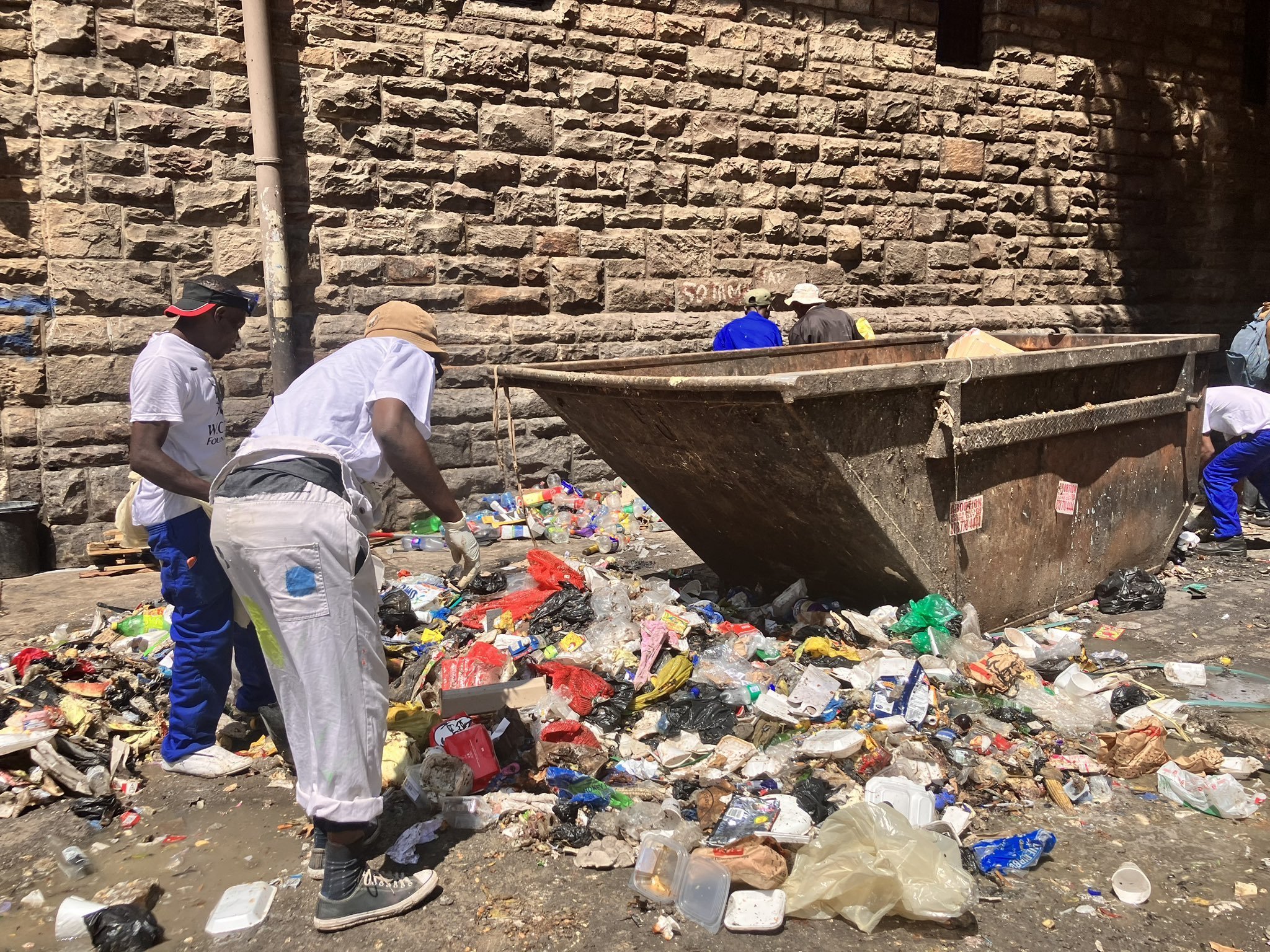
Across the city, dozens of community groups are taking action organising clean-up drives, hosting discussions, promoting recycling, and even building ecobricks from waste materials.
So far, more than 60 local campaigns have been rolled out. It may sound small against a city-wide crisis, but these efforts are shifting behaviour and building awareness where it matters most.
As one community organiser put it: residents aren’t just victims of pollution they’re part of the solution.
But awareness isn’t enough
While community action is powerful, it can’t carry the burden alone.
Experts say stronger government intervention is essential from enforcing environmental regulations to improving waste management and monitoring industrial emissions more effectively.
There’s also a growing call for transparency. Many residents want clearer, real-time air quality data so they can understand the risks they face daily.
Without that, people are left guessing and breathing in uncertainty.
A question of justice, not just environment
At its core, the air pollution crisis in Johannesburg is about more than the environment. It’s about inequality.
Those who contribute the least to pollution often suffer the most from its effects. It’s a reality that raises uncomfortable questions about fairness, accountability, and whose lives are being prioritised.
Clean air, many argue, shouldn’t be a luxury. It should be a basic right.
A moment to act
With initiatives tied to upcoming environmental campaigns like tree planting and school awareness programmes, there’s a renewed push to keep the conversation alive.
But the real test will be what happens after the campaigns end.
Johannesburg already has the knowledge, the partnerships, and the community energy to tackle this crisis. What’s needed now is urgency and the political will to match it.
Because while the issue may be invisible, its impact is anything but.
{Source: IOL}
Follow Joburg ETC on Facebook, Twitter , TikTok and Instagram
For more News in Johannesburg, visit joburgetc.com