News
Eskom delays solar registration deadline, giving households much-needed relief
Eskom delays solar registration deadline, giving households much-needed relief
For months, solar households across South Africa have been living under a cloud of uncertainty. Threatening letters from Eskom warned of fines, tariff hikes, and even possible disconnections if homeowners didn’t register their solar systems by 31 March.
Now, there’s a reprieve: Eskom has extended the registration deadline to 30 September 2026, giving households and small businesses a six-month window to comply without fear of penalties.
A welcome breath of fresh air
For many families relying on rooftop or hybrid solar systems under 100kWp, the looming deadline sparked anxiety. From residential suburbs to commercial hubs, the letters created confusion leaving owners worried about power cuts or being forced onto unfamiliar tariffs.
Energy expert Chris Yelland explained the reasoning behind Eskom’s push for registration. “Eskom wants to get people onto the home flex tariff, which has a high fixed monthly cost and uses time-of-use pricing,” he said. “It’s a commercial move, aimed at increasing revenue from households already producing their own electricity.”
Why solar users were targeted
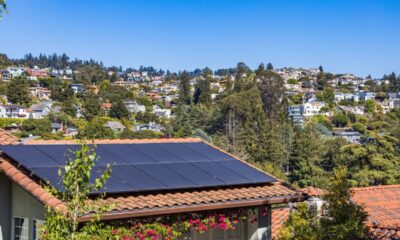
South Africa’s private sector has embraced solar in a big way. Residential PV systems with battery storage, along with commercial, industrial, agricultural, and manufacturing installations, have played a key role in reducing Eskom’s generation load and in turn, easing load shedding for many communities.
Yelland pointed out that Eskom’s threats were largely on shaky legal ground. “While customers were warned they could be fined or disconnected, the utility didn’t have strong legal justification,” he said.
The reality is that solar PV systems have become a critical part of South Africa’s energy mix, with households and businesses helping reduce demand on the national grid while maintaining their own energy security.
The bigger picture: revenue vs relief
The registration push isn’t just about compliance; it’s about revenue. Eskom’s home flex tariff, coupled with the time-of-use model, shifts more costs onto solar users while still allowing the utility to profit from distributed generation.
Yet for many homeowners, the extended deadline provides much-needed clarity. It allows time to navigate the registration process, review their tariffs, and avoid the pressure of sudden fines or power cuts.
Public reaction: cautious optimism
On social media, solar households expressed relief at the extension. Some joked about finally having time to read the small print, while others highlighted the continued tension between Eskom’s revenue interests and homeowners’ right to self-generated power.
“It’s a relief, but it doesn’t erase months of stress,” one Twitter user wrote. “We’ve been scared we’d be cut off just for generating our own electricity.”
As Eskom balances revenue needs with public pressure, the extension may signal a recognition that solar households are here to stay and that heavy-handed threats only generate public frustration.
For now, solar owners have a window to breathe, register, and ensure compliance without fear of immediate consequences. But the broader debate continues: how can South Africa integrate private solar power fairly, without punishing those contributing to the national energy solution?
{Source: The Citizen}
Follow Joburg ETC on Facebook, Twitter , TikTok and Instagram
For more News in Johannesburg, visit joburgetc.com