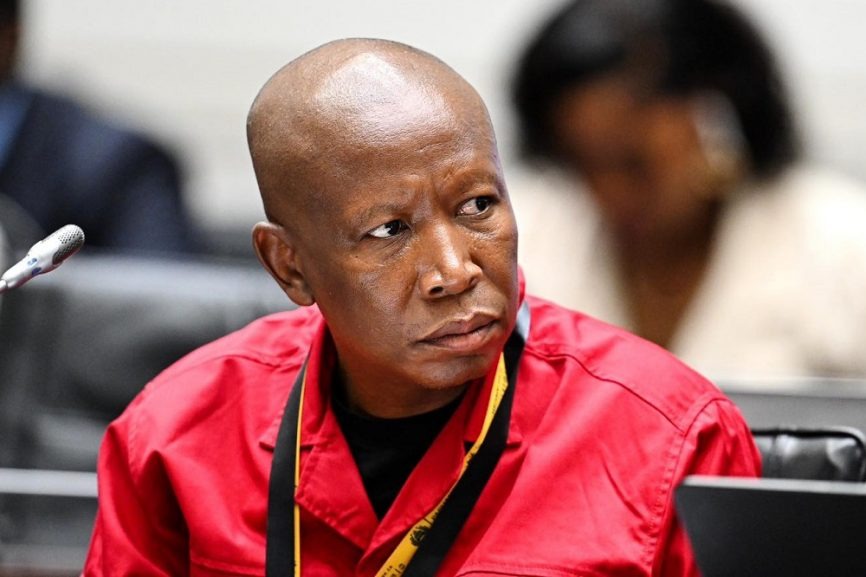
In a country where political fights usually play out on stages, in rallies or across Parliament benches, this one has taken a different turn. It started with a podcast, escalated into a war of words, and now it’s heading straight to court.
Julius Malema has filed a R1 million defamation lawsuit against Kenny Kunene, following explosive claims made earlier this year. The case is set to be heard on 14 April 2026, and it is already shaping up to be one of the most closely watched political clashes of the year.
The Claim That Sparked It All
The dispute traces back to a February episode of Podcast and Chill with MacG, where Kunene made serious allegations about Malema’s alleged involvement in a so-called “Big Five” drug cartel.
For Malema, this is where the line was crossed.
He made it clear that his legal action is not about insults or political jabs. It is about something far more serious. Being linked to organised crime, he argues, is the kind of accusation that can destroy reputations and political careers if left unchallenged.
While Kunene also referred to him as a “boy” during the podcast, Malema brushed that aside in comparison to the cartel claims. In the South African context, the term carries historical weight, but Malema’s focus is firmly on clearing his name of criminal allegations.
Kunene Refuses To Back Down
Kunene, known for his outspoken and often controversial style, is not retreating.
Instead, he has filed an answering affidavit and insists he will defend his claims in court. He has described the lawsuit as an abuse of the legal system and says he is ready to present evidence to support his version of events.
His stance has added another layer of intrigue to the case. In South African politics, it is not unusual for leaders to trade accusations, but it is rare for both sides to dig in this firmly before a court date.
The Allegations And The Denial
At the centre of the legal battle are detailed claims made by Kunene. These include allegations that Malema had links to individuals associated with the alleged cartel and that he was involved in questionable activities tied to them.
Malema has rejected every single claim.
He has dismissed the narrative as fabricated and even challenged the logic behind it. At one point, he questioned how he could supposedly pay protection money to a cartel he is accused of being part of.
There were also claims about his alleged association with businessman Adriano Mazzotti’s property, which Malema has denied, stating that the description given does not reflect reality.
A Political Clash With Bigger Implications
Beyond the legal arguments, this case speaks to something deeper in South African politics.
Malema has built much of his political identity on confronting power and speaking boldly, often positioning himself as someone who cannot be silenced. Taking legal action to stop the spread of certain claims introduces a different dimension to that image.
At the same time, defamation law exists for a reason. Allegations of criminal activity are not just political rhetoric. If proven false, they can have lasting consequences.
This is why the courtroom now becomes the battleground.
Why This Case Matters Now
The timing is hard to ignore.
With elections always looming in South Africa’s political landscape and opposition parties competing for influence, a high-profile legal fight between two prominent figures could shift attention, narratives and even public trust.
There is also a broader irony at play. Two opposition leaders, often critical of the same establishment, are now locked in a legal battle against each other. While they fight it out in court, political energy, time and resources are being redirected away from broader national issues.
All Eyes On 14 April
As the court date approaches, the stakes are clear.
For Malema, this case is about protecting his reputation and drawing a firm line against what he considers damaging falsehoods. For Kunene, it is about standing by his words and proving they are grounded in fact.
What happens next will not just determine the outcome of a R1 million lawsuit. It could also shape how political speech, accountability and reputation are handled in South Africa moving forward.
One thing is certain. What started as podcast talk has now become a national courtroom showdown.