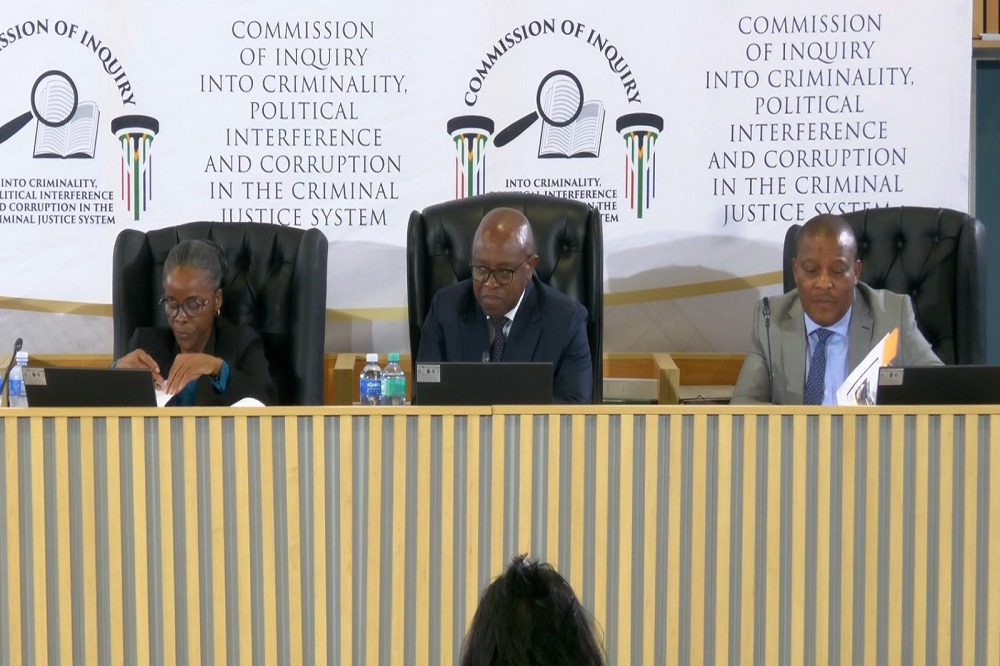
Confusion around recent high-profile arrests has prompted the Madlanga Commission of Inquiry to step in and set the record straight. At the centre of the clarification is a growing public perception that the commission itself is making arrests.
That, according to the commission, is simply not the case.
Commission Draws A Clear Line
Chairperson Justice Mbuyiseli Madlanga has expressed concern that the public may believe the commission is directly involved in arresting individuals linked to alleged wrongdoing.
But the commission’s role is investigative, not prosecutorial.
Spokesperson Jeremy Michaels explained that recent media reports referring to a “Madlanga Task Team” have blurred the lines between the commission’s work and that of law enforcement.
In reality, the arrests are being carried out by a task team within the South African Police Service.
“The function of arresting people is at odds with the judicial function,” Michaels clarified, reinforcing that the commission’s mandate does not extend to law enforcement action.
What The Commission Is Actually Investigating
The Madlanga Commission was established by President Cyril Ramaphosa to probe serious allegations within the South African Police Service and the broader criminal justice system.
These include claims of corruption, political interference, and criminal conduct that have raised concerns about the integrity of key institutions.
The inquiry follows allegations made in July 2025 by Lieutenant-General Nhlanhla Mkhwanazi, which triggered a national conversation about accountability within policing structures.
Since then, the commission has been gathering evidence and compiling findings, including its first interim report submitted late last year.
Where The Task Team Fits In
The so-called “task team” that has been making arrests was created by National Police Commissioner General Fannie Masemola.
Its purpose is to act on referrals made by the commission, particularly those outlined in its interim report.
In other words, the commission identifies potential wrongdoing, and the police step in to investigate further and, where necessary, make arrests.
Following discussions between the two bodies, SAPS has now agreed to change the name of the task team to avoid further confusion.
Recent Arrests Put Spotlight On Process
The clarification comes after the arrest of two senior officials from the Ekurhuleni Metropolitan Police Department.
Deputy chief Julius Mkhwanazi and senior official Kagiso Lerutla appeared in the Boksburg Magistrate’s Court earlier this week. Their case has been postponed to a later date.
While these arrests are linked to issues raised during the commission’s work, the commission itself had no direct role in detaining the suspects.
Why The Distinction Matters
In South Africa’s legal system, commissions of inquiry serve a very specific purpose. They uncover facts, test evidence, and make recommendations. They do not prosecute or enforce the law.
That responsibility lies with institutions like SAPS and the National Prosecuting Authority.
By drawing a firm line between investigation and enforcement, the Madlanga Commission is reinforcing the principle of separation between judicial inquiry and policing powers.
It is a distinction that may seem technical, but in a country grappling with trust in its justice system, it carries real weight.
{Source:The Citizen}
Follow Joburg ETC on Facebook, Twitter , TikTok and Instagram
For more News in Johannesburg, visit joburgetc.com