News
Madlanga Commission witness delays grow as ninth medical postponement disrupts inquiry
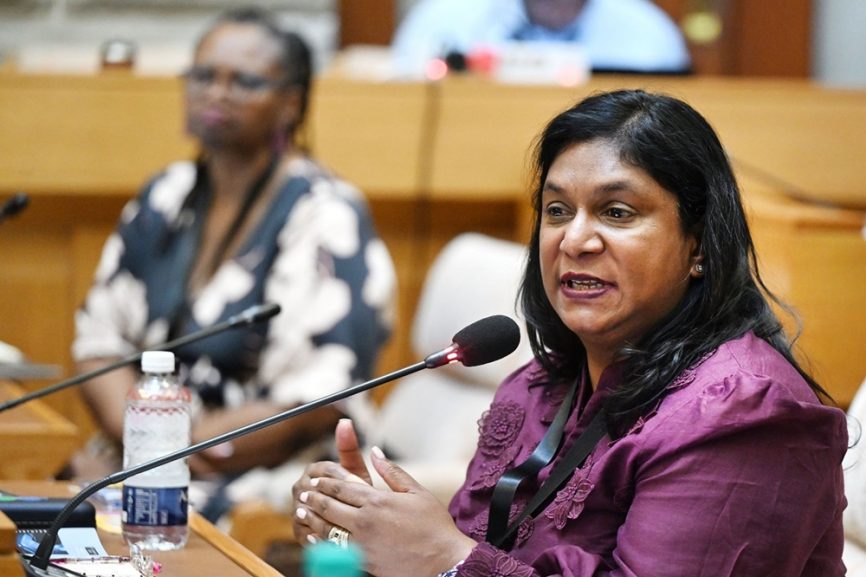
Ninth medical postponement puts Madlanga Commission under growing pressure
The Madlanga Commission was meant to move a step closer to uncovering the truth this week. Instead, it found itself facing yet another delay.
Advocate Andrea Johnson, head of the Investigating Directorate Against Corruption (IDAC), became the ninth witness linked to the inquiry to postpone testimony on medical grounds, adding to a growing list of interruptions that are beginning to test both the commission’s patience and public confidence.
Her absence has once again shifted attention away from the evidence the commission is trying to uncover and towards an uncomfortable question: Are repeated medical postponements slowing one of South Africa’s most important corruption inquiries?
A hearing that never got off the ground
Johnson had been expected to answer questions relating to allegations involving suspended Crime Intelligence deputy head Major-General Feroz Khan and claims of interference dating back to 2018.
Instead, commissioners were informed on Monday morning that she had been rushed to hospital before proceedings could begin.
While no one disputed that medical emergencies happen, the documentation submitted to explain her absence quickly became the focus.
Commission chairperson Justice Mbuyiseli Madlanga criticised the medical certificate presented to the commission, describing it as lacking meaningful detail about Johnson’s condition and saying it did little to explain why she could not testify.
It is not the first time the commission has voiced frustration over vague medical notes submitted shortly before scheduled appearances.
A pattern the commission can no longer ignore
Johnson’s postponement follows a series of similar incidents involving high-profile witnesses over recent months.
Among those whose appearances have previously been delayed for health-related reasons are political figure Brown Mogotsi, an unnamed intelligence officer known as Witness F, businessman Suliman Carrim, Medicare24 CEO Mike van Wyk, suspended Crime Intelligence deputy head Feroz Khan, detective Fannie Nkosi and Crime Intelligence boss General Dumisani Khumalo.
In several cases, witnesses eventually returned to continue giving evidence. However, the repeated interruptions have forced the commission to reshuffle its programme and postpone key testimony.
For a commission operating under strict timelines, every unexpected postponement creates a ripple effect that delays subsequent witnesses and extends proceedings.
Tougher scrutiny may be on the way
The repeated postponements have prompted the commission to consider stronger measures.
Earlier this year, commissioners warned that doctors who issue medical certificates could themselves be called to testify under oath to explain the diagnosis and justify why a witness was declared medically unfit.
The commission has also indicated it may refer questionable medical certificates to the Health Professions Council of South Africa (HPCSA) for professional assessment where appropriate.
The move reflects growing concern that vague medical documentation could undermine public confidence if left unchallenged.
Legal experts say false medical notes carry serious consequences
Legal analysts believe there are already legal tools available if medical certificates are found to be misleading.
Legal expert Vuyo Manisi says doctors who knowingly issue inaccurate medical certificates could potentially face fraud charges as well as disciplinary action from professional bodies.
He noted that courts have previously relied on independent medical experts to determine whether accused persons were genuinely unable to participate in legal proceedings.
One of the best-known examples involved former Bosasa executive Angelo Agrizzi, whose health became a central issue during criminal proceedings. Independent specialists later confirmed he suffered from severe hypoventilation syndrome and required continuous oxygen therapy, providing objective medical evidence to support the delays.
Advocate Paul Hoffman shares a similar view, arguing that deliberately misleading medical certificates should attract criminal consequences because they interfere with the administration of justice.
Public frustration continues to grow
The repeated interruptions have not gone unnoticed outside the commission room.
Across social media, many South Africans have questioned why witnesses so often become ill shortly before scheduled testimony, with some calling for stricter verification of medical claims before hearings are postponed.
Others, however, have cautioned against assuming bad faith, pointing out that genuine medical emergencies do happen and that every witness is entitled to fair treatment.
That balancing act now appears to be one of the commission’s biggest challengesprotecting the rights of witnesses while ensuring the inquiry is not repeatedly derailed.
Why the delays matter
The Madlanga Commission was established to examine serious allegations involving Crime Intelligence and possible misconduct within law enforcement structures.
Its findings could influence future investigations, accountability measures and public trust in institutions tasked with fighting corruption.
Each postponement means critical evidence is heard later than planned, extending uncertainty around issues that have already attracted significant public interest.
With nine witnesses now having delayed their testimony for health reasons, pressure is mounting on the commission to find a way of keeping proceedings on track without compromising fairness.
- For now, the inquiry faces a familiar challenge: separating genuine medical emergencies from delays that require closer scrutiny, while ensuring South Africans eventually receive the answers the commission was created to uncover.
Follow Joburg ETC on Facebook, Twitter, TikTok and Instagram
For more News in Johannesburg, visit joburgetc.com
Source: iol.co.za