Will GNU partners stand by Ramaphosa as Phala Phala pressure grows?
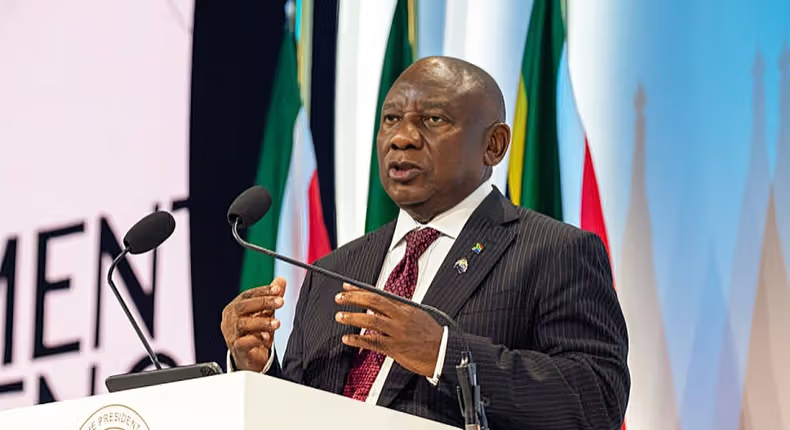
The political temperature inside South Africa’s government of national unity is rising fast and at the centre of it is President Cyril Ramaphosa and the long-running Phala Phala saga.
After years of legal and political debate, the Constitutional Court has effectively reopened the door to an impeachment process linked to the controversial theft of foreign currency from Ramaphosa’s Phala Phala game farm in Limpopo. Now, attention is shifting beyond the ANC itself and toward a far more unpredictable question: will Ramaphosa’s GNU partners stand by him if pressure intensifies?
For many South Africans watching the drama unfold, this moment feels bigger than just one scandal. It is increasingly becoming a test of whether coalition politics in South Africa can survive a major constitutional crisis.
DA signals it will not blindly defend Ramaphosa
Inside the GNU, the Democratic Alliance has tried to position itself as a party unwilling to compromise its anti-corruption stance simply to preserve political stability.
DA parliamentary leader George Michalakis made it clear over the weekend that support for Ramaphosa cannot be taken for granted.
According to Michalakis, the DA did not enter the GNU to become an extension of the ANC or to protect leaders facing serious allegations. The message from the party was blunt: if wrongdoing is proven, accountability must follow.
That sentiment was echoed by Geordin Hill-Lewis, who told supporters that the DA would not participate in what he described as the “old system” of shielding politically connected leaders from consequences.
The remarks immediately triggered debate online, with many South Africans questioning whether the GNU’s fragile partnership can survive if impeachment proceedings gain momentum.
On social media, reactions have been sharply divided. Some users praised the DA for publicly drawing a line in the sand, while others accused opposition parties of selectively applying principles depending on political convenience.
Why the Constitutional Court ruling matters
The latest political storm follows a Constitutional Court ruling that parliament acted irrationally in 2022 when it rejected recommendations to establish an impeachment committee under Section 89 of the Constitution.
The case stems from the 2020 theft at Ramaphosa’s Phala Phala farm, where roughly $580,000 in cash was reportedly stolen.
Although multiple investigations including probes by the Hawks, the Public Protector and the South African Reserve Bank previously found no evidence that Ramaphosa committed a criminal offence, the Constitutional Court ruling means parliament must now revisit the impeachment process properly.
That distinction is important.
The court did not declare Ramaphosa guilty of misconduct. Instead, it found that parliament failed to follow a rational constitutional process when it dismissed the matter earlier.
For many legal analysts, this transforms the issue from a political scandal into a broader constitutional test about accountability at the highest level of government.
ANC faces another internal balancing act
Behind closed doors, the ANC is once again confronting difficult questions about leadership, unity and electoral survival.
Reports suggest senior ANC leaders have been discussing several possible routes forward including challenging parts of the Section 89 panel findings, narrowing the scope of the impeachment committee, or lobbying coalition allies for support should a parliamentary vote eventually take place.
The timing could hardly be worse for the governing party.
The ANC is already navigating declining voter confidence, coalition politics and growing internal factionalism ahead of future local government elections. Another drawn-out scandal risks reopening old divisions inside the party while strengthening opposition narratives around corruption and accountability.
Political economist Sandile Swana believes the DA could ultimately soften its position if it believes the GNU itself is at risk of collapsing.
According to Swana, the political and economic interests tied to coalition stability may eventually outweigh public rhetoric.
But constitutional expert Phindile Ntliziywana sees the situation differently. He argues that most GNU partners may prefer stability over political upheaval, particularly given concerns about market confidence, investor sentiment and social unrest.
That tension between constitutional accountability and political stability is now becoming the defining issue of the moment.
MK Party adds more pressure
Adding to Ramaphosa’s mounting political problems is the growing aggression from Jacob Zuma’s MK Party.
The party announced plans to table a motion of no confidence against Ramaphosa and is reportedly pushing for the vote to happen by secret ballot.
MK Party spokesperson Nhlamulo Ndhlela argued that a secret ballot would allow ANC MPs to vote freely without fear of party pressure or political retaliation.
The strategy mirrors previous moments in South African politics where secret ballots exposed deep fractures within governing party ranks.
Although the ANC still maintains significant parliamentary influence, the political landscape today looks very different from the era of overwhelming ANC dominance. Coalition politics has introduced uncertainty into parliamentary calculations, making every major vote harder to predict.
Will Ramaphosa resign?
Despite speculation resurfacing after the Constitutional Court judgment, reports from within the Presidency suggest resignation is not currently being considered.
For Ramaphosa and his supporters, stepping down now would likely be interpreted as an admission of wrongdoing something the ANC is eager to avoid, especially with elections always looming on the political horizon.
Instead, the president appears set to fight the process politically and legally.
Parliament must now establish an impeachment committee under National Assembly rules. That committee will examine evidence, hear testimony and decide whether the allegations against the president meet the threshold required under Section 89 of the Constitution.
That process could take months and may become one of the most politically explosive parliamentary proceedings South Africa has seen since the Zuma years.
A defining moment for the GNU
What makes this moment particularly significant is that it is unfolding during South Africa’s first major experiment with coalition governance at national level.
The GNU was sold to voters as a fresh start a break from the political dysfunction, corruption scandals and internal battles that have defined much of the country’s democratic era.
Now, its biggest partners may soon be forced to choose between protecting government stability and defending institutional accountability.
For ordinary South Africans already frustrated by unemployment, load shedding, corruption and rising living costs, the fear is that another prolonged political battle could distract leaders from urgent national issues once again.
But others argue that allowing constitutional processes to unfold transparently even when politically uncomfortable may ultimately strengthen South Africa’s democracy in the long run.
The coming weeks inside parliament could determine not only Ramaphosa’s political future, but also whether the GNU itself can withstand its first real stress test.