Motoring
Ford and Geely to build EVs at underused Valencia plant in 66/34 joint venture
Ford and Geely will build two electric SUVs at Ford’s Valencia plant in a 66%/34% joint venture, with first cars due in 2028 amid spare European factory capacity.
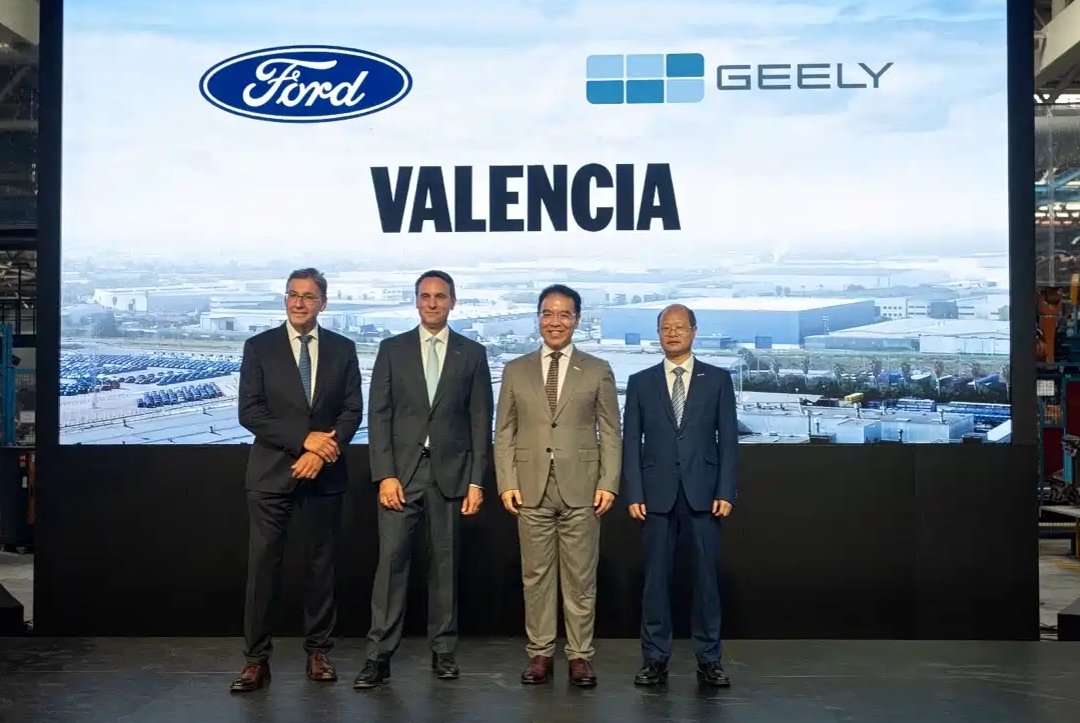
Ford Motor Company and Geely Automobile Holdings will produce two electric SUVs at Ford’s Valencia, Spain, factory in a joint venture 66% owned by Ford and 34% by Geely, with the first cars expected to roll off the line in 2028.
Why the tie-up happened
The deal pairs a legacy US automaker with a major Chinese rival at a time when European factory capacity sits well below profitable utilisation levels. Ford’s Valencia plant was operating at 26% of capacity in 2025, according to GlobalData. Consulting firm Boston Consulting Group estimates European auto plants average roughly 60% utilisation when around 80% is generally needed for healthy returnsleaving about 5.4 million vehicles’ worth of spare capacity, the equivalent of more than 35 idle assembly plants.
Business logic for both sides
For Geely, the tie-up secures a European production foothold as Brussels finalises rules expected to require electric vehicles to be at least 70% made in Europe to qualify for state subsidies and to pass broader supply-chain resilience checks. Several Chinese automakers are reported to be moving quickly to lock down European production sites; examples cited alongside the Geely deal include Leapmotor’s agreement with Stellantis in Zaragoza and Hongqi’s talks with Stellantis over another Spanish plant.
Ford framed the agreement as a way to increase throughput at Valencia. Ford Europe president Jim Baumbick said the aim is to “load up” the underused facility. Ford will also bring its own Bronco SUV to the same plant under the arrangement.
Market and investment backdrop
Chinese brands have been expanding rapidly in Europe. The source reports China’s share of the Western European car market reached 8.6% in early 2026, nearly double its share a year earlier. In addition, Chinese-backed EV and battery investment in Europe has topped €30 billion this year, underscoring the urgency for manufacturers seeking local production.
Politics and labour reaction
The pact has drawn criticism in some quarters. US Representative John Moolenaar, who chairs the House committee on China, called Ford’s decision “incomprehensible” and contrasted it with US moves to tighten restrictions on Chinese automakers; the Senate has recently advanced legislation aiming at tougher limits.
Spanish unions expressed cautious support but set conditions. Union leader Juan Jose Picazo said, “We can’t be just an assembly plant.” Unions want meaningful technology transfer and development of a local supply chain rather than simple assembly of imported parts.
What it signals for the industry
The Valencia deal is presented as part of a broader reshaping of the car industry in Europedriven by underused factory capacity on one side and Chinese manufacturers racing to establish local production before new EU local-content rules take effect on the other. The agreement is an example of factory-sharing and joint production arrangements that observers expect to continue as companies adapt to changing market and regulatory realities.
Follow Joburg ETC on Facebook, Twitter, TikTok and Instagram
For more News in Johannesburg, visit joburgetc.com
Source: iol.co.za