News
Godongwana rejects claims he avoided DA deputy minister in PIC chair choice
Finance Minister Enoch Godongwana says political considerations did not drive the appointment of the new PIC chair and defends government steps after a High Court ruling.
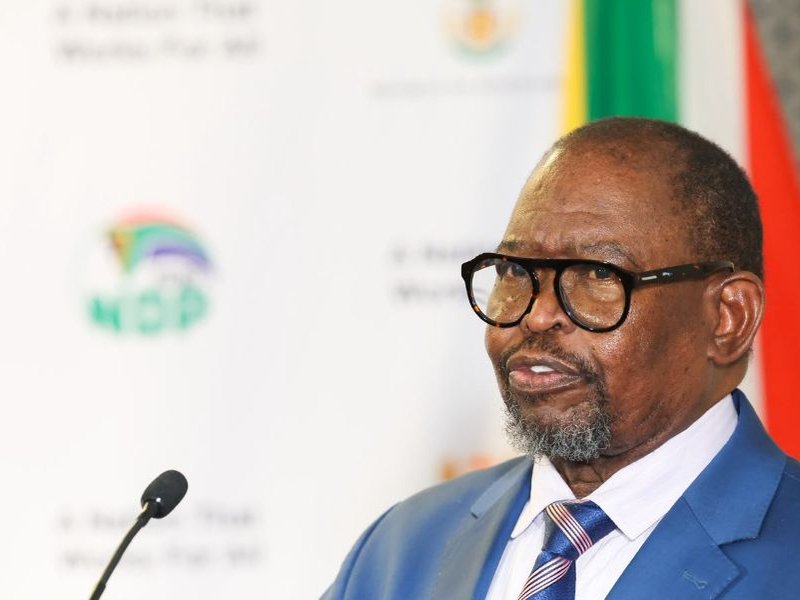
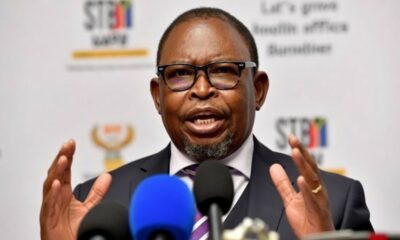
Finance Minister Enoch Godongwana has rejected claims that political considerations influenced the decision not to appoint Deputy Minister Ashor Sarupen as chairperson of the Public Investment Corporation (PIC). Godongwana spoke about the leadership changes, the recent High Court judgment on the PIC CEO’s suspension and ongoing investigations in an interview with Newsroom Afrika.
Why Sarupen was not chosen
Godongwana said the decision about the PIC chair was based on governance concerns and existing law, which allows the minister to either designate the deputy minister of finance as PIC chairperson or, in consultation with Cabinet, appoint another deputy minister in the economic cluster.
Responding to claims that he avoided appointing Sarupen because the deputy minister belongs to the Democratic Alliance, Godongwana said he had discussed the matter directly with Sarupen and that they had reached a common understanding.
“I did not avoid appointing this one,” he said. “I sat down with Deputy Minister Sarupen, and in our discussion I pointed out this conflict. I said, in light of this conflict, it’s not in his interest, or in the interest of the officials in the Asset and Liability Division, to be in that conflict situation.”
New chair and the board shake-up
Cabinet has appointed a new PIC board and named Seiso Mohai, the Deputy Minister of Planning, Monitoring and Evaluation, as the corporation’s chairperson. Mohai is the first PIC chair who is not the deputy minister of finance.
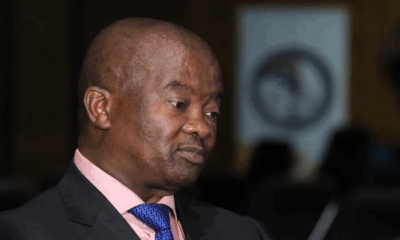
The leadership changes followed the resignation of former PIC chair David Masondo, who stepped down last week.
Court ruling on CEO suspension and legal fallout
The Gauteng High Court in Pretoria found the PIC board’s precautionary suspension of CEO Patrick Khulekani Dlamini to be unlawful and invalid. The judge ruled the board exceeded its powers by suspending Dlamini without following required governance procedures, including recommendations from the Human Resources and Remuneration Committee and ministerial consultation.
The court ordered the PIC and its board to pay legal costs. The suspension challenge was largely unopposed after the PIC board and the finance minister did not contest the matter. Attempts by GEPF member Jabu Happy Moche and Public Interest South Africa to intervene were dismissed.
Ongoing investigations and reputational concerns
Godongwana stressed it was premature to declare Dlamini tainted while several investigations were under way.
“I don’t want to rely on hearsay. These matters are under investigation by a couple of institutions,” he said.
He named the Special Investigating Unit (SIU), the Auditor-General, the Financial Sector Conduct Authority (FSCA) and the Public Protector as bodies involved in inquiries related to the PIC. The Auditor-General had flagged material irregularities relating to Daybreak Foods, a wholly owned PIC subsidiary, and referred the matter to the SIU.
Godongwana said the PIC board had been asked to initiate an independent investigation into all whistleblower allegations, including complaints involving Dlamini and Masondo, and that final conclusions should wait on those reports.
“I’m not going to therefore come to the conclusion that he’s tainted in the absence of the final decision of those reports,” he said.
Governance risks and portfolio concerns
Godongwana said instability at the PIC posed wider risks to the South African economy because of the corporation’s extensive investments. He said a deputy governor of the South African Reserve Bank had warned that instability at the PIC could create systemic risks.
He described the PIC’s unlisted investment portfolio as representing only about 5% of the overall portfolio, while also saying that the same 5% had contributed significantly to reputational damage. Godongwana said the government may need to reconsider whether the PIC should continue maintaining an unlisted portfolio depending on the outcome of investigations.
Next steps and institutional reforms
Godongwana said the Treasury was conflicted in its oversight role and that this highlighted the need to review the structure of the PIC board. He cited the Mpati Commission’s suggestion that the government should review the notion of a chair who is a deputy minister and said the government was considering proposals to align PIC governance with the commission’s recommendations.
On whether the PIC should have opposed Dlamini’s urgent court application, Godongwana said the corporation received the court papers when there was no sitting board and that lawyers instructed to seek a postponement did not appear in court. He said it was unclear whether opposition would have changed the outcome.
“Whether, if the board opposed, there would have had a successful application, I don’t know,” he said.
The comments were made in an interview with Newsroom Afrika.
Follow Joburg ETC on Facebook, Twitter, TikTok and Instagram
For more News in Johannesburg, visit joburgetc.com
Source: iol.co.za