Opinion
Mecca Agreement: Alliance in Ink or a Saudi Image Play?
The Mecca Agreement binds Saudi Arabia, Turkey and Pakistan on paper. IOL questions whether it is a real security pact or a move to rebuild Saudi power and prestige.
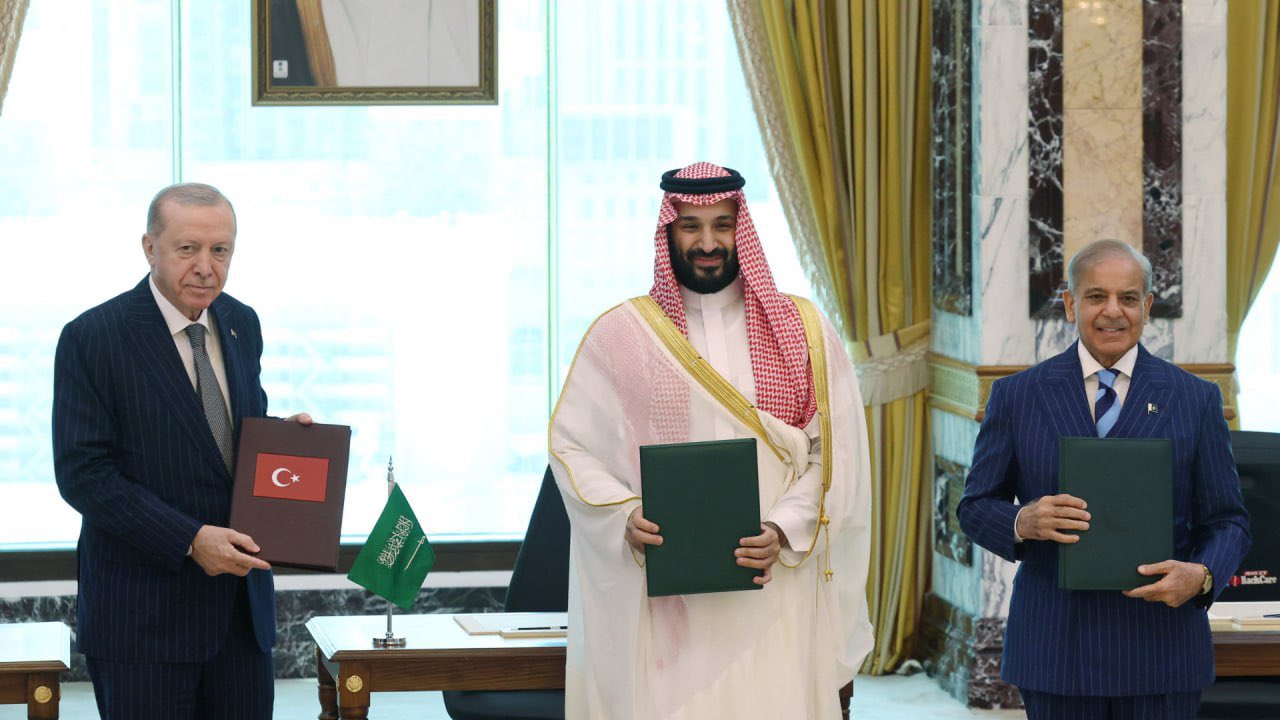
The Mecca Agreement, signed on August 7 by Saudi Arabia, Turkey and Pakistan, commits the three states to regard an armed attack on one as an attack on all. The pact has revived debate over whether it creates a meaningful regional security alliance or mainly serves to recast Saudi Arabia’s image of power, according to IOL.
What the pact says and what it lacks
On paper the agreement presents a collective‑deterrence formula: an armed attack on one party will be treated as an attack on all three. According to IOL, international reports note the pact still lacks many of the military and operational structures that would make it equivalent to NATO’s Article 5.
The significance of the deal, according to IOL, lies not only in assembling three major Muslim countries but in whether it marks a real shift in the regional balance of power or repeats past attempts by Riyadh to build a security umbrella that fell short of their announced aims.
Historical precedents and recurring limits
IOL highlights earlier regional projects that failed to produce integrated military command or lasting cohesion: the Arab League, the Arab Cooperation Council, the Gulf Cooperation Council, proposals for an Arab NATO, the 2015 Islamic Military Alliance announced by Riyadh, and the Saudi‑led coalition against the Houthis in Yemen. According to IOL, these precedents show the recurring problem was not a lack of declarations but conflicting interests when crises arose and Saudi Arabia’s failure to lead any alliance.
According to IOL, after 11 years of war, Saudi Arabia has failed to achieve any of its objectives and has failed to defeat an armed Yemeni movementan outcome that has exposed limits to Riyadh’s regional influence and deterrence.
Partners with different priorities
The three signatories bring differing strategic orientations. Turkey is a NATO member with relations across the region; Pakistan’s defence thinking is shaped by its rivalry with India; Saudi Arabia’s priorities centre on Gulf security, Iran and Yemen. According to IOL, these differences mean the pact unites states that need one another now but does not eliminate divergent interests or produce a single strategic vision.
Image, politics and the crown prince
According to IOL, the Mecca Agreement can be read as serving a political and media function as much as a military one: to recast Crown Prince Mohammed bin Salman as a leader capable of building a bloc combining Turkish military power, Pakistani capabilities and Saudi financial weight.
According to IOL, there is also a need for Riyadh to demonstrate it can launch initiatives and lead regional arrangements rather than appear as a state seeking protection after vulnerabilities vis‑à‑vis Iran and the Houthis were exposed.
The test ahead
According to IOL, the Mecca Agreement appears to be, at least in part, a publicity‑driven alliance, and it would be premature to describe it as an “Islamic NATO.” Defence cooperation exists among the three states and the pact may expand training, intelligence sharing and military manufacturing, but historical patterns set a higher bar for determining whether the arrangement will hold under pressure.
According to IOL, the critical question is not whether Ankara and Islamabad were willing to sign alongside Riyadh, but what they will do if Saudi Arabia faces another attack from Iran or the Houthiswhether they will deploy forces and bear the costs of a confrontation that does not directly serve their own interests.
What will show the pact’s true nature
If Turkey and Pakistan commit forces and resources in defense of Saudi Arabia when tested, the agreement would indicate a substantive security umbrella. If they do not, according to IOL, the Mecca Agreement risks becoming another alliance that primarily creates an image of power for an ambitious Saudi leader rather than a durable military partnership.
Follow Joburg ETC on Facebook, Twitter, TikTok and Instagram
For more News in Johannesburg, visit joburgetc.com
Source: iol.co.za