News
Bronkhorstspruit water declared unsafe as treatment plant operates at 26% capacity
Bronkhorstspruit water declared unsafe as treatment plant operates at 26% capacity
Residents across several communities have been warned about drinking water from the struggling plant as experts raise concerns over infrastructure and municipal accountability.
Residents in Bronkhorstspruit and surrounding communities have been warned that water supplied by the local treatment plant is not suitable for human consumption.
The warning comes as the plant continues to operate at just 26% capacity, with deteriorating raw water quality making it difficult to produce water that is safe to drink.
According to the notice, the facility is operating with only one raw water pump and one high lift pump.
“The deteriorated raw water quality, which was caused by high turbidity, makes it difficult for the plant to produce drinkable water under its current operating capacity,” the notice stated.
Which areas are affected by the water warning?
The warning covers Region 7, which supplies Bronkhorstspruit town and its suburbs, as well as several surrounding communities.
Affected areas include:
- Zithobeni
- Rethabiseng
- Kandustria
- Ekangala
- Thembisile Hani Local Municipality
Residents in these areas face concerns over access to safe drinking water while the treatment plant struggles to operate effectively.
WaterCAN questions Tshwane’s response
WaterCAN water expert Ferrial Adam said residents had been dealing with ongoing water problems in Bronkhorstspruit for more than a year.
She questioned how long the City of Tshwane expected communities to wait while issuing notices and reporting that technical teams were monitoring the situation.
“Monitoring is not fixing and notices are not accountability,” Adam said.
She argued that the municipality needed to demonstrate measurable progress towards resolving the problem rather than repeatedly acknowledging it.
Adam called on the mayor and municipal manager to explain why the situation had continued for so long, clarify who was responsible for addressing it and outline the consequences if commitments were not met.
“Residents deserve action, transparency and consequences for failure,” she said.
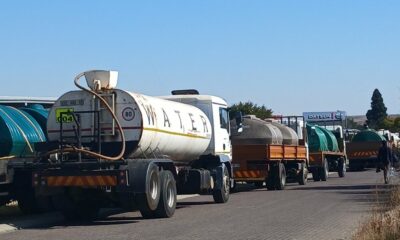
Adam also questioned the reliance on water tankers, arguing that they should not be treated as a long-term answer to the crisis.
Experts raise concerns over water governance
Water intelligence analyst Tarryn Johnston said the situation pointed to wider governance concerns rather than an isolated technical problem.
She argued that the condition of raw water entering a treatment plant can reflect issues involving catchment management, pollution control, enforcement of effluent standards and infrastructure maintenance.
Johnston said high turbidity, which refers to cloudiness caused by suspended particles in water, can make treatment more difficult, particularly when a plant is operating with limited capacity.
She warned that treatment facilities could struggle to maintain reliable supplies when raw water quality deteriorates and critical equipment is not sufficiently resilient.
Plant’s limited capacity raises further concerns
Johnston said the plant’s operating capacity of 26%, together with the availability of only one raw water pump and one high lift pump, highlighted concerns about the system’s ability to cope with disruptions.
She argued that essential water infrastructure should be maintained to reduce dependence on individual pieces of equipment and emergency measures.
Communities relying on water tankers may receive temporary assistance, but Johnston said tanker deliveries were not a sustainable replacement for a reliable municipal water supply.
She called for improved catchment management, investment in infrastructure and stronger accountability to prevent similar situations from recurring.
For residents in Bronkhorstspruit and surrounding areas, the immediate concern remains access to safe drinking water while the treatment plant continues to operate below capacity.
Residents should follow official municipal updates for further guidance on the water warning and any changes to the safety of the supply.
Follow Joburg ETC on Facebook, Twitter, TikTok and Instagram
For more News in Johannesburg, visit joburgetc.com
Source: The Citizen