News
Investigations under way after stomach illness at Rhodes University and Saint Albans Prison
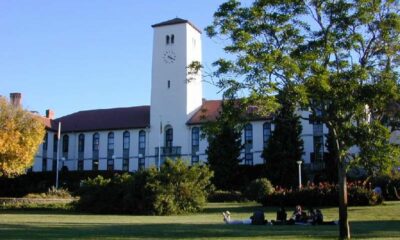
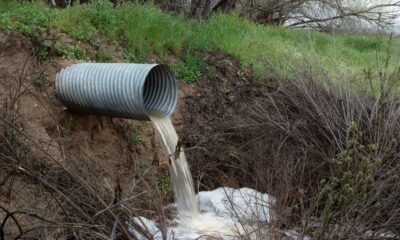
Authorities are testing water after 111 students fell ill at Rhodes University and 23 cases at Saint Albans Prison. Tests point to campus and prison systems.

Probe launched after stomach-illness outbreaks at campus and prison
The Department of Water and Sanitation (DWS) and the Eastern Cape government have launched an investigation into a stomach-illness outbreak at Rhodes University in Makana and Saint Albans Prison in Nelson Mandela Bay, DWS spokesperson Wisane Mavasa said on Thursday.
Who fell ill and when authorities were alerted
According to Mavasa, the department received a media alert from Rhodes University on 20 October, which prompted an immediate response.
As Mavasa reported,
“A total of 111 cases were reported at Rhodes University’s student residences,”
and the prison recorded 23 additional cases, the spokesperson said. Patients displayed symptoms including severe abdominal cramps, diarrhoea, vomiting and dehydration and were treated at various health facilities in the two municipalities.
Teams, testing and early findings
A technical response team was assembled to locate the source of illness and to halt further spread. The team comprises representatives from multiple bodies, including:
- Department of Water and Sanitation (DWS)
- Provincial health and Cogta departments
- National Institute for Communicable Diseases
- Amatola Water
- Rhodes University
- Affected municipalities
Samples were taken from several points to map where contamination, if present, might be entering distribution systems. The sampling locations included:
- the university’s internal water system
- the municipal network serving the area
- the Makana treatment works
- the prison’s elevated water tower
Mavasa said early indications show the problem is concentrated within the campus and the prison systems rather than originating from the municipal supply. He noted:
“Preliminary findings indicate that the spread is currently concentrated within the university and the Saint Albans Prison.”
Laboratory analysis of all samples is still under way; results are pending and will be released when available, Mavasa added.
Senior officials meet local leaders
On Wednesday evening, Water and Sanitation Minister Pemmy Majodina and Eastern Cape Premier Oscar Mabuyane met with the mayors of the affected municipalities, Yandiswa Vara and Babalwa Lobishe, for an update on the situation, according to the department.
What authorities are advising the public
The government urged anyone who develops symptoms to seek medical attention early and to report suspected cases at their nearest clinic or to local health authorities. As Mavasa emphasised:
“Early reporting protects not only individuals and families but also enables health authorities to respond quickly and prevent further spread.”
Public health guidance issued alongside the investigation encourages routine hygiene measures such as handwashing after toilet use and before handling food. Mavasa concluded:
“Communities are further encouraged to at all times employ hygiene practices such as washing hands after toilet use and before handling food.”
Why investigators sample multiple points
When authorities suspect water-related illness, testing at several points along a supply chain is standard practice. Sampling the source treatment works, the municipal distribution network and the internal systems of institutions helps teams determine whether contamination is introduced at source, during distribution, or within private systems.
Finding contamination confined to a facility’s internal network can shift the response focus toward flushing, disinfection and remedial work inside those systems, while contamination in the municipal network typically triggers broader public notices and supply-level interventions. These are general steps public-health and water engineers commonly take; investigators on this case have indicated their sampling is intended to clarify where targeted action is needed.
What happens next
The investigation will rely on laboratory confirmation to determine the precise nature and extent of contamination. Health and water officials will use those results to decide on remedial steps for the university and the prison systems, and to advise the public if any further precautions are necessary.
In the meantime, residents and institutions are being asked to report symptoms promptly and to maintain good hygiene practices to reduce the risk of further spread.
Officials say laboratory results are pending; samples were taken from campus, municipal and prison water points.
Follow Joburg ETC on Facebook, Twitter, TikTok and Instagram
For more News in Johannesburg, visit joburgetc.com
Source: citizen.co.za