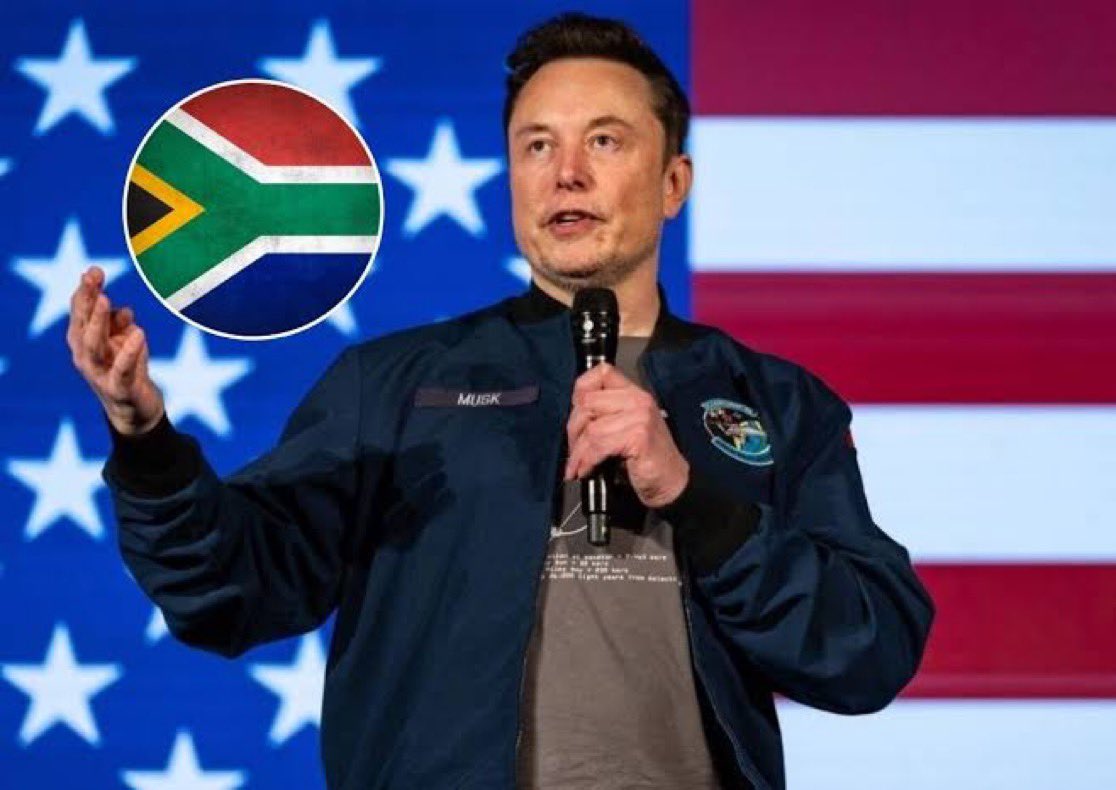
The ongoing back and forth between South Africa’s government and Elon Musk has taken another sharp turn, with the Presidency now openly telling the tech billionaire to look elsewhere if he is unhappy with local rules.
At the centre of the dispute is Starlink, Musk’s satellite internet service, which still has not launched in South Africa despite growing demand for faster, more reliable connectivity.
Government Pushes Back On Musk’s Claims
Musk recently reignited the debate after claiming that Starlink is being blocked from operating in South Africa because he is not black. He also suggested that there had been attempts to pressure the company into bending the rules to meet local ownership requirements.
Those claims have now been firmly rejected.
Presidency spokesperson Vincent Magwenya dismissed the allegations and made it clear that the government is not interested in engaging further on the issue. Instead, he suggested Musk should focus his attention on other markets around the world.
His message was blunt. South Africa is one of many opportunities globally, and companies that are not willing to comply with local laws are free to take their business elsewhere.
The Licensing Rules Behind The Standoff
At the heart of the situation is South Africa’s Electronic Communications Act, which governs how telecoms companies operate in the country.
Under the law, businesses applying for licences must ensure that at least 30% of ownership is held by historically disadvantaged groups. This forms part of South Africa’s broader effort to address inequality and transform key sectors of the economy.
For companies like SpaceX, which owns Starlink, that requirement has become a sticking point. The company has not applied for a licence, arguing that the ownership structure does not align with how it operates globally.
That deadlock has effectively kept Starlink out of the South African market.
Why Starlink Still Matters Locally
Despite the political tension, the conversation around Starlink is not going away anytime soon.
Across South Africa, especially in rural provinces and smaller towns, access to fast and stable internet remains a daily challenge. Traditional mobile networks often struggle to deliver consistent coverage in areas where infrastructure is costly and returns are limited.
This is where Starlink has sparked real interest. Its satellite-based model has the potential to reach places that fibre and mobile networks have not fully covered.
For many South Africans, the debate is not just about policy or politics. It is about access to opportunity, whether that is online learning, remote work, or running small businesses in underserved communities.
A Bigger Conversation About Policy And Progress
The clash between Musk and the South African government highlights a deeper issue. It raises questions about how the country balances transformation goals with attracting global technology investment.
On one side, there is a clear push to ensure that industries reflect the country’s demographics and history. On the other, there is growing pressure to modernise infrastructure and close the digital divide as quickly as possible.
For now, neither side appears ready to shift its position.
And as the stalemate continues, South Africans are left watching closely, knowing that the outcome could shape the future of internet access in the country.