News
Home Affairs rolls out Smart ID services at 203 bank branches nationwide

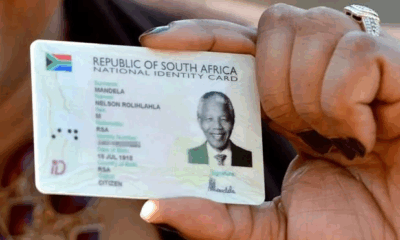
The Department of Home Affairs has expanded Smart ID replacement services to 203 bank branches nationwide, the department said, marking what it described as a major step in modernising identity services and reducing reliance on traditional Home Affairs offices.
Rapid expansion and uptake
Home Affairs said more than 250 000 South Africans have used the bank branch Smart ID service since it was launched on 9 March 2026. The department said the addition of the 203 bank branches increased access to the service substantially.
How the network has changed
Under the previous model, Smart ID replacement services were available at 248 Home Affairs offices and 32 participating bank branches. The department said,
“The addition of 203 bank branches means that access to this critical service has been expanded by 73% in a little over three months,”
reflecting the recent growth in the number of participating bank locations.
Which banks are offering the service
The department provided a breakdown of branches offering Smart ID services:
- Capitec Bank: 109 branches
- Standard Bank: 74 branches
- First National Bank: 20 branches
Speed and the move to biometric processing
Home Affairs highlighted the speed of the bank-based system, saying
“It now takes as little as five minutes to apply for a smart ID through a fully biometric process that requires no paperwork, no booking, and leaves no room for discretion,”
and said the biometric approach is intended to reduce fraud and streamline verification.
Planned further expansion
Minister of Home Affairs Leon Schreiber described the rollout as a major achievement and outlined further plans. He said the department intends to expand Smart ID replacement services to 750 bank branches by the end of 2026, and indicated
“Not only will we expand the smart ID replacement service to 750 branches by the end of the year, but we will shortly also add first-time smart ID applications, passport applications, and home deliveries,”
according to the department.
Context
The department noted that about 16 million South Africans still use the older document, a point used to frame the significance of moving services onto digital and biometric platforms.
Follow Joburg ETC on Facebook, Twitter, TikTok and Instagram
For more News in Johannesburg, visit joburgetc.com
Source: thesouthafrican.com