News
Ramaphosa’s bid to halt impeachment process heads to court as political battle intensifies
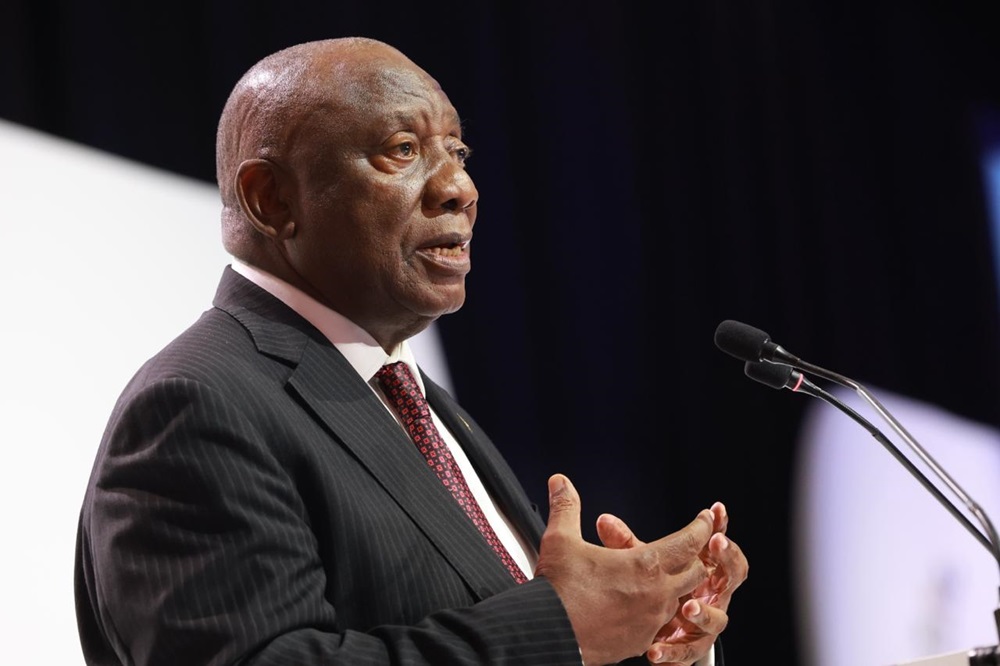
Ramaphosa’s bid to halt impeachment process heads to court as political battle intensifies
President Cyril Ramaphosa’s attempt to temporarily halt Parliament’s impeachment process is set to take centre stage in the Western Cape High Court this week, as a legal showdown unfolds over whether the inquiry should continue while a separate court challenge is still pending.
The urgent application has become one of the most closely watched political court battles of the year, with Parliament, opposition parties and the president presenting sharply different views on what should happen next.
Court to hear urgent interdict application
The Western Cape High Court is scheduled to hear Ramaphosa’s urgent interdict application over two days, with Impeachment Committee chairperson Makashule Gana expected to attend the proceedings.
The president is asking the court to temporarily suspend Parliament’s Section 89 impeachment process until his separate application to review and set aside the Independent Panel’s report is decided. That review is currently expected to be heard from 2 to 4 September.
Ramaphosa argues that the interdict is not an attempt to permanently stop the inquiry but rather to pause it until the courts determine whether the panel’s findings were lawful.
Ramaphosa says public hearings would cause irreparable harm
In court papers, the president argues that allowing impeachment proceedings to continue before the review is finalised could cause irreversible damage to both his office and reputation.
His legal team says a public impeachment hearing should not proceed while questions remain over the legality of the Independent Panel’s report that triggered the process.
According to the application, Parliament’s own rules are intended to protect a sitting president from facing a public impeachment inquiry based on allegations that have not yet been fully tested.
Parliament warns against lengthy delays
The Impeachment Committee has opposed the application, arguing that granting the interdict could stall its constitutional work for years.
Committee chairperson Makashule Gana says legal processes often take considerable time, meaning Parliament could be prevented from fulfilling its constitutional responsibilities if the proceedings are suspended.
He also questioned exactly what Ramaphosa wants the court to stop.
In his responding affidavit, Gana argues that it remains unclear whether the committee would still be allowed to hold meetings, gather documentary evidence or carry out administrative preparations while the interdict is in place.
He says this uncertainty creates practical difficulties and could leave Parliament without clear guidance on how to proceed.
Opposition parties challenge urgency of application
Several political parties have also entered the legal battle, insisting the president has failed to demonstrate why the matter deserves urgent attention.
The Economic Freedom Fighters (EFF), uMkhonto weSizwe (MK) Party and the United Africans Transformation (UAT) all oppose the application.
EFF leader Julius Malema argues that Ramaphosa created the urgency himself by delaying his court application. He maintains that the Independent Panel was never tasked with deciding guilt or innocence but simply determining whether sufficient evidence existed to justify further investigation.
Former president Jacob Zuma, who filed papers on behalf of the MK Party, argues that Ramaphosa’s review application confuses the legal principles governing reviews and appeals.
According to Zuma’s affidavit, the Independent Panel’s role was limited to determining whether a prima facie case existed rather than making final findings on the allegations.
Speaker chooses neutral position
Another point of contention has been National Assembly Speaker Thoko Didiza’s decision not to formally oppose Ramaphosa’s application.
Instead, Didiza has elected to abide by the court’s decision while submitting an explanatory affidavit outlining Parliament’s constitutional responsibilities under Section 89.
Her affidavit is intended to provide context to the court without directly joining either side of the dispute.
Why this case matters
The outcome of the interdict application could determine how quickly Parliament proceeds with one of its most significant constitutional processes.
If the court grants the interim relief, impeachment proceedings are likely to remain on hold until the review application has been decided.
If the application is dismissed, the Impeachment Committee will be able to continue its work, including plans to meet next week to appoint an evidence leader before witness hearings begin.
The ruling is expected to have significant implications not only for Ramaphosa’s legal strategy but also for how future Section 89 impeachment proceedings are managed in South Africa.
Follow Joburg ETC on Facebook, Twitter, TikTok and Instagram
For more News in Johannesburg, visit joburgetc.com
- Source: iol.co.za