News
MK Party Makes Historic Gains Across KwaZulu-Natal as ANC Falters
The MK Party, led by Jacob Zuma, gains significant ground in KwaZulu-Natal, taking control of key councils and relegating the ANC to third place in the province.

Dominating Councils and Outpacing Rivals
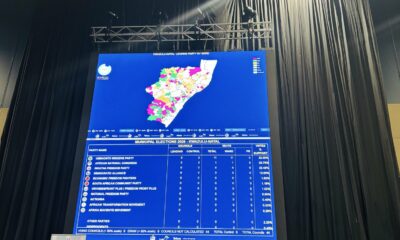
With 66% of votes counted in KwaZulu-Natal and national tallies surpassing 70%, the MK Party has secured outright control in three rural councils and leads in 11 additional municipalities. The results position the party ahead of its rivals, relegating the ANC to third place, a significant shift from previous elections.
Province-wide, the MK Party captured 34.63% of the vote, translating to 1,266,117 ballots and 243 council seats. Their dominance is particularly marked in:
- Richmond MK Party took 56.27% of the vote and claimed 10 council seats, ending decades of ANC leadership. The ANC followed at 30.15% with five seats.
- iMpendle The party secured 42.61% of votes and six seats, while the ANC earned 26.37% and two council seats.
- Dr Nkosazana Dlamini Zuma Municipality (registered as Johannes Phumani Pungula) MK Party achieved 47.84% support and 14 council seats.
The Zuma Effect in KwaZulu-Natal
The stunning rise of the MK Party has prompted analysts to point to the influence of its leader. According to University of KwaZulu-Natal political expert Zakhele Ndlovu, “Much of the party’s continued support can be explained by the enduring popularity of former president Jacob Zuma,” a factor that now characterizes the political environment as the “Zuma effect.”
“Attention will now turn to whether the party can secure an outright majority in eThekwini or whether it will need to negotiate with smaller parties to form a governing coalition,” noted Ndlovu.
Ndlovu observed that the current numbers spell ongoing challenges for parties like the EFF and ActionSA in the province, while the IFP maintains its grip on rural voter bases.
eThekwini and Broader Provincial Trends
In the vital eThekwini metro, the MK Party established a commanding lead, drawing 43.69% of ballots. The DA sits in second place with 20.93%, while the ANC registered a steep drop to 16.77%. These figures underline the magnitude of the ANC’s descent in its former bastion.
Elsewhere in the province:
- The Inkatha Freedom Party (IFP) held strong in rural areas, garnering 22.27% and 166 council seats while leading in three municipalities.
- The ANC found itself in third place provincially, with 21.59% of the vote, totaling 789,336 ballots and no outright council control.
- The DA retained dominance in uMngeni, achieving 61.24% locally and registering 11.62% across KwaZulu-Natal.
- The Economic Freedom Fighters (EFF) managed 1.76% of provincial votes, securing 10 seats.
Many Councils Remain Undecided
Of the 44 municipalities in KwaZulu-Natal, 13 are currently classified as hung councils, with outcomes in 28 councils still pending at the time of reporting. This situation opens the door to further coalition negotiations and political maneuvering as final tallies approach completion.
Observing the Process
As counting continued, Cardinal Wilfred Napier, chairperson of the KwaZulu-Natal Church Leaders group, visited the Durban results centre on Thursday to monitor proceedings, reflecting ongoing interest from community leaders and observers in the provincial outcome.
National Perspective and Implications
Nationwide, the MK Party’s influence was also felt, as the party secured 9.01% of the national vote and 290 seats, placing it third overall, behind the ANC and the DA. This rise underscores the shifting political patterns not only in KwaZulu-Natal but across South Africa, with the traditional dominance of the ANC now being fundamentally challenged by emerging parties.
Looking Forward
The transformation of the political landscape in KwaZulu-Natal, largely attributed to the continued resonance of Jacob Zuma’s leadership, signals a new chapter in the province’s governance. As final votes are counted and coalition talks materialize, attention remains focused on whether the MK Party will secure outright control in additional key areas such as eThekwini, potentially reshaping local governance structures for years to come.
Follow Joburg ETC on Facebook, Twitter, TikTok and Instagram
For more News in Johannesburg, visit joburgetc.com
Source: iol.co.za