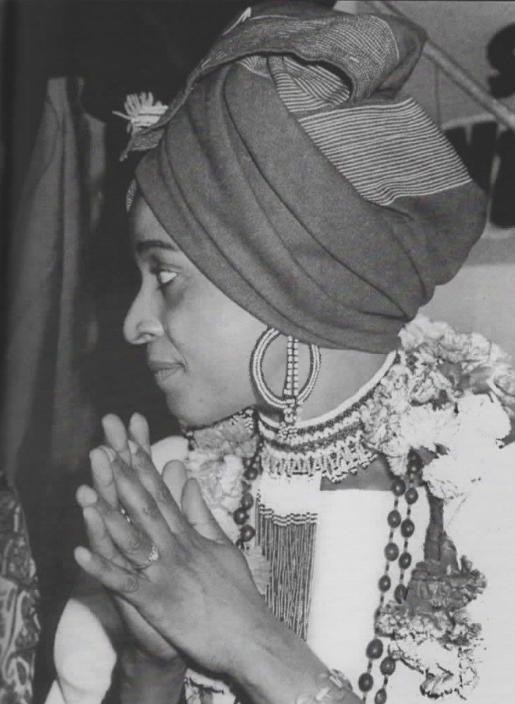
More than a decade in the making, the story of Winnie Madikizela-Mandela is finally stepping into the spotlight in a way that feels deeply personal and long overdue.
A new seven-part Netflix series, The Trials of Winnie Mandela, promises to unpack the life of one of South Africa’s most complex and influential figures, not through headlines or political commentary, but through her own voice and the memories of those who knew her best.
A Family’s Mission To Tell The Full Story
For her granddaughters, Zaziwe Dlamini-Manaway and Swati Dlamini-Mandela, this project is more than a documentary. It is a labour of love that has taken 12 years to bring to life.
They describe their grandmother not just as a political icon, but as a deeply present figure in their lives. To them, she was a confidant, a guiding force, and someone whose love shaped their understanding of family and identity.
At the same time, they recognise that Winnie Madikizela-Mandela belonged to the nation. Her decision to remain in Soweto, even at the height of her political influence, is often remembered as a defining part of her legacy. It grounded her in the very community she fought for, reinforcing her image as the “Mother of the Nation”.
Nothing Left Untold
One of the most striking aspects of the series is its commitment to honesty. According to her granddaughters, Winnie herself insisted that every part of her life be explored, even the uncomfortable chapters.
She gave her full approval to the project and encouraged the filmmakers to seek out different voices and perspectives. This level of openness sets the tone for a documentary that does not shy away from complexity.
In a country still grappling with how to remember its past, this approach feels particularly significant. South Africa’s history is often told in fragments, but this series aims to present a fuller, more nuanced picture.
From Prison Diary To Global Screen
The roots of the project trace back to a deeply personal moment. After the death of her former lawyer David Soggot in 2011, a prison diary he had encouraged Winnie to keep was returned to her.
That diary would later become the foundation for her memoir, 491 Days: Prisoner Number 1323/69, offering a rare glimpse into her experiences during detention under apartheid.
It was this material that sparked interest from the Ichikowitz Family Foundation, which sought to preserve the voices of key figures in South Africa’s journey to democracy through its African Oral History Archive.
From there, the idea of a documentary began to take shape, eventually evolving into the series set to reach a global audience.
Her Story In Her Own Words
What sets this series apart is its focus on letting Winnie Madikizela-Mandela speak for herself.
Her granddaughters emphasise that the project is rooted in her voice, her memories, and her perspective. For them, this is not just about preserving history, but about correcting it.
There is a growing awareness in South Africa that many stories, particularly those of women, have been sidelined or simplified over time. This series aims to change that by placing Winnie’s narrative firmly at the centre.
Why Her Story Still Matters Today
The title The Trials of Winnie Mandela carries a deeper meaning. It reflects both her given name, Nomzamo, and the many challenges that defined her life.
Her granddaughters believe her journey speaks far beyond South Africa. Whether it is a young woman navigating her own struggles or a leader facing scrutiny, the themes of resilience and sacrifice remain universal.
More importantly, they see this series as a reminder of what is at stake when stories are not told. South Africa’s democracy was built on the experiences of people like Winnie Madikizela-Mandela, and preserving those stories is essential to understanding the present.
Her legacy, they argue, is not just about the past. It is about ensuring that future generations know where they come from and what was sacrificed to get here.
And perhaps most powerfully, it is a reminder that behind every political figure is a human story waiting to be told.