News
‘I Would Do It All Again’: Judge Siraj Desai Reflects on 50 Years in Law, Struggle, and Justice
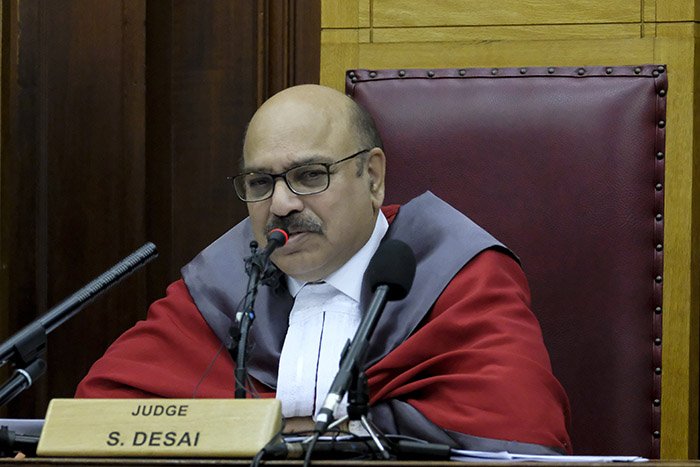
Fifty years ago, a young attorney was admitted to the bar in Cape Town. He didn’t know it then, but a glorious career was about to unfold.
This week, retired Judge Siraj Desai marked 50 years since he was admitted as an attorneyand looking back, he says it was well worth it.
“Looking back 50 years, I would do things exactly the same. It was exciting, meaningful, and I played my role in the Struggle for freedom in this countryas a lawyer and in other capacities.”
From Salt River to the Bench
Desai comes from humble beginnings, born in Salt Riveror “the backstreets of Cape Town,” as he calls it.
“My colleagues at the Bar all smiled when they heard I came from Salt River. I don’t know what the smiles were all about, but it made me an unlikely judge at the time.”
When he started, there were only 12 attorneys of colour in Cape Town. “We all knew each other because it is such a small community.”
The Dullah Omar Years
In 1976, Desai did his articles under Dullah Omar, who later became Minister of Justice.
“Dullah gave me a robe in my very first week and said, ‘Go and defend this guy.’ I have never defended anyone before.”
The accused was charged with throwing a stone at a police vehiclebut he missed. Desai defended him on the basis that it couldn’t be public violence (he was a kilometre away) or malicious damage to property (he missed).
The magistrate acquitted him on those charges but convicted him on an invented minor charge, slapping him with a R10 fine.
“The magistrate looked at me and said, ‘You have a good future ahead of you.’ And his prediction was right.”
The Struggle Cases
Desai’s first case as an instructing attorney involved three accused charged with planting a limpet mine on railway tracksa case filled with drama, including two witnesses who refused to testify “in this fascist court.”
He also defended defence force generals accused of the 1988 Bophuthatswana coup, who stood trial for terrorism and were acquitted.
And he fought for activist Shirley Gunn to have her baby placed with her while she was detained, so she could breastfeed. Her son, Haroon Gunn-Salie, became a famous artist.
“Those were the days. I was in the streets with the people, I defended them, and I was so busy that I never got time to marry until I was 36.”
The Bench
As a judge, Desai presided over some of South Africa’s most notable trials.
-
Najwa Petersen: Convicted of murdering her husband, Taliep Petersen, and sentenced to 28 years. Desai still laughs recalling how Muslim women on the street wanted to take “selfies” with him afterwards.
-
Henri van Breda: Sentenced the triple axe murderer to life imprisonmentand got the same reaction from the Afrikaans community.
Early in his tenure, he also ruled that beggars could not be banned from the Waterfront area. Years later, walking with his wife, they saw a beggar tell police: “The court said I may be here.”
The Legacy
Desai served five years as an attorney, 20 years at the Cape Bar, and five years on the Bench before retiring.
But he hasn’t hung up his robe entirelyhe now serves as the Legal Services Ombudsman.
He is grateful for the colourful legacy he will leave behind, especially for his two grandchildren, Mira and Rami.
The Bottom Line
Fifty years. From defending stone-throwers to sentencing murderers. From the backstreets of Salt River to the highest court in the land.
Judge Siraj Desai’s journey is a testament to what a life in lawand in service of justicecan achieve.
“I would do things exactly the same,” he says. And after 50 years, that’s a legacy worth celebrating.
{Source: IOL}
Follow Joburg ETC on Facebook, Twitter , TikTok and Instagram
For more News in Johannesburg, visit joburgetc.com