News
SAHRC accused of shielding state in Boipatong sewage crisis complaint
A worsening sewage crisis now turns into a human rights battle
What began as a local service delivery collapse in Boipatong has now escalated into a national human rights dispute, with the South African Human Rights Commission (SAHRC) accused of shielding senior government officials from accountability.
Activist Rev Modise Molefe has taken the matter to Parliament, arguing that the commission has deliberately softened the scope of his complaintshifting it away from alleged national government negligence and narrowing it to municipal failures in Emfuleni Local Municipality.
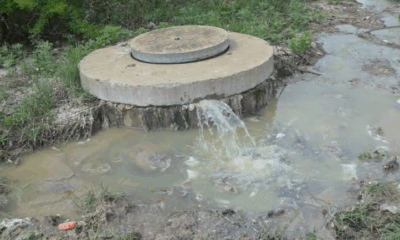
The allegations have added a new layer of tension to an already long-standing crisis involving raw sewage spilling into homes, streets, and communities across parts of Gauteng.
Claims of “downgraded” accountability and institutional protection
At the centre of Molefe’s petition is the claim that the SAHRC reclassified what he believes is evidence of national executive failure into routine service delivery complaints.
He argues that this decision effectively protects both the Presidency and the Department of Water and Sanitation from scrutiny, despite ongoing intervention programmes under Section 63.
Molefe’s submission to Parliament questions why the commission has not applied the same level of accountability expected in President Cyril Ramaphosa’s public stance on failing municipalities, particularly his earlier call for a “hardball” approach to underperforming officials.
Instead, Molefe claims the response to Boipatong has been far softer than what national leadership has demanded elsewhere in the country.
The human toll behind the sewage flows
Beyond policy and institutional disputes, the crisis is rooted in deeply personal tragedies.
One of the cases highlighted in the petition is that of Dimakatso Mofokeng from Sebokeng, who allegedly died while awaiting intervention for persistent sewage leaks affecting her home.
The petition also references a 70-year-old woman and a toddler identified under a 2023 intervention programme for vulnerable residents. According to Molefe, the child has since developed chronic respiratory illness linked to prolonged exposure to sewage conditions.
These accounts have become central to his argument that the situation is no longer just about infrastructure failure, but about a breakdown in state duty of care.
Allegations of ignored evidence and disputed reporting
Molefe further accuses SAHRC officials of overlooking key evidence during a site visit conducted in June last year. He also raises concerns about an attempt to merge multiple complaints into a single report, which he believes diluted claims of higher-level government responsibility.
Another allegation in his petition refers to what he calls the “Evaton fraud”, where he claims misleading images were used to suggest progress had been made, allegedly presented to the Presidency.
These claims, if pursued further, could deepen scrutiny of how human rights investigations linked to infrastructure failures are handled and reported.
Parliament given deadline as pressure mounts
In his submission, Molefe has given Parliament’s portfolio committee 21 days to respond. He is calling for the SAHRC to separate the complaints, subpoena internal documents, and investigate the conduct of its own officials.
If no action is taken, he has warned that the matter will be escalated to the United Nations High Commissioner for Human Rights.
The SAHRC has not yet responded to the allegations.
A familiar pattern in South Africa’s service delivery crisis
The Boipatong sewage crisis is not an isolated case. Across Gauteng, communities have repeatedly raised concerns about failing sanitation systems, ageing infrastructure, and slow municipal response times.
What makes this case different is that it now sits at the intersection of local governance, national oversight, and human rights accountabilityraising uncomfortable questions about where responsibility begins and ends when basic services collapse.
For residents, however, the debate remains painfully simple: sewage is still flowing, and relief is still out of reach.
{Source: The Citizen}
Follow Joburg ETC on Facebook, Twitter , TikTok and Instagram
For more News in Johannesburg, visit joburgetc.com