News
Malema urges Ramaphosa to focus on 24-hour clinics instead of bread handouts
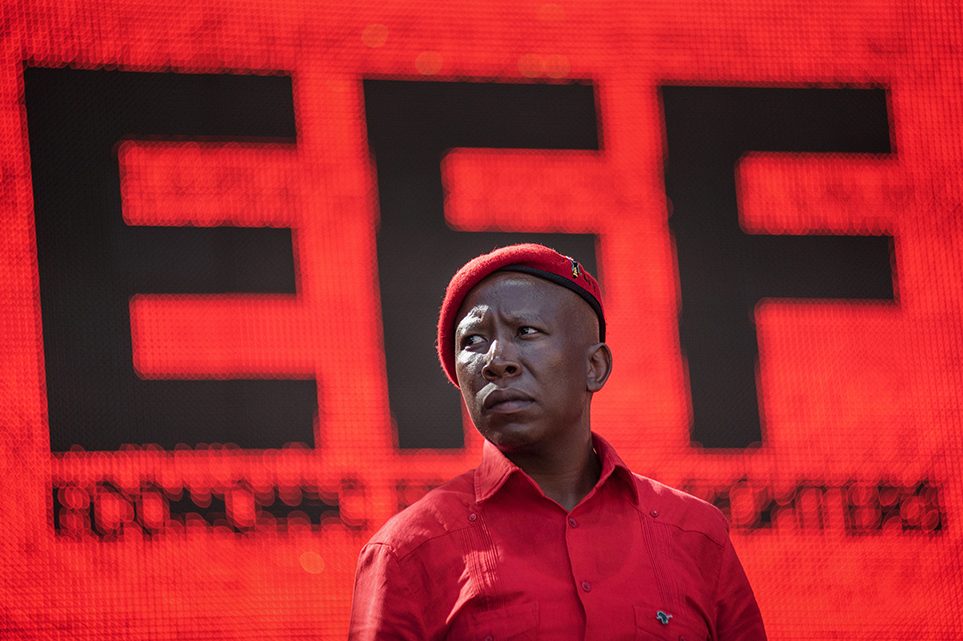
Malema urges Ramaphosa to focus on 24-hour clinics instead of bread handouts
A heated exchange in Parliament this week turned the spotlight back on one of South Africa’s most pressing issues: access to healthcare.
During an oral question session in the National Assembly of South Africa, Julius Malema challenged Cyril Ramaphosa to prioritise real improvements in the country’s struggling health system, particularly by ensuring clinics operate around the clock.
The Economic Freedom Fighters leader argued that South Africans need reliable healthcare services far more than symbolic gestures like food handouts.
His comments came during a sitting held at the Nieuwmeester Dome in Cape Town.
The proposal: clinics open 24 hours a day
Malema reminded Parliament that the EFF had already proposed a solution years ago.
In 2018, the party introduced a bill calling for clinics across South Africa to operate 24 hours a day, seven days a week.
The proposal, tabled by EFF MP Susan Thembekwayo, was eventually rejected by lawmakers in 2022 after concerns were raised about whether the government could afford the policy.
But Malema believes the idea is more relevant now than ever.
He argued that many communities particularly in rural areas struggle to access medical care after hours.
“People are not going to wait until 2030 to get sick,” he told Parliament, referring to the long timeline for implementing the National Health Insurance Act.
According to Malema, the country needs practical improvements to public healthcare right now.
Bread handout video sparks controversy
Malema’s criticism was also aimed at a recent political controversy that exploded on social media.
A widely shared video showed volunteers distributing loaves of bread under the banner of the African National Congress.
In the footage, one volunteer tells residents that each family would receive a loaf, describing the gesture as a sign that “ANC is life”.
Some of the volunteers were wearing party-branded clothing encouraging people to vote for the ANC.
The clip quickly went viral online, with critics accusing the party of using food distribution as a campaign tactic ahead of local government elections.
The incident involved ANC MP and deputy minister Bernice Swarts, although the party later distanced itself from the event.
ANC officials said the bread distribution was not an official campaign activity and had not been authorised by the organisation.
“People want clinics, not bread”
For Malema, the viral video symbolised what he sees as a deeper problem in South African politics.
He argued that politicians often focus on short-term gestures rather than long-term improvements to public services.
“People want clinics and health facilities that are in good condition,” he said during the parliamentary exchange.
The EFF leader also used the opportunity to highlight the condition of major public hospitals such as George Mkhari Academic Hospital in Gauteng and Tshilidzini Hospital in Thohoyandou, which he said need urgent upgrades.
Ramaphosa surprisingly agrees, in principle
In a rare moment of agreement across the political aisle, Ramaphosa acknowledged that Malema’s proposal had merit.
“You will be pleased to know maybe for the very first time that I agree with you,” the president told Parliament.
Ramaphosa said the demand for 24-hour clinics frequently comes up during his visits to rural communities.
In many areas, residents must travel long distances to major hospitals because local clinics close at night.
But the president said the challenge is not simply keeping doors open it is ensuring clinics have enough staff to operate safely.
“You cannot open a clinic and have an empty building,” he said.
Clinics would need sufficient nurses and ideally a doctor on standby to function properly.
The real obstacle: funding and staffing
Ramaphosa pointed to financial constraints as the biggest hurdle.
Despite training doctors and nurses, the government has struggled to employ enough medical professionals across the country.
He noted that many graduates complain they cannot find jobs despite years of medical training funded by the state.
The situation may improve slightly following the recent national budget.
During his February budget speech, Enoch Godongwana, South Africa’s finance minister, announced R21.3 billion in additional funding for the health sector over the medium term.
The funds are intended to help employ more doctors and address shortages in hospitals and clinics.
The bigger health debate still ahead
The discussion also unfolded against the backdrop of the ongoing debate around the National Health Insurance (NHI) plan.
Ramaphosa recently agreed to delay implementing sections of the law until the Constitutional Court of South Africa rules on legal challenges.
The court is expected to hear arguments from 5 to 7 May 2026.
Meanwhile, lobby group AfriForum has also launched a separate legal challenge seeking to have the NHI Act declared unconstitutional.
Presidential spokesperson Vincent Magwenya said that although the legal process may slow the rollout, government efforts to strengthen the health system will continue.
A debate that resonates with ordinary South Africans
For many South Africans, the debate in Parliament reflects a daily reality.
In rural towns and township communities, clinics often close by late afternoon, leaving residents with limited options if someone becomes seriously ill at night.
On social media, reactions to Malema’s comments were mixed.
Some users applauded the call for round-the-clock clinics, saying it addresses a real gap in the health system.
Others argued that the proposal would require massive investment in staffing, infrastructure and security.
What is clear, however, is that healthcare access remains one of the country’s most urgent challenges.
And if this week’s debate is anything to go by, the conversation about how to fix it is far from over.