News
Inflation expectations jump to 4.4% in Q2 survey as households and professionals revise forecasts
South African inflation expectations rose sharply in the second quarter, with the Bureau for Economic Research (BER) survey showing an annual average forecast of 4.4% for this year, up from 3.6% in the first quarter.
Survey snapshot
The BER’s second-quarter 2026 survey was conducted between 18 May and 4 June 2026. It reports an overall annual average consumer inflation expectation for the year of 4.4%.
Professional groups’ forecasts
The survey averages responses from three professional groups. Business executives expect inflation of 4.3% for the year, up from 3.7% in the first quarter and 3.9% in the fourth quarter. Trade union representatives forecast 4.3%, up from 3.8%. Economists also put their expectation at 4.3%, compared with 3.3% in the first-quarter survey. The actual average consumer inflation rate for 2025 was 3.2%.
Five-year outlook
The BER also collects five-year views. Economists raised their five-year expectation to 3.5% from 3.2%. Trade union officials revised their five-year forecast to 4.7% from 3.7%, while business executives increased theirs to 4.2% from 4.0%.
Household expectations
The BER surveys households separately. Households’ 12-month inflation expectation rose to 6.0% from 5.4%, and their five-year view climbed to 9.1% from 8.4%. The survey notes that households generally report more pessimistic inflation expectations than the professional groups.
What the survey says about recent drivers
The report links the rise in inflation expectations to the impact of higher fuel prices caused by the Middle East war, citing that development as a factor behind the second-quarter increase.
Policy relevance
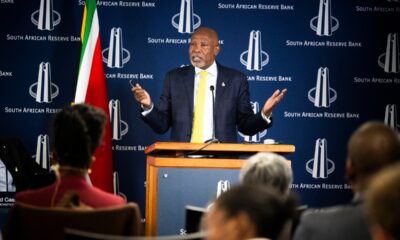
The BER survey has been commissioned by the South African Reserve Bank since 2001 and is one input the Reserve Bank’s Monetary Policy Committee considers when setting the repo rate. The survey measures inflation expectations and related variables such as wage expectations. The BER notes that if inflation expectations rise above the inflation target of 3%, it can influence wage demands and business pricing decisions, which in turn may affect monetary policy decisions.
Follow Joburg ETC on Facebook, Twitter, TikTok and Instagram
For more News in Johannesburg, visit joburgetc.com
Source: thesouthafrican.com