Business
Dubai’s proposed manufacturing park signals shift from re‑export hub to regional production base
A proposed Dubai power and energy equipment park and rising Chinese investment could move the UAE from a re‑export hub toward regional manufacturing and advanced industry.
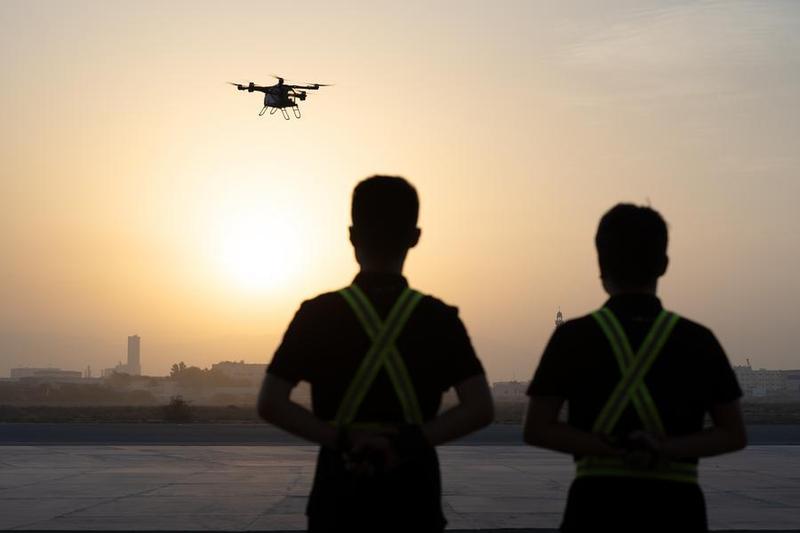
Dubai’s plan for a power and energy equipment manufacturing park marks a possible turning point in UAE–China economic ties, shifting the relationship from trade and re‑export toward industrial production, advanced manufacturing and green energy investment.
From gateway to production base
In July 2026, the Dubai Multi Commodities Centre (DMCC) and Hong Kong Tinkam Capital signed a memorandum of understanding to explore development of a power and energy equipment manufacturing park in Dubai. The proposed park is intended to attract Chinese companies across the value chain, particularly in advanced manufacturing, green technology and energy.
For decades Dubai’s role for Chinese firms has been largely logistical: ports, free zones and aviation infrastructure made it a hub for distribution. The UAE reports that roughly 60 percent of Chinese trade is re‑exported through its ports to more than 400 cities across the Middle East and North Africa. The new park would offer a different proposition using the emirate as a regional production base rather than only a distribution point.
How this fits UAE industrial strategy
The proposed development aligns with a broader national push to grow the industrial economy. The UAE’s Operation 300bn strategy aims to raise the industrial sector’s contribution to GDP from AED133 billion to AED300 billion by 2031, and to position the country as a global hub for future industries. Chinese manufacturing investment is presented in the source as fitting directly into that ambition.
Existing Chinese footprint in the UAE
China is already deeply embedded in the UAE’s commercial ecosystem. The DMCC now hosts more than 1,000 Chinese companies, including more than 130 technology firms, and Chinese membership at the DMCC grew by more than 16 percent in the year to October 2025. Chinese commercial activity in the UAE spans energy, logistics, finance, agriculture, technology, artificial intelligence and manufacturing.
Signs the model is moving beyond proposals
There are concrete examples of on‑the‑ground industrial investment. In Abu Dhabi, China Southern Glass announced a AED300 million investment in an intelligent manufacturing facility producing energy‑saving glass. The plant is expected to create 400 specialised and technical jobs and to supply markets across the UAE, the Gulf, Europe, Africa and the United States.
Potential regional implications
The strategic opportunity lies not just in attracting factories but in embedding them into the UAE’s wider industrial ecosystem. If the power and energy equipment park is realised, it could generate demand for local suppliers, logistics providers, engineering firms, maintenance services and skilled labour, and could facilitate technology transfer and partnerships between Chinese manufacturers and Emirati businesses.
According to the source, the ultimate measure of success will be whether investments produce lasting domestic capabilities: skilled employment, research and development, local suppliers, technology transfer and internationally competitive products.
What this could mean for supply chains
The article frames the development as part of a wider reorganisation of global manufacturing towards more resilient and diversified supply chains. It notes that Chinese firms are under growing pressure to internationalise production and that emerging markets seek greater access to industrial capabilities and higher‑value manufacturing. For China, the UAE offers a strategically located platform for international expansion; for Dubai, it is an opportunity to move further up the value chain.
Conclusion
The proposed Dubai manufacturing park is presented in the source as more than a single investment project: it could be a step in Dubai’s emergence as a manufacturing and technology bridge between China and the Global South, provided investments translate into durable domestic industrial capabilities.
Follow Joburg ETC on Facebook, Twitter, TikTok and Instagram
For more News in Johannesburg, visit joburgetc.com
Source: iol.co.za