News
Macpherson: Four collapses reveal systemic failures in South Africa’s construction sector
Public Works Minister Dean Macpherson says four recent building collapses that killed 17 and injured 24 expose weak enforcement, poor oversight and professional failings.
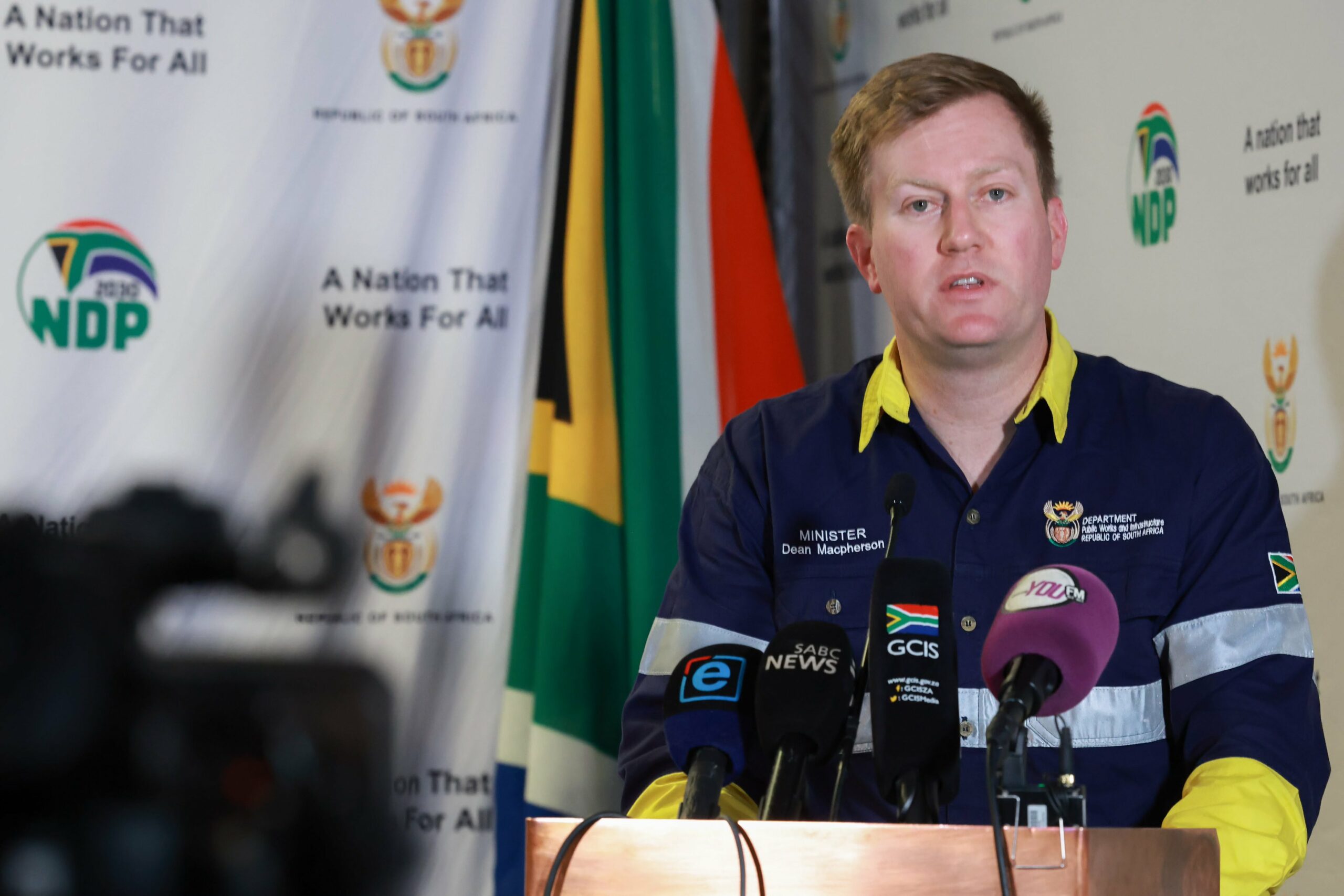
Public Works and Infrastructure Minister Dean Macpherson has told reporters that four recent building and structural collapses in South Africa exposed serious weaknesses in the country’s construction and regulatory systems, including unlawful construction, weak enforcement, inadequate municipal oversight and failures in professional accountability.
Who, what and when
The Council for the Built Environment carried out investigations into incidents in Verulam, Doornkop (Soweto), Sea Point and Ormonde. The four incidents occurred between December 2025 and March 2026, claimed 17 lives and left 24 people injured.
Verulam: construction outside the system
At the River Range Ranch Temple site in Redcliffe, Verulam, a five-storey building collapsed on 12 December, killing five people and injuring 11. Investigators found the building had no approved building plans, no construction work permit and no identified built-environment professionals responsible for its design and supervision. No complete structural drawings could be found and investigators were unable to establish a single technical cause of the collapse.
Macpherson said the building had been built “effectively outside the formal regulatory system.” He described the collapse as “a case of ignoring the law” and warned that “a building of this scale should never be capable of progressing so far without the necessary approvals, professional oversight and regulatory visibility.”
Doornkop: known risk, inadequate management
A residential structure in Doornkop collapsed after heavy rainfall on 28 December, killing three members of one family and injuring three others. The victims included a 60-year-old woman, her 24-year-old daughter and her one-year-old granddaughter. Investigators found the property stood on high-risk dolomitic land and concluded the most probable cause was a shallow sinkhole or doline beneath the building that led to loss of foundation support.
Investigators noted the area had been identified as unsafe before, with residents previously relocated and demolition work started. Macpherson said the incident revealed a failure to manage a known public safety risk: “Identifying a danger is not enough. Once government knows that land or a structure poses a serious risk to life, that risk has to be actively managed until it is resolved.” The investigators characterised Doornkop as “a case of not enforcing the law”.
Sea Point: temporary works and inspections
At the Magnolia residential development in Sea Point on 17 February, about 40 square metres of temporary formwork became unstable and failed, injuring four workers. The permanent structure did not collapse; investigators found the failure occurred after an incomplete and uninspected structure was prematurely loaded. Unlike some other incidents, the Magnolia development had complied with planning requirements and had professionals appointed.
Macpherson emphasised that paperwork alone was insufficient: “Compliance cannot simply exist in documentation. Every safety control has to operate at the point where work is actually being performed.”
Ormonde: technical and regulatory shortfalls
The Ormonde industrial building collapse in Johannesburg on 2 March killed nine workers and injured six while concrete topping was being placed on suspended floors. Engineers identified significant deficiencies in the structural steelwork supporting the floors, raising concerns about connection details, structural members and the overall configuration. Investigators concluded the beams and columns supporting the affected slabs “effectively had no capacity to carry the additional load being applied during construction.”
Regulatory lapses were highlighted: no application for building approval had been submitted to the City of Johannesburg before the collapse, with an application lodged only after the incident. The investigation also raised concerns about professional arrangements, including the involvement of an engineer who had previously been deregistered by the Engineering Council of South Africa. Investigators described Ormonde as “a disaster waiting to happen.”
Common themes and recommended responses
Macpherson said the investigations did not point to a lack of construction legislation but to inconsistent implementation. He summarised the central problems as “inconsistent implementation, inadequate oversight, weak enforcement and non-compliance.”
He warned against treating plan approval as the end of oversight: “Building control cannot stop when a plan receives a stamp.” Authorities must know when construction begins, whether work matches approved plans, who has accepted professional responsibility and whether inspection and certification systems are functioning.
The reports recommend stronger information-sharing between municipalities, the Department of Employment and Labour, the National Home Builders Registration Council, professional councils and other regulators, noting that regulators often hold different pieces of information about the same project.
They also call for stronger sanctions against owners, developers, contractors and professionals who ignore statutory requirements. Macpherson said: “People cannot regard compliance with building legislation as optional because the financial consequences of breaking the law are less significant than the financial benefits of continuing construction. That balance has to change.”
Next steps and broader implications
Macpherson said the findings will be referred to municipalities, professional councils, national departments and law-enforcement authorities where necessary, but stressed the reports “do not determine criminal or civil liability.” He said those determinations rest with investigative authorities, professional disciplinary processes and the courts.
He confirmed the Council for the Built Environment is supporting the government’s response to a separate July collapse of a retaining wall at the Nazareth Baptist Church in eBuhleni, Inanda, and that that investigation is at an early stage and is not part of the four reports released.
Macpherson closed by returning to the human cost: “Seventeen people died in the four incidents before us today. That number should remain at the centre of our response.” He said government action must focus on closing regulatory gaps, strengthening enforcement, improving professional accountability and ensuring known risks are not left unresolved so that construction sites are safer for workers.
Follow Joburg ETC on Facebook, Twitter, TikTok and Instagram
For more News in Johannesburg, visit joburgetc.com
Source: iol.co.za