News
Nepal requests DNA from families of six South Africans missing in August floods
Nepal has asked direct families of six missing South Africans for DNA samples after the 26 August floods that killed over 1,000 and left thousands missing.
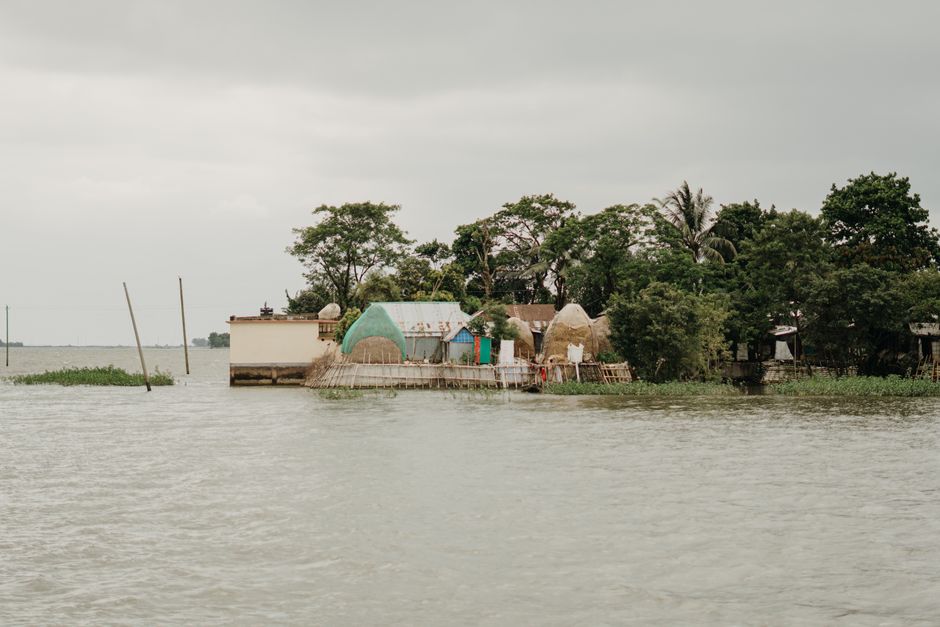
Nepali authorities have requested DNA samples from the direct families of six South Africans who remain unaccounted for after devastating floods that struck the Nepal–China border on 26 August, officials said.
Who is missing
The six South African citizens named by authorities are: Surendranath Maharaj, 74, and his wife Anita Devi Maharaj, 67; Vivaganathan “Tony” Pillay, 66, and his wife Janet Pillay, 56; Bavika Ramjee, 43; and Terricia Govender, 33.
Scale of the disaster and search efforts
The floods across Nepal and China caused widespread devastation. Initial recovery operations retrieved more than 1 000 bodies, and authorities say thousands of people remain missing, including tourists, pilgrims and hydropower workers.
The Nepali government allowed four friendly countries India, China, Australia and South Korea to assist with rescue operations in the affected zone. Countries and organisations worldwide have pledged humanitarian aid, the report said.
South African diplomatic response
South African High Commissioner to India, Nepal and Bangladesh, Professor Anil Sooklal, said the mission has been liaising with Nepali authorities through South Africa’s honorary consul in Nepal, Pradeep Kumar Shrestha. He said Nepali authorities recently requested DNA samples and that the High Commission arranged for families to hand samples over a few days ago.
“We continue to follow closely. The families are in touch with us but it’s a slow process on the side of the Nepalis, given the large number of persons who still are missing. Recovery efforts are ongoing but they keep us informed if and when they do identify bodies,” Sooklal said.
Sooklal said the High Commission has assisted families who contacted them and helped one family travel from Nepal to Tibet after China recovered personal belongings, by connecting them with embassy staff in Beijing.
“The first thing they do is contact the embassies of those nationals. But our honorary consul has staff still in that area. And we liaise with him regularly. He keeps us updated on the progress that’s going on but it’s a very complex and slow process as well, and we have to understand the scale of it.”
He also said a number of countries continue to assist the Nepal government and described international search-and-rescue teams on the ground.
“India, China and Australia are there with their best equipment, technology, search and rescue teams, including K9 units. They are quite thorough, and these countries also have some of the best search and rescue outfits in the world,” Sooklal said.
Families searching and support efforts
Linda Govender, mother of Terricia Govender, travelled to Nepal to search for her daughter. In a Facebook post she said 21 days had passed but her hope had not diminished.
“Every morning I wake with the same prayer. Please let today be the day my daughter comes home,” Govender wrote. “I refuse to let distance, silence or time convince me to stop searching. A mother’s heart does not have an expiry date on hope. As long as there is a possibility, I will keep looking. As long as there are unanswered questions, I will keep asking. As long as Terricia is not home, mummy will not stop.”
Govender described flying by helicopter towards the place where her daughter was last seen as an “incredibly emotional day” and said she needed to see the area for herself.
Other unaccounted groups and ongoing identification work
The Isha Foundation said in a Facebook post that 77 participants of the Kailash Manasarovar Sojourn and three volunteers remain unaccounted for. The foundation said authorities have indicated that identification work at the site is ongoing and may take considerable time, given the conditions.
The foundation said a team of 25 volunteers in Nepal is supporting search-and-rescue efforts by coordinating with local authorities, visiting hospitals and mortuaries, and assisting families with shipping personal belongings.
Officials emphasised that identification and recovery are complex and slow due to the scale of the disaster; embassies are being contacted as bodies are identified.
Follow Joburg ETC on Facebook, Twitter, TikTok and Instagram
For more News in Johannesburg, visit joburgetc.com
Source: iol.co.za