News
Watch: Teens’ viral phone ban debate hits Constitutional Court
Learners from Umtata High School and Klaas Mothapo Secondary School were crowned winners of the 15th Annual South African National Schools Moot Court Programme, after a grand finale at the Constitutional Court in Braamfontein on 4 October that left online viewers buzzing over the sharpness of their constitutional arguments on social media and phone bans, Joburg Etc reports.
A courtroom drama with real judges
The final saw Justice Leona Theron of the Constitutional Court presiding, alongside fellow Constitutional Court Justices Nambitha Dambuza and Annali Basson and Judge Moleboheng Mdalana-Mayisela of the Gauteng Division of the High Court. The winning respondents’ team comprised Nathi Thetha and Luvumo Bacela from Umtata High School in the Eastern Cape, and Matsie Maenetja and Reneilwe Ncumalo from Klaas Mothapo Secondary School in Limpopo.
Runners-up honours went to Yibanathi Mzili and Ahlume Ntaka of Ndabankulu Senior Secondary School in the Eastern Cape, and Lesedi Nakedi and Mica’h Peter Arendse of Tygerberg High School in the Western Cape. Mzili also claimed best oralist, with Justice Theron describing her as ‘dynamite, with a huge voice and stature’.
#MootCourt
The 2026 National Moot Court Programme concludes at the Constitutional Court, Johannesburg.
All rise!
@DOJCD_ZA @DBE_SA https://t.co/lNf5bkzn7t
SAHRCommission (@SAHRCommission) October 4, 2026
What the learners were actually arguing
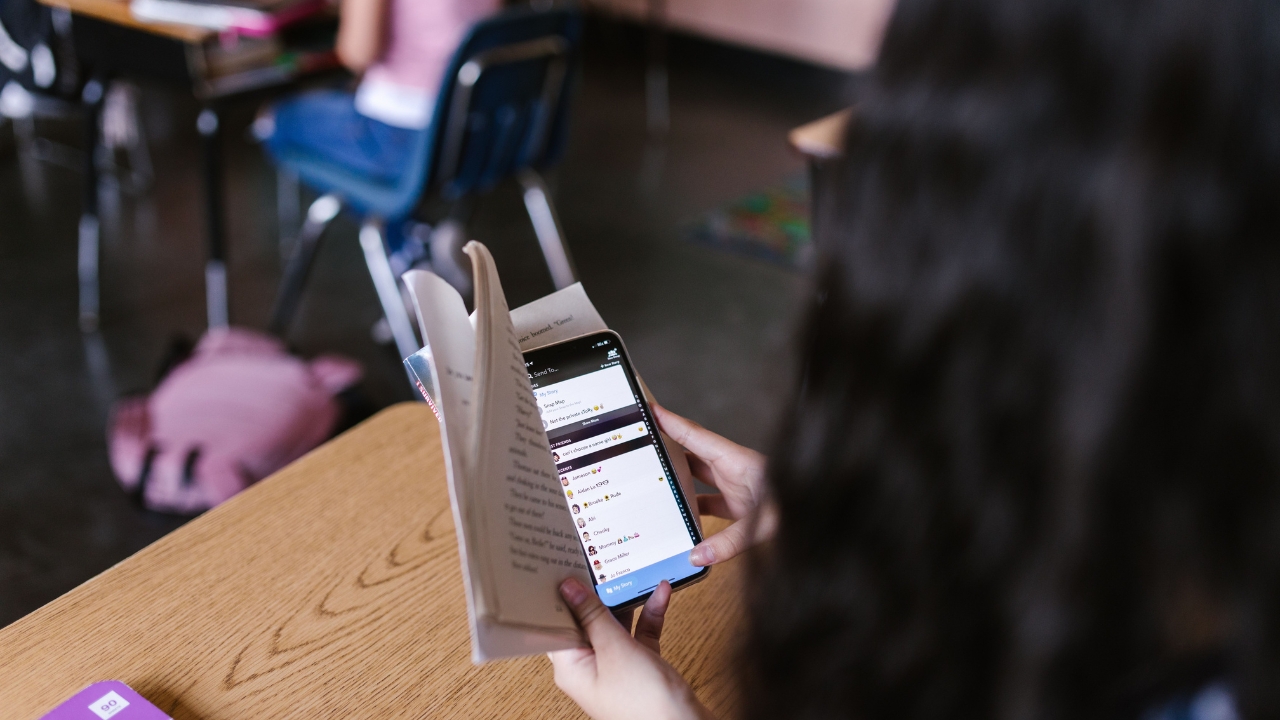
This year’s moot problem asked whether it is constitutional for a school to include a clause in its Cell Phone and Internet Policy restricting learners of a specific age from accessing social media on school premises during school hours, the clip that went viral captured exactly this clash playing out live.
Pressed by the bench on whether learners simply could not read, one student countered that ‘some learners are visual learners, my justice’, before a fellow team member added that a mismatch often exists because ‘sometimes the teacher’s teaching style does not match the learner’s learning style’.
The team also reached for international precedent, submitting that in ‘the persuasive US case of Tinker v. Des Moines Independent Community School District of 1969, the court assertively stated that learners do not shed their constitutional rights at the school gate‘. They went further, arguing that restricting access during school hours ‘violates the inherent dignity these learners have under Section 10 of the Constitution’.
Why it struck a nerve online
The SAHRC framed the exercise as civic education, noting that moot court ‘plays an important role in teaching learners about human rights, constitutional literacy and active citizenry’. But reactions beneath the clip split sharply. One widely seen comment dismissed the debate outright, arguing that ‘in other countries kids are learning how to built what can boost their economy’ while South African learners debate policy instead.
Another took aim at the policy gap itself, saying a government ‘can’t even implement social media policy in schools’ yet expects learners to litigate it. Others picked up the substance of the argument: one commenter asked whether ‘our schools [are] flexible enough to identify those differences and help each child flourish’, while a dissenting voice insisted ‘school hours are for learning, not scrolling’, framing restriction as a boundary rather than a rights violation.
A bigger platform than just one debate
Now in its 15th year, the programme has grown into one of South Africa’s most visible pipelines into constitutional literacy. In his opening remarks, Commissioner Tshepo Madlingozi paid tribute to the late Professor Christof Heyns for his vision of high school learners participating in the moot court as part of human rights advocacy and constitutional literacy. Basic Education Minister Siviwe Gwarube urged learners to interrogate what justice means in practice, while Justice and Constitutional Development Minister Mmamoloko Kubayi used her keynote to remind the finalists that the Constitutional Court is not merely a courtroom; it is a shield of society’s most fundamental rights.
Take a peek at the viral footage shared by SABC News
WATCH | Four schools debated the constitutionality of restricting learners’ access to social media during school hours. Watch the full report on the SABC News YouTube channel. https://t.co/um8uxmAD6e
SABC News (@SABCNews) October 6, 2026