News
Zille warns Joburg voters split opposition vote could keep ANC in power
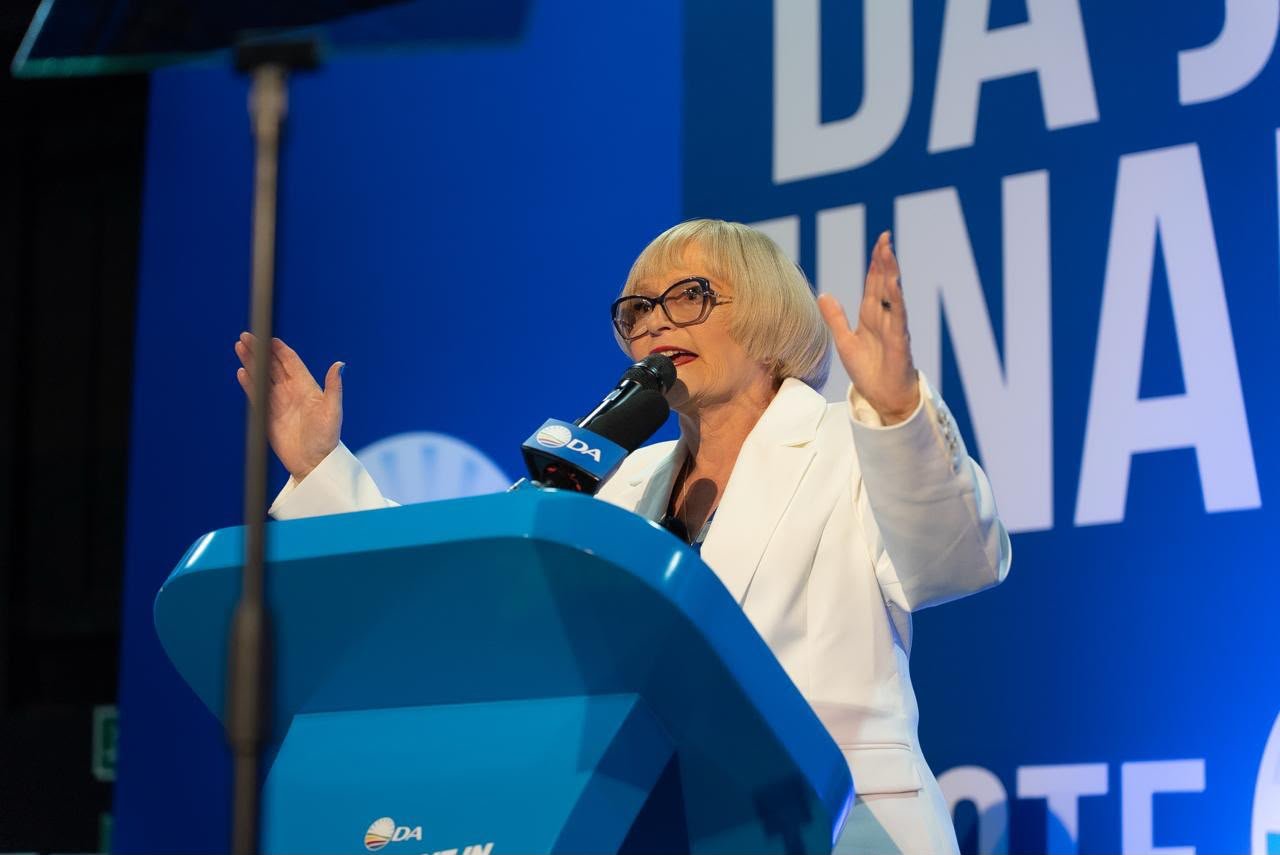
DA mayoral candidate Helen Zille warns Johannesburg voters that a fragmented opposition vote in next month’s local elections could allow an ANC-led coalition to retain influence.
The stakes in Joburg
Johannesburg’s local contest is unfolding amid deep concern over municipal decline, a heavy Eskom debt burden and frequent governance disruptions. Political parties campaigning in the city have made service delivery, corruption and economic revival central themes of their messages.
Zille’s warning on a split vote
Zille told author and broadcaster Sizwe Mpofu-Walsh that residents face a stark choice and that the real fight for control of the city is between the DA and the ANC. She said the election will determine which party is the largest force in any coalition that follows.
“The choice in this election is the ANC or the DA. One of us is going to be the biggest party in a coalition,”
Her central argument was a tactical one: even if the DA emerges as the single largest party by share of the vote, a number of smaller opposition parties aligning with the ANC and its allies could still form a governing coalition that sidelines the DA.
“Even if we get 40%, we could very well end up in opposition. We will be the biggest party by far if we get 40%,”
Coalition arithmetic and practical implications
Zille emphasised that coalition mathematics will be decisive in Johannesburg, where no party is widely expected to win an outright majority. She said a stronger DA vote would improve the party’s negotiating position in coalition talks.
“If we get 45%, then we can do a coalition with some smaller parties,”
Analysts and party strategists frequently point to the importance of post-election negotiations in hung councils. In that context, Zille’s warning is aimed at persuading voters that every additional vote for the DA increases its leverage and reduces the chance of an ANC-led alliance taking control.
Refusing an ANC partnership
Zille pushed back against calls for the DA to consider a coalition with the ANC, arguing such an arrangement would undermine efforts to tackle corruption and maladministration in the city.
“There are lots of people pushing us hard to do a deal with the ANC. But I need to ask this question: Please tell me how we get rid of corruption in coalition with the ANC.”
She said a determined anti-corruption drive, supported by witness protection and independent investigations, would be necessary to expose and hold wrongdoers to account, and she questioned whether that would be possible with the ANC in government.
“And with the ANC in government, I just don’t see how it is going to be possible to expose it all, and then to cut it out root and branch.”
Other parties and the wider contest
The contest in Johannesburg includes several other parties casting themselves as alternatives. ActionSA has positioned itself around urban renewal and inner-city management, and the EFF is campaigning on a more radical economic and land-reform platform. The MK Party and Rise Mzansi are also contesting the council. Zille warned that growing support for smaller opposition parties could have the unintended effect of enabling an ANC-led coalition.
What Zille says voters should consider
Zille framed the decision at the ballot box as consequential for residents frustrated with the pace of change under ANC leadership in the city. She suggested many voters who have rejected the ANC would see a return to ANC-backed governance as a reversal of their mandate.
“Having rejected the ANC so powerfully, to then see it coming back,”
Over the weekend Zille said the city needed “its own Madlanga moment” and called for an independent investigation into corruption within the municipality, positioning that as part of a broader effort to restore governance and public trust.
Why this matters
Coalition politics increasingly shapes outcomes in metros where no single party commands a majority. The immediate consequence is that voters must weigh not only which party they prefer, but how their choice affects the post-election arithmetic that determines who governs. Zille’s message is tactical: concentrate enough support behind the DA to prevent an ANC-led alliance from forming.
As campaigning intensifies, the practical effect of Zille’s warnings will be tested at the ballot box. The result in Johannesburg will be watched closely as a sign of whether voters prioritise consolidation behind a single opposition party or continue to distribute support among several challengers a distribution Zille warns could return ANC influence to the city.
Follow Joburg ETC on Facebook, Twitter, TikTok and Instagram
For more News in Johannesburg, visit joburgetc.com
Source: citizen.co.za