News
Mpofu challenges investigating officer in Zuma-Sambudla terrorism trial
Dali Mpofu challenged Colonel Bheki Nazo’s evidence in Duduzile Zuma-Sambudla’s terrorism trial, saying the officer relied too heavily on the complainant.
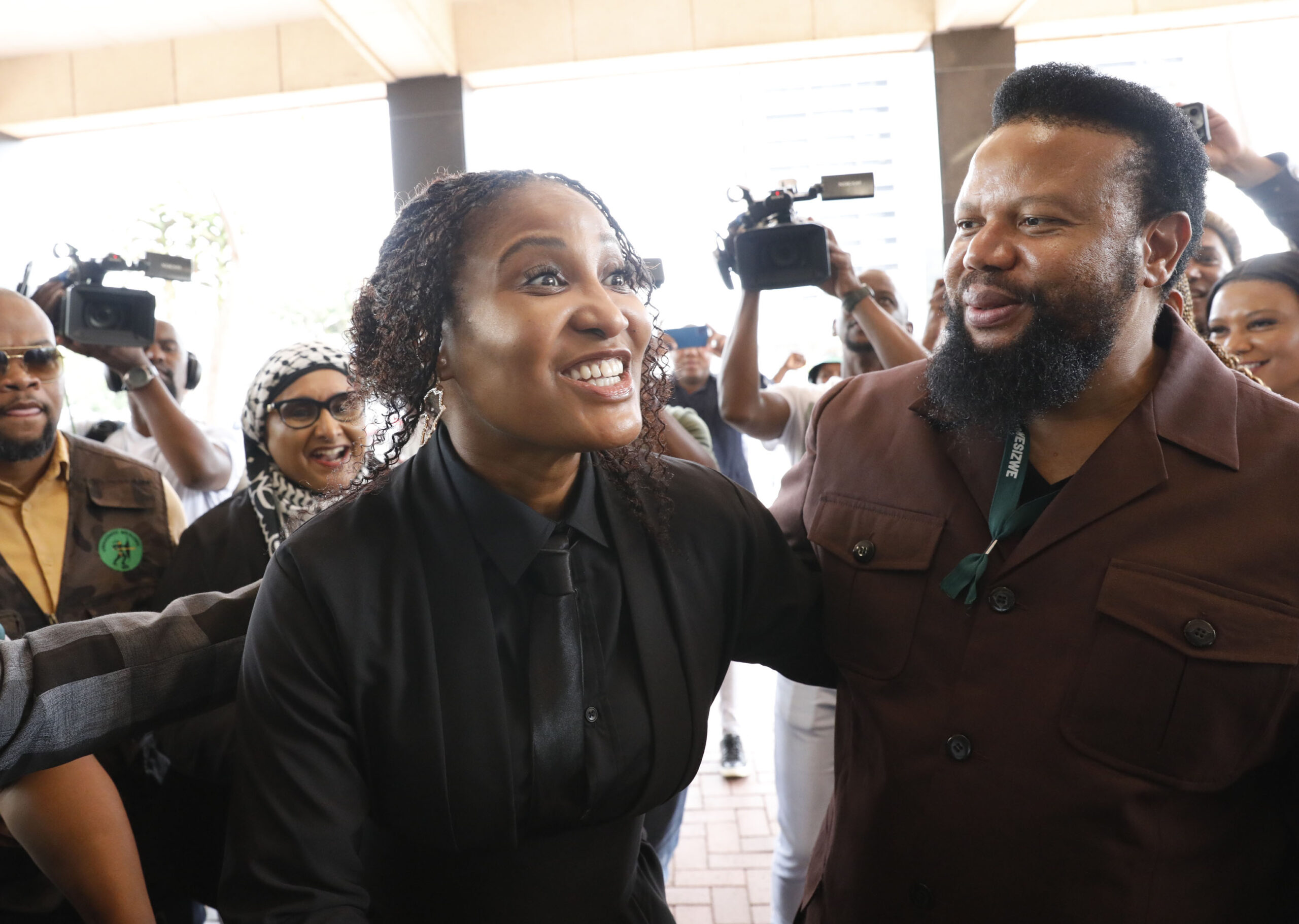
Mpofu represents Zuma-Sambudla, a former uMkhonto weSizwe (MK) party MP who has pleaded not guilty to one count of incitement to commit terrorism and two counts of incitement to commit public violence.
The charges relate to the deadly July 2021 unrest in KwaZulu-Natal and Gauteng, which followed the incarceration of her father, former president Jacob Zuma, for contempt of court. The state alleges that social media posts by Zuma-Sambudla encouraged participation in the violence and contributed to its escalation.
Questions over the investigating officer’s affidavit
Colonel Bheki Nazo, a commander in the South African Police Service’s KwaZulu-Natal serious organised crime unit, is the investigating officer in the case.
Much of Tuesday’s cross-examination focused on what Mpofu described as an inconsistency in Nazo’s affidavit. The lawyer drew attention to paragraph 17, where Nazo stated that he believed Zuma-Sambudla had conspired with others, and paragraph 20, where he expressed concern that she would continue inciting people unless she was arrested.
Mpofu questioned why Nazo regarded one of the statements as a mistake while standing by the other, despite both appearing in the same document.
“I’m saying to you that you are busy misleading this court and actually being untruthful,” Mpofu told Nazo.
He continued: “The first one is a mistake, while the second one is not a mistake, and you are the same person making both statements in the same document. What is that?”
The exchange placed the officer’s initial assessment of the allegations under scrutiny. In a criminal trial, an investigating officer’s account can be examined not only for what evidence was collected, but also for how conclusions were reached and whether competing possibilities were considered.
Mpofu accuses Nazo of being a conduit
Mpofu also questioned whether Nazo had independently formed his views about Zuma-Sambudla or had relied on information and conclusions supplied by Sarah-Jane Trent, a former employee of forensic examiner Paul O’Sullivan and the complainant in the case.
Trent previously testified that she laid a complaint and deposed an affidavit on 14 July 2021.
The defence lawyer suggested that Nazo had signed off on a prepared statement without properly scrutinising its contents. Mpofu argued that the officer had effectively formed his views about Zuma-Sambudla before the investigation had begun.
“In other words, you were just a conduit pipe to parrot Sarah-Jane Trent’s views,” Mpofu said.
The phrase captured the central criticism raised by the defence: that the investigating officer may have repeated the complainant’s conclusions instead of independently assessing the allegations and the circumstances in which they were made.
Political motivation raised in court
The cross-examination then turned to Trent’s professional association with O’Sullivan. Mpofu linked O’Sullivan to people he described as political rivals of Zuma-Sambudla’s father.
Nazo agreed that he had not known Trent worked for O’Sullivan. However, he rejected the suggestion that this information would have changed the way he approached the investigation.
Mpofu put it to Trent that her actions against Zuma-Sambudla were politically motivated because she worked for O’Sullivan, whom he described as being known as a friend or associate of, among others, President Cyril Ramaphosa.
Nazo maintained that an investigation should be guided by evidence rather than assumptions about a complainant or the people with whom they are associated.
“The motive can only be established when the investigation has started. So, one wouldn’t have started the investigation,” Nazo told the court.
He added: “That would be incorrect. We don’t look at the person; we look at the facts.”
Mpofu rejected that explanation, arguing that an investigating officer should consider the possible motives of a person bringing allegations to the authorities. He described Nazo’s evidence as “fanciful” and suggested that the officer had failed to exercise independent judgment.
Mpofu also accused Nazo of having acted “like a robot” rather than critically examining the allegations.
Judge asks why Zuma-Sambudla was singled out
Judge Mbuzeni Mathenjwa intervened during the exchange and asked whether Nazo had questioned why Trent had singled out Zuma-Sambudla from among the thousands of people who participated in the July 2021 unrest.
Nazo said he had asked the complainant why she submitted her affidavit and what had driven her to do so.
“I asked her, my Lord, to say, ‘What is it that drove you to submit this affidavit?’” the officer said.
The exchange highlighted the different approaches taken by the prosecution and defence to the complainant’s role. Mpofu focused on whether her reasons and associations should have been investigated at the outset, while Nazo maintained that the facts and available evidence should guide the investigation.
Defence says testimony may hurt the state’s case
Earlier in the proceedings, Mpofu questioned the state’s decision to call Nazo as a witness. He noted that the state had initially indicated that it would not call the investigating officer before later reversing that position.
Mpofu suggested that Nazo’s evidence was more useful to the defence than to the prosecution.
“Actually, it’s hurtful to the state,” Mpofu said.
Nazo responded: “I have no comment.”
The testimony is significant because the defence is using the investigating officer’s evidence to question the foundation of the state’s case, including the way the allegations were assessed and the extent to which the complainant’s account influenced the investigation.
At the same time, the allegations against Zuma-Sambudla remain before the court and have not been proved. She has pleaded not guilty to all the charges.
The trial is scheduled to continue on Thursday, 28 October 2026.
Follow Joburg ETC on Facebook, Twitter, TikTok and Instagram
For more News in Johannesburg, visit joburgetc.com
Source: citizen.co.za