News
Cape Town’s Data-Centre Boom Faces Pushback Over Water and Power
Activists want Cape Town’s data-centre expansion paused, warning that weak regulation could deepen pressure on scarce water, power and local communities.
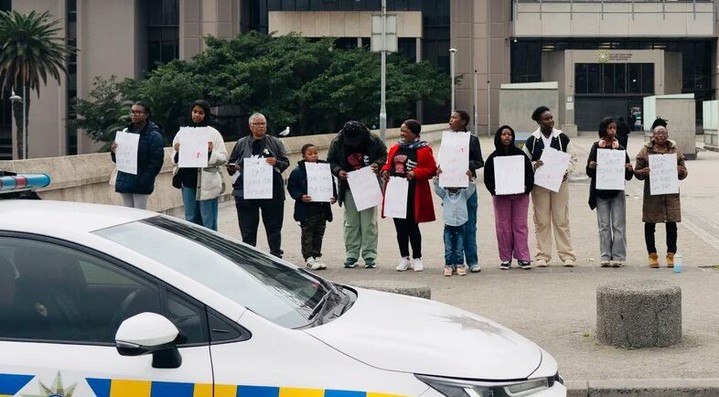
Community concerns over land and basic services
In Barcelona, residents depend on a communal tap for water. Older people sometimes pay young boys a few rand to collect it for them, highlighting the contrast between the community’s limited access to services and the scale of infrastructure associated with hyperscale data centres.
Housing Assembly activist Kenneth Matlawe, who lived in Barcelona for 15 years, said the rezoning was directly connected to questions about land, water, sanitation and the benefits of development.
“It’s a direct land issue. It affects the water and sanitation policy. It affects socio-economic development because any form of development must benefit the community,” Matlawe said.
Housing Assembly has joined UK non-profit Foxglove and other organisations in appealing the rezoning. The appeal was heard this month, with a non-binding recommendation expected within 90 days.
The rezoning could make it possible for Equinix to develop the site near the airport, but it does not confirm that a data centre will be built there. Equinix managing director Sandile Dube said the company had no immediate plans to develop the land.
Dube said that if a project were to proceed, it would follow the required process and take local community concerns into account.
Why data centres are under scrutiny
Data centres house the computing equipment and digital infrastructure that support online services, cloud platforms and increasingly artificial-intelligence applications. These facilities can require substantial amounts of electricity, while some cooling systems also use significant quantities of water.
South Africa already has more than 60 data centres, described as the highest number on the continent. Cape Town has around a dozen facilities, and the city has approved licences for five more.
That expansion is being encouraged by the government, which views data-centre investment as part of South Africa’s role as “Africa’s digital gateway”. Civil society organisations, however, argue that growth should not move faster than the rules needed to manage its environmental and social effects.
Housing Assembly and Extinction Rebellion asked the Cape Town mayor in a September petition to halt new development until “clearly defined, enforceable regulations and standards are in place to govern this rapidly expanding industry”.
Legal Resources Centre attorney Saadiyah Kadwa, who represents the organisations, said the concern extended beyond one proposed site or one city.
“If we need to move forward at breakneck speed to roll out the red carpet and let industries build data centres… we need to have proper understanding of what the law allows and regulation needs to happen,” Kadwa said.
“It’s not just Cape Town, it’s the entire South Africa,” she added.
Water use and cooling systems
The groups told the South African Human Rights Commission that hyperscale data centres could use more than 4.4 billion litres of water each year if a standard cooling method were used. They said that amount was equivalent to the annual water use of more than 18,000 households.
The figures have particular significance in Cape Town, where water supply remains a highly sensitive issue. The city narrowly avoided a planned “Day Zero” shutdown in 2018 and could reportedly face restrictions from December as the warming El Niño weather pattern develops.
Equinix said its facilities use dry cooling, which requires minimal water, and that the company aims to use “biorenewable” energy. The company said those measures are intended to reduce pressure on local water resources and electricity grids.
The debate demonstrates why the impact of a facility cannot be assessed only by its physical footprint. The relevant questions can also include how much power and water it requires, how its cooling system operates, what backup generation it uses and how its demand combines with other facilities in the same area.
Electricity demand and questions about jobs
Pitso Tsibolane, a senior lecturer in information systems at the University of Cape Town, told AFP that a 160-megawatt data centre could use approximately 1.4 billion kilowatt-hours of electricity a year when operating at full load.
Supporters of data-centre investment often point to construction activity and the possibility of employment. But Tsibolane said these facilities are among the least labour-intensive buildings in the economy once they are operating.
Equinix said its facility outside Johannesburg employed about 750 people during construction, while only 26 permanent staff members remained once the centre was operational. The figures have intensified questions about whether the long-term economic benefits of data-centre expansion will be distributed widely enough to justify its infrastructure demands.
Calls for a dedicated legal framework
Digital technologies minister Solly Malatsi said data centres must comply with existing building and environmental laws, while prioritising the self-provision of electricity and water. Activists and researchers argue that those requirements do not provide the level of sector-specific oversight needed for large hyperscale projects.
Tsibolane said a dedicated legal framework should require developers to disclose their expected electricity demand, water use, cooling design, backup generation and cumulative impact before approval. He also said those conditions should be enforceable.
“Serious investors are not deterred by clear rules,” Tsibolane said.
That principle sits at the centre of the disagreement. The issue is not simply whether Cape Town should participate in the digital economy, but whether development can take place without worsening unequal access to essential services or placing unexamined demands on scarce resources.
For communities such as Barcelona, the rezoning appeal has therefore become part of a larger debate about what infrastructure investment should deliver. Until the process is concluded, the proposed land-use change remains contested, while calls for clearer national standards continue.
Follow Joburg ETC on Facebook, Twitter, TikTok and Instagram
For more News in Johannesburg, visit joburgetc.com
Source: iol.co.za