News
Dr Iqbal Survé Stands Firm in Face of Sustained Pressure as Media Owner
Dr Iqbal Survé vows to stand strong against sustained attacks faced as a media owner, defending media freedom and democracy in South Africa.
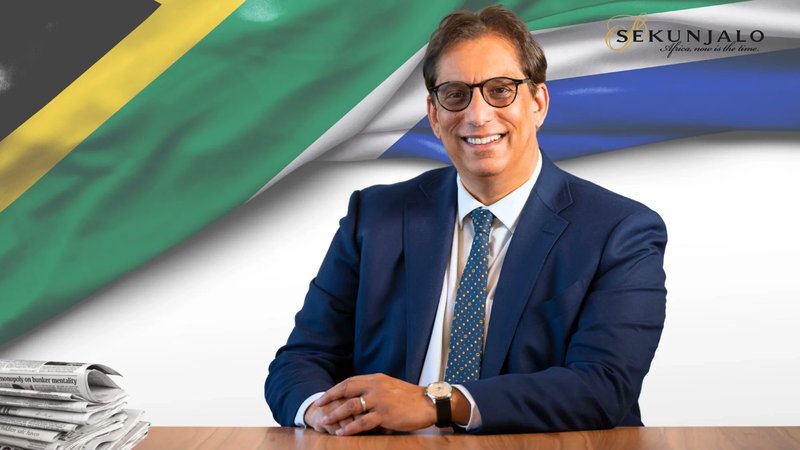
Defending Media Freedom in the Public Eye
Dr Iqbal Survé, chairman of Survé Group Holdings and owner of Independent Media, has reaffirmed his commitment to media freedom and democracy amid ongoing challenges and personal attacks since acquiring Independent Media in 2013. Speaking after the Nelson Mandela Foundation’s annual lecture in Cape Town, Dr Survé addressed both the difficulties he has faced and the motivations that continue to drive him as a prominent media proprietor in South Africa.
Inspiration Drawn from Global and Local Leaders
The occasion for Dr Survé’s reflections followed a lecture by former Colombian president and Nobel Peace laureate Juan Manuel Santos. Dr Survé noted his previous encounter with President Santos at the World News Media Congress in Cartagena, where themes of media freedom and peace were at the forefront. For Dr Survé, the connection between democracy, peace, and an independent press is inseparable. He emphasised that, “You cannot have a democracy in which only certain voices are permitted to be heard.”
Recalling his own upbringing – selling newspapers on the streets of Kenilworth as a boy – Dr Survé spoke of the formative effect that exposure to selective representation in the media had on him. He shared, “Information, I understood, is power. That is why, when I bought Independent Media in 2013, I did not see it as a business deal. I saw it as a chance to give a voice to the people I grew up among.”
Facing Systematic Attacks Across Sectors
Dr Survé detailed a series of coordinated challenges faced by himself, his family, and his companies since 2013. He claimed that these efforts were not criticisms of journalism or governance, but rather calculated moves to pressure him into relinquishing control of Independent Media to politically connected figures.
“I did not give up. I did not sell. And so the attacks came from every direction at once,” he stated.
Economic and Reputational Targeting
- Business operations came under strain through what he described as “false accusations,” targeting companies with established histories of employment and compliance.
- Banking access was restricted for black-owned businesses associated with his name, as major South African banks closed accounts without court findings of wrongdoing. Dr Survé cited a 2022 Competition Tribunal finding supporting a prima facie case that banks had acted in concert, asserting, “That was not paranoia on our part.”
- The credibility of his media outlets was also undermined through coordinated efforts, including allegations spread in the media and within the intelligence environment, as well as an advertising boycott he says came from both government and private sector elites.
Use of State and Regulatory Structures
He recounted raids on company offices and repeated trips to court to seek fair treatment, noting that these actions, when carried out by institutions meant to be neutral, raise questions about their independence. Dr Survé also referred to the Mpati Commission, which recommended further investigations but made no findings of wrongdoing against him or his companies. He observed that some original testimony against him was later changed in court without receiving equivalent media coverage.
Media Narrative and Public Perception
Highlighting the sheer volume of media scrutiny, Dr Survé claimed that thousands of articles have been published about him and his companies, often relying on repeated allegations and unnamed sources. He asserted, “That is not journalism, it is a covert campaign.” He further argued that the online spread of accusations has shaped public perception through search engine results, regardless of court findings.
Physical and Personal Toll
Dr Survé revealed that the consequences have included not just reputational damage, but also threats to his personal safety over the years. While he has generally chosen not to discuss these threats, he acknowledged their existence and persistence.
Challenges in Engaging with the Media
A recurring obstacle, according to Dr Survé, has been what he calls “strategic silence” from much of the media landscape. He claims that either his perspective is dismissed if published within his own media outlets or ignored altogether by others, making it difficult to offer a public response. “When a newsroom chooses, again and again, not to carry the other side, its silence is not neutral. It is complicity,” he stated, echoing themes raised in the Mandela lecture.
Understanding the Broader Implications
Dr Survé painted a picture of a tightly interconnected campaign: an accusation surfaces in the media, is referenced by regulators, results in banking difficulties, and then feeds back into further negative coverage perpetuating a cycle regardless of formal findings. He pointed out that corrections and clarifications rarely receive prominent attention, helping accusations persist in the public domain.
“No court is needed at any point. No finding of wrongdoing is ever required. The story proves itself, and then it lives forever.”
The Human Impact
Reflecting on the personal cost, Dr Survé spoke of the pressure placed on both his family and his employees, sharing concerns about salaries during banking restrictions and the stigma faced by those choosing to work with his companies. He insisted he does not seek pity, but believes it important to articulate his experience: “Many South Africans paid a far higher price for our freedom than I have. I say it because, after all these years, people deserve to hear it from me.”
Was It Worth It?
Asked if the struggle was worth it, Dr Survé described the difficulty in standing against what he called tyranny, reinforcing that his battle was larger than individual interests. “What was under attack was never only me. It was media freedom, and with it our democracy. If a black-owned media group can be broken because it refuses to toe a line, then nobody’s media in this country is truly free, and the poor, the forgotten and the voiceless lose one of the few platforms that ever tried to speak for them.”
He shared his admiration for Nelson Mandela and others who endured reputational attacks to make a stand for justice and transparency, noting how history eventually favours those who take such risks.
Resolute Commitment to Justice and Democracy
Concluding his remarks, Dr Survé firmly declared: “I will not be intimidated. Not as a media owner, not as a businessman, and not as a South African who fought for this democracy before it existed. Those who tried to break me expected me to give up a long time ago. I did not. I know which side of history I am on.”
His position highlights the ongoing debate about media freedom and democracy in South Africa, with Dr Survé maintaining that a diverse and independent press is vital for representation, social justice, and the very health of the nation’s democracy.
Follow Joburg ETC on Facebook, Twitter, TikTok and Instagram
For more News in Johannesburg, visit joburgetc.com
Source: iol.co.za