News
Ramaphosa Urges Political Unity as Hung Councils Trigger Coalition Negotiations
President Ramaphosa calls for collaboration among political parties as 127 hung councils emerge post-2026 elections, urging focus on service delivery.
Hung Councils Set Coalition Scene
President Cyril Ramaphosa has called on South Africa’s political parties to cooperate in forming stable municipal councils, as a record number of 127 councils emerged hung after the 2026 local government elections. With no single party claiming clear control in these municipalities, upcoming coalition negotiations are set to shape the political landscape for the next five years.
Final Election Results Highlight New Dynamics
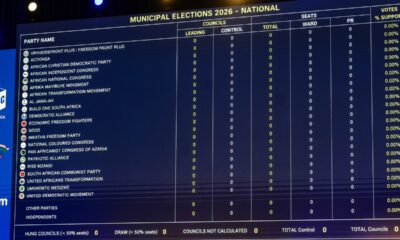
On Sunday, the Electoral Commission of South Africa (IEC) announced final results, revealing that 72 of 213 councils achieved outright majorities, while 127 are hung, requiring parties to negotiate coalition agreements to form local governments. The African National Congress (ANC) remained South Africa’s largest party with 30.76% of the national votea significant drop from the 45.59% secured in 2021. The Democratic Alliance (DA) followed with 24.64%. The newly prominent uMkhonto weSizwe (MK) Party gathered 9.76%, the Economic Freedom Fighters (EFF) scored 6.22%, and ActionSA reached 5.67%.
This fragmented result compels political parties to find common ground to establish working majorities in councils and ensure functional local governance.
Presidential Call for Co-operation
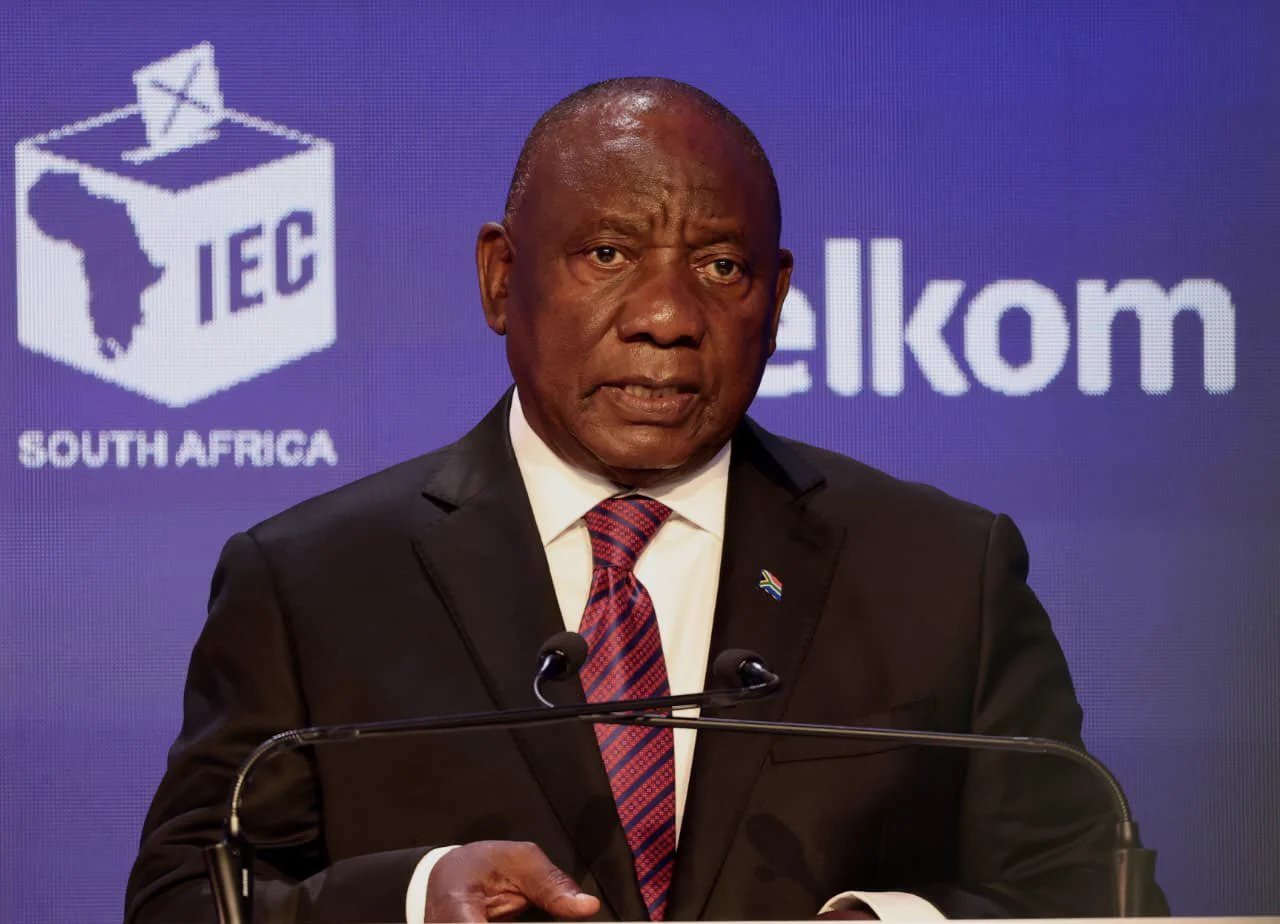
In his weekly address to the nation, President Ramaphosa urged parties to “co-operate in good faith” during negotiations, emphasizing the need to prioritize community needs and service delivery over political rivalries. He stated that agreeing on the election of office-bearers is critical for councils to start functioning and attend to urgent local issues.
“Winning the confidence of the electorate at the ballot box must never be taken for granted. Political parties must co-operate in good faith to reach agreement on the election of office-bearers so that councils can be constituted and they can get to work.”
Ramaphosa also stressed that elected officials should strive to find common ground from the outset, setting aside party differences to serve their communities.
Service Delivery Remains a Core Priority
The President noted that the election results reflect South Africans’ expectation for those in public office to deliver tangible improvements in everyday life. Voters prioritized job creation, economic opportunities, consistent and affordable water and electricity, well-maintained public spaces, and safer neighborhoods.
- Good governance and responsible management of municipal finances were highlighted as vital.
- Incoming councillors are expected to not only address immediate community needs but also help reshape the local government sector.
Ramaphosa referenced the importance of reforms proposed in the revised White Paper on Local Government. These measures focus on strengthening municipal finances, increasing funding for infrastructure maintenance, and improving service reliability.
“We need to make local government an engine room of service delivery, a driver of development and a creator of opportunity.”
He urged councillors to place the interests of local communities at the forefront, to listen to residents, and to act with humility and accountability.
Electoral Process and Democracy in Action
More than 14.9 million South Africans participated in the 2026 municipal elections, marking a turnout of 52% from the country’s 29.2 million registered voters. This represents an increase from the 45.9% turnout seen in the 2021 elections.
The President commended the IEC for conducting peaceful, free, and fair elections. He also acknowledged the efforts of police, the defence force, government officials, and political parties for safeguarding a smooth and secure voting process. Over 540 political parties and nearly 137,000 candidates contested, offering South Africans unprecedented political choice since 1994.
The elections coincided with the 30th anniversary of South Africa’s Constitution, underscoring the country’s commitment to universal adult suffrage and multi-party democracy.
Accountability and the Road Ahead
Ramaphosa drew attention to the reality that the issues influencing South African voterssuch as economic opportunity and quality of basic servicesare shared by democracies worldwide. He reminded all parties that public confidence must be continuously earned through effective performance in office.
Incoming councillors now face the challenge of making municipalities more responsive, financially sustainable, and effective in addressing community needs. The President stressed that ensuring democracy delivers requires collective responsibility that extends far beyond election day.
“It is up to all of us to ensure that democracy delivers for every South African and that local government works better for all.”
The emergence of 127 hung councils after the 2026 local elections signals a new phase for South African democracy, one that demands unprecedented levels of political cooperation. As coalition talks commence, the focus will shift from campaigning to governanceand from promises to deliveryunderscoring the need to restore voter trust through accountable, people-centered councils.
Follow Joburg ETC on Facebook, Twitter, TikTok and Instagram
For more News in Johannesburg, visit joburgetc.com
Source: iol.co.za