News
ActionSA accuses government of prioritising security spending over immigration enforcement ahead of June 30 protests
ActionSA has accused the Government of National Unity (GNU) of prioritising a large security deployment for planned nationwide protests on June 30 over investing in enforcement of South Africa’s immigration laws.
Party condemns R600 million security allocation
ActionSA president Herman Mashaba said the government should show the same urgency in strengthening border controls as it has shown in preparing for potential unrest. Mashaba questioned the focus on funding policing for demonstrations while, he said, immigration enforcement remains under-resourced.
Acting Police Minister Firoz Cachalia confirmed that about R600 million has been set aside for police deployments at potential hotspots ahead of June 30, and that private security firms, including Fidelity, are expected to assist law enforcement.
ActionSA: enforcement should match security spending
Referencing the R600 million allocation, Mashaba said:
“While government has made R600 million available to police public demonstrations tomorrow, ActionSA believes that equal urgency should be applied to strengthening immigration enforcement and ensuring the effective implementation of existing laws, rather than only finding the resources to police citizens who, when they demand action to enforce our laws, are told that resource constraints prevent meaningful enforcement.”
Border Management Authority capacity concerns
The article notes longstanding capacity problems at the Border Management Authority (BMA). Since becoming operational in 2023, the BMA has warned Parliament of chronic funding shortages, outdated technology and severe staffing constraints. The authority has disclosed more than 8,500 vacant posts while operating with a workforce of about 2,600 officials.
Government response and broader debate
President Cyril Ramaphosa announced a five-point plan on June 7 that included strengthening border controls, accelerating deportations and introducing sector-specific employment quotas for foreign nationals. The President said the BMA had intercepted approximately 450,000 attempted illegal border crossings over the past year and arrested more than 34,000 undocumented immigrants since January 2026.
ActionSA dismissed the announcement as a repackaging of past measures. Mashaba said the commitments would remain, in his words, “dead on arrival” while the BMA lacked adequate funding, staff and equipment.
Warnings from experts and rights bodies
Some migration experts questioned whether the announced measures address root causes of the social and economic issues linked to migration. The South African Human Rights Commission warned rising anti-immigrant sentiment risks triggering a human rights crisis.
The report states that at least three foreign nationals have reportedly been killed in violence linked to anti-immigration protests in recent weeks, and that journalists covering the unrest have been assaulted.
Political positioning and call for peaceful protest
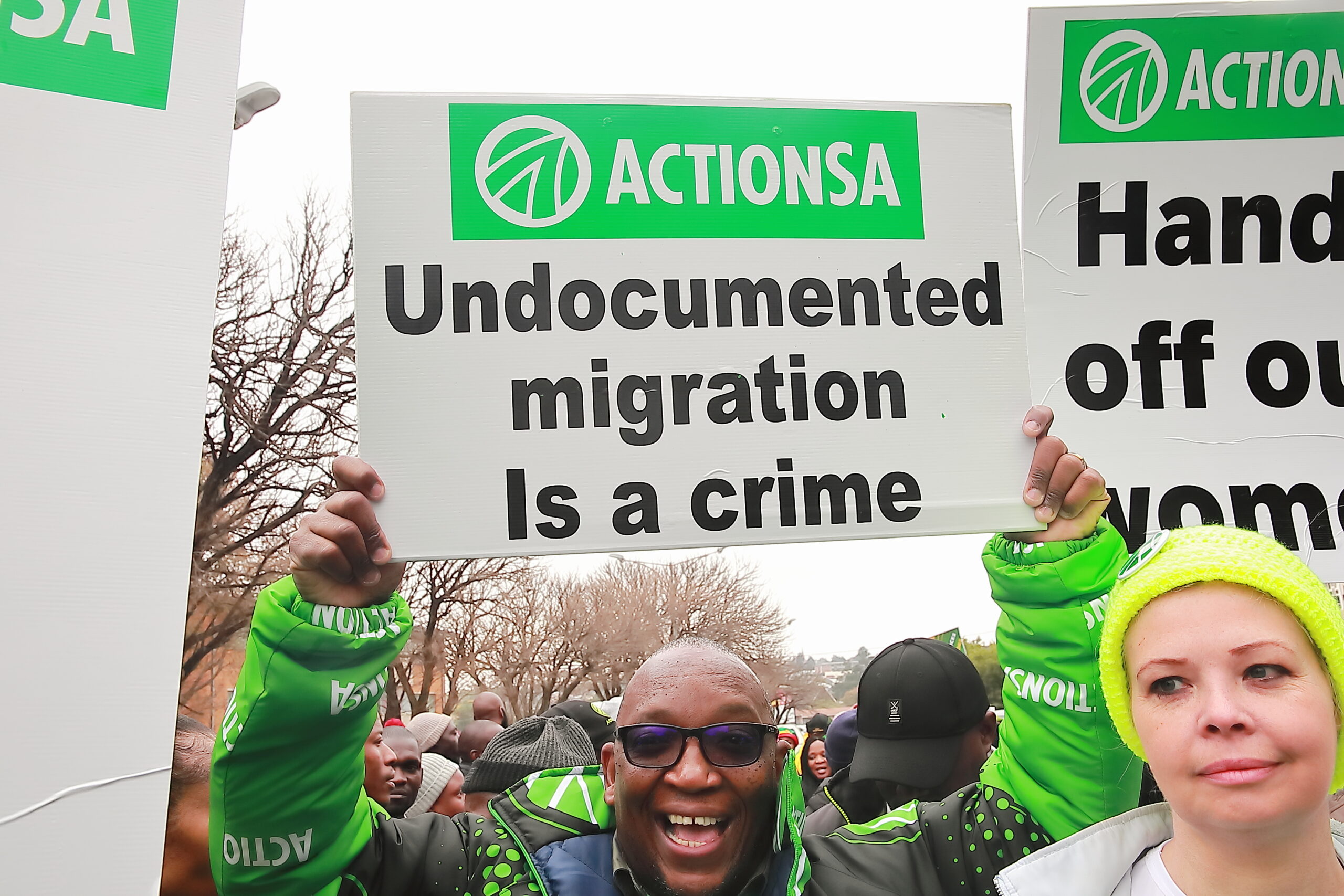
ActionSA has framed itself as an advocate for stricter immigration enforcement in both Parliament and local government. The party says it introduced constitutional amendments since entering Parliament in 2024 to prioritise South African citizens and has repeatedly called for increased funding for the BMA during budget processes. At municipal level it has led enforcement operations in the City of Tshwane targeting undocumented immigrants and by-law violations.
Mashaba urged protesters to remain peaceful:
“South Africa is home to peace-loving people who are widely known for their hospitality and warmth towards our visitors, and this is something ActionSA takes pride in, but we are no longer willing to tolerate those who abuse our laws and generosity.”
Context
The article highlights persistent socioeconomic pressures: it notes national unemployment remains above 30% and recalls the country’s deadliest outbreak of xenophobic violence in May 2008, when attacks left 62 people dead, hundreds injured and more than 100,000 displaced.
Security analysts warned that despite strengthened preparations for the June 30 protests, concerns remain that some participants may carry illegal weapons such as sjamboks, sticks and spears, increasing the risk of violent confrontations.
Follow Joburg ETC on Facebook, Twitter, TikTok and Instagram
For more News in Johannesburg, visit joburgetc.com
Source: iol.co.za