News
ANC says leaders carry heightened responsibility after Mantashe remarks
The ANC has told its leaders to act with dignity after national chair Gwede Mantashe’s remarks on women drew criticism; the party directed him to apologise.
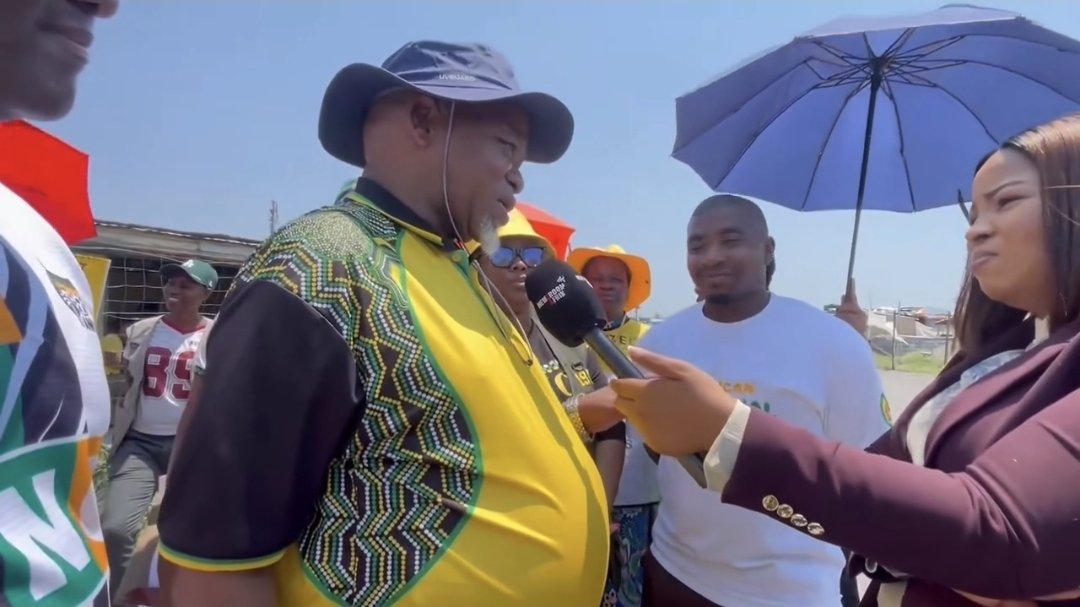
What the party said
The ANC issued a statement on Thursday evening emphasising that its officials and the national working committee had resolved to direct national chair Gwede Mantashe to apologise for remarks that provoked concern inside the party. In its statement the ANC reaffirmed its stance on gender equality and the treatment of women.
The party said, in part:
“The ANC remains unequivocal in its commitment to building a society in which every woman can live and work free from coercion, abuse and discrimination.
Leaders of the ANC carry a heightened responsibility to uphold these principles through their words and actions, confront discrimination and advance gender equality.”
The comments that prompted the rebuke
Gwede Mantashe, who is identified by the party as national chairperson and Minister of Mineral and Petroleum Resources, made remarks during an interview over the weekend that referenced female genitalia in crude terms when he was asked about men who allegedly try to sexually exploit women seeking to advance their careers.
In that interview he said the behaviour related to individual morality rather than being an ANC matter. As quoted in the party’s reporting of the exchange, Mantashe said:
“If councillors, once elected, try to use their position to sleep with people, just know that the man is behaving badly and is going around sleeping with people. That’s not an ANC thing.”
Following the public reaction, Mantashe told SABC News on Wednesday that he would apologise, while also asking for clarity about what exactly required apology. His words to the broadcaster were quoted as:
“I’m apologising, but I don’t know what I must apologise for. My understanding was that ANC Women’s League would talk to me and I would understand exactly what it is that I should apologise for.”
Party concerns and emphasis
The ANC’s Thursday statement stressed that women must be treated with respect and warned against the abuse of perceived power imbalances by male leaders. The party said it recognises that unequal gender and power relations expose women to sexual exploitation, and it listed the types of conduct the statement sought to condemn.
“We recognise that unequal gender and power relations continue to expose women to sexual exploitation, including demands for sexual favours in exchange for employment and other opportunities.”
It went on to call such conduct a serious problem for society and the organisation, saying:
“Such conduct constitutes a grave abuse of power and must be eliminated from our society.”
Timeline in brief
- Weekend: Mantashe gave an interview in which he made the remarks that later drew criticism.
- Wednesday: Mantashe told SABC News he would apologise but asked for clarity on what he should apologise for.
- Thursday evening: The ANC’s national officials and national working committee resolved to direct Mantashe to apologise and issued a public statement underlining leaders’ responsibilities.
Why the party response matters
Senior public remarks by party leaders can shape public perception and internal debates. In this case the ANC moved to remind its leaders of the organisation’s stated commitments to gender equality and to call attention to the responsibilities that come with public office. The party’s decision to publicly direct an apology signals an internal attempt to address the matter through its national structures.
That approach issuing a public statement, recording the resolution of national officials and the national working committee, and directing an apology is consistent with how political organisations often respond when a senior figure’s comments cause concern. Such steps are intended to clarify organisational values, set behavioural expectations for leaders and, where applicable, to contain reputational impact.
What remains clear from the record
From the available reporting the factual sequence is straightforward: Mantashe made remarks during a weekend interview that many found objectionable; he said on Wednesday he would apologise while questioning the need for specifics; and on Thursday the ANC’s leadership bodies resolved to direct him to apologise and restated the party’s commitment to protecting women from exploitation.
The party’s public statements explicitly frame unequal gender and power relations as ongoing vulnerabilities that can lead to sexual exploitation, and they characterise demands for sexual favours in exchange for employment or opportunities as a grave abuse of power that must be eradicated.
The ANC’s directive to Mantashe to apologise and the party’s public restatement of principles aim to address the immediate controversy and to underline the standards expected of its leaders. Beyond the immediate sequence documented here, parties and organisations typically use such moments to reaffirm internal codes of conduct and to engage with affected constituencies, such as women’s structures, though those subsequent steps are not detailed in the reporting available.
For now the published record sets out what was said, the party’s response and the resolution instructing an apology facts the ANC has placed in the public domain.
Follow Joburg ETC on Facebook, Twitter, TikTok and Instagram
For more News in Johannesburg, visit joburgetc.com
Source: citizen.co.za