News
Why a pensioner was said to ‘need a PhD’ to read a water bill as eThekwini’s billing woes are exposed
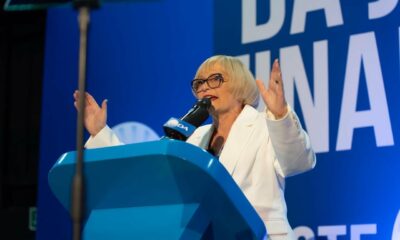
At an IOL mayoral debate in Durban, speakers warned that confusing bills and meter failures are leaving residents with inflated accounts and indigent applications unprocessed.

What was said at the debate
Participants at the debate raised concerns about the city’s approach to billing and the implementation of its indigent policy. According to IOL, the Democratic Alliance (DA) criticised the administration for confusing account statements and slow processing of applications for indigent support.
“Do we not have many indigent applications that are waiting per year or maybe more? Why do we have these policies if these policies don’t work? Why do you need to have a PhD to read your own water and lights account?”
Alicia Kissoon, DA
“I don’t understand it myself. It’s difficult to understand. And when our pensioners get to the Sizakala centres, then someone tells them what their bill says and tells them what to do. That’s just not acceptable.”
Alicia Kissoon, DA
Indigent policy and the contrast in practice
According to IOL, the city’s indigent policy is meant to provide 6kl of free water per day plus support for rates, electricity and sanitation. Speakers at the debate pointed to a contradiction between the written policy and residents’ experiences: while the policy states indigent households cannot be charged after the free allocation, residents are reportedly being told they may have to pay for top-ups.
The debate also highlighted complaints that indigent applications are not being processed in a timely manner. According to IOL, opposition speakers said some applications are sitting for more than a year without resolution, and that the municipality has only one social worker processing indigent applications.
Meter failures, estimates and steep bills
Speakers raised concerns about the condition and reliability of water meters. According to IOL, thousands of meters are said to be failing, producing estimated readings that have in some cases led to inflated bills. The report cited instances of estimated accounts rising to as much as R100 000 for RDP homes in Chatsworth, Phoenix and Verulam.
Opposition voices emphasised that faulty meters trigger a cascade of problems: incorrect readings lead to estimates, estimates produce unexpectedly large accounts, and unresolved high bills increase household stress and municipal arrears.
Responses and proposed fixes
At the debate the ANC defended the city’s staff and procedures. According to IOL, Thabani Nyawose of the ANC in eThekwini said residents who present themselves for assessment will be assisted and denied that staff broadly ignore citizens.
“If you come forward, present yourself, you will be assisted. It is not true that our staff don’t attend to our citizens. It might happen here and there. We employ more than 24 000 people.”
Thabani Nyawose, ANC in eThekwini
Other speakers proposed operational changes. According to IOL, Zwakele Mncwango of ActionSA suggested insourcing meter readers as municipal employees and moving toward smart metering with radio-frequency communication to reduce reliance on estimated readings.
“The solutions are twofold. One is to insource meter readers and get them permanently employed by the city, with meters being read every month with no estimates. Second, we need to look at smart metering.”
Zwakele Mncwango, ActionSA
In addition, the DA told the debate that the municipality lacks a clear policy to handle high bills, a gap the party says is contributing to a growing debtors book. According to IOL, this absence of a practical high-bill relief mechanism was flagged as a contributor to rising municipal arrears.
Why this matters for residents and service delivery
Clear, accurate billing is a basic component of municipal service delivery. When bills are hard to understand or appear inflated, residents can be left uncertain about what they owe and about how to access relief. Administrative backlogs in processing indigent applications can compound hardship for households that rely on subsidies.
Operational failures such as malfunctioning meters, missed readings and reliance on estimates tend to affect the most vulnerable disproportionately. Restoring confidence in billing requires both accurate metering and accessible, transparent communication so residents know what charges mean and how to apply for support.
Possible paths forward (general context)
Measures commonly suggested by municipal experts and echoed at the debate include improving meter maintenance, reducing estimated readings through more frequent or automated reads, and simplifying bill layouts so that critical information is clear to all account holders. Training frontline staff at customer-service centres to explain bills in plain language can also reduce confusion for pensioners and other vulnerable residents.
None of these suggestions are new, but their relevance was underscored at the Durban debate, where parties traded criticisms and proposals. According to IOL, the exchange left questions about the practical steps the municipality will take to align policy with outcomes and to stem the flow of disputed and unaffordable accounts.
The debate brought billing and indigent relief into sharper public focus, highlighting both human impacts and administrative pressures. For residents awaiting decisions on indigent applications, and for households facing unexpectedly large estimates, the discussion underlined the need for clearer bills, functioning meters and a practical, timely approach to applying policy on the ground.
Follow Joburg ETC on Facebook, Twitter, TikTok and Instagram
For more News in Johannesburg, visit joburgetc.com
Source: iol.co.za