
News
Gauteng government’s R144-million gift to beauty training company
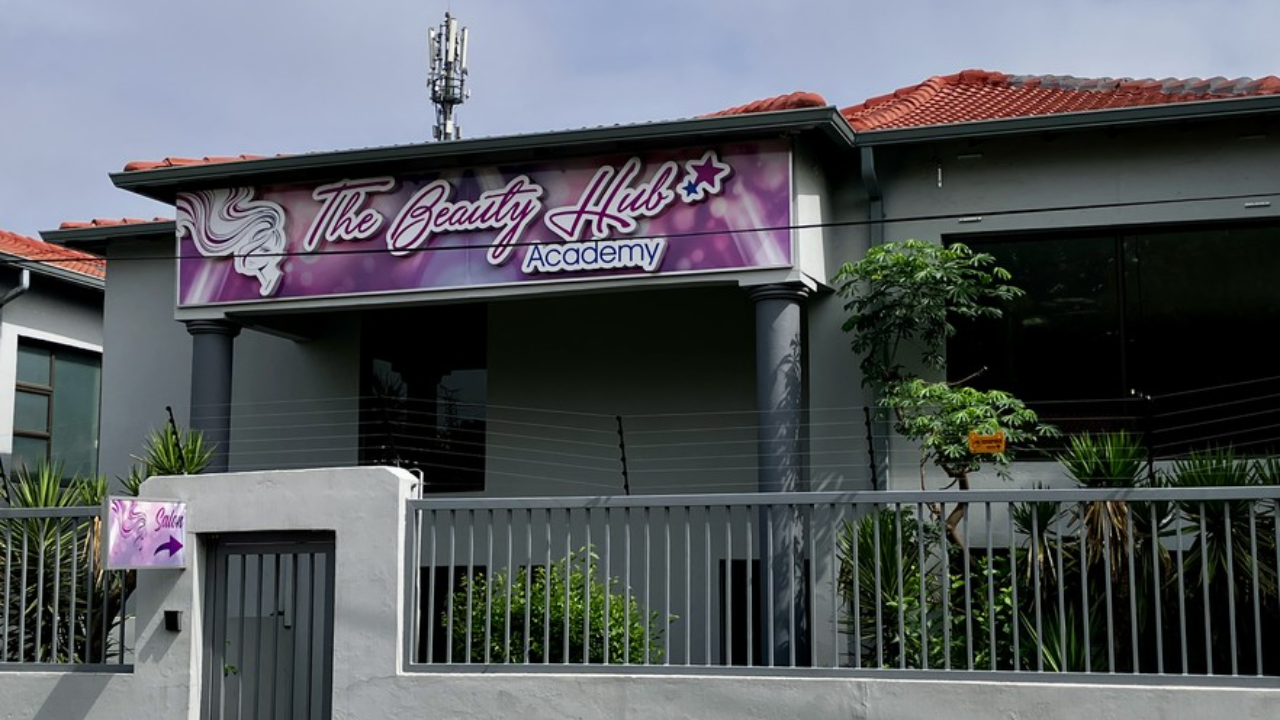
A beauty school received R144-million from the Gauteng Department of Social Development (GDSD) to train young beauticians and provide beauty services for older people. It was one of the department’s highest-funded organisations, far exceeding the average subsidies for social welfare services for Gauteng’s most vulnerable people.
A 2024 forensic audit by FSG Africa found that money was transferred from the Beauty Hub Academy, a non-profit organisation (NPO), to a private company with the same name, even though for-profit entities are not eligible for funding.
Millions of rands of public funds were spent on rent and renovations for properties, at least one of which was owned by a property company that shares directors with the Beauty Hub Academy.
The auditors also found that the academy’s caterer – paid R8.4-million over three years – was owned by the daughter of one of the academy’s directors.
The forensic auditors recommended disciplinary action against four senior GDSD officials – Onkemetse Kabasia, Solly Ndweni, Themba Msimanga, and Mbali Ndlovu. More than two years later, these disciplinary processes have still not been completed.
Ndlovu, Msimanga, and Kabasia had previously been implicated in a 2019 forensic audit, which is under investigation by the Hawks. Kabasia has since been made head of the KwaZulu-Natal Department of Social Development.
The audit findings led to the department discontinuing funding to the academy in the 2024/25 financial year.
Disproportionate funding
The department is supposed to make details about all the non-profit organisations it funds available online. But it has not done so for years.
A Promotion for Access to Information (PAIA) application by GroundUp for details of Beauty Hub’s funding, as well as details of all GDSD’s funding of non-profits from 2014 to 2024 was rejected.
We appealed this in the Western Cape High Court and won.
The documents we obtained reveal that Beauty Hub received R144-million between the 2017/18 and 2023/24 financial years. This makes it one of GDSD’s highest-funded organisations.
The funding was allocated to train 1,800 beauticians and hairdressers on campuses in Johannesburg, Tshwane, Carletonville and at the Lenasia military base.
In 2017/18 the academy was given R14-million for 150 students. Funding increased almost every year, with the academy spending the next six years in the top ten of department-funded organisations. By 2023/24, the academy received R30-million for 500 students, making it the second-highest funded organisation that year.
The average grant received in GDSD funding by a child and youth care centre that year was R2.6-million.
The academy also received funding under the department’s Services to Older Persons programme for students to provide hair and beauty services at old age homes. Between 2017 and 2023, the academy received R14-million to provide services at old age homes.
Money channelled to private company
GroundUp has obtained a draft copy of the investigation report by FSG Africa that was handed to the department on 23 April 2024.
Following a site inspection, FSG was satisfied that the academy had systems and processes in place to manage its affairs, but FSG flagged its governance for “conflict of interest, related party transactions and violation of the NPO’s own policies”.
FSG found that department subsidies were periodically paid from Beauty Hub Academy NPO to the for-profit Beauty Hub Academy (Pty) Ltd, without the department’s approval.
The two directors of the for-profit company, Joel Nkomo and Daisy Gama, also held positions at the non-profit organisation: Nkomo was principal, and Gama was treasurer.
The auditors found it “strange” that the audited financial statements for the 2021/22 and 2022/23 financial years were a consolidation of both the NPO and the private company’s accounts.
Beauty Hub Academy NPO also used GDSD funding to rent two vehicles from the Pty Ltd at a cost of R50,576 a month.
Property rentals and renovations
The Beauty Hub Academy used department funds to rent its headquarters, at a cost of almost R1.2-million over three years, from Sehlule Properties, of which Nkomo and Gama are directors.
In concluding the lease agreement between Sehlule Properties and the academy, FSG found, “the treasurer, Ms Daisy Gama, had transacted with a company owned by her thereby indirectly benefitting from the lease payments by the NPO and renovations funded by the department”.
In 2022, the GDSD funded the renovations at the Johannesburg site for R750,000. A further R750,000 was given to renovate another rented property in the West Rand.
According to the report, between March and April 2021, the NPO also paid Sehlule Properties renovation fees totalling almost R320,000.
The contracts between the organisation and the department, which GroundUp obtained through the PAIA application, show that the academy had previously received about R464,000 in 2020/21 to renovate bungalows at its campus in Lenasia, and another R663,000 for capital costs such as furniture, computers and kitchen setup. The funding contract with the department did not explain what these bungalows would be used for.
In 2021/22, the academy received another R3.6-million for capital costs, including more renovations for bungalows and buying furniture.
Family ties
Between 2020 and 2023, the Beauty Hub Academy paid R8.4-million for catering to Edge Promotions and Events (Pty) Ltd, owned by director Daisy Gama’s daughter, Nokwakha Gama.
The FSG auditors found that Nokwakha Gama had sent the academy’s board a letter, pre-empting the “perception of a possible conflict of interest” and arguing that her company should still be considered to supply services as her mother is not a director of Edge and has no part in its business dealings.
At a board meeting in September 2019, the board resolved that the advantages of hiring Edge outweighed the disadvantages. Daisy Gama did not recuse herself from the meeting despite her daughter’s company being the topic of discussion, FSG said.
Gama and Nkomo did not respond to our questions sent via email and WhatsApp.
Officials go silent
FSG found that the department’s leadership failed in its oversight of the academy’s funding and recommended disciplinary action against four senior staff members. Officials approved multi-million rand grants without investigating the viability of the funded projects, the investigators found.
In the 2022/23 financial year, then deputy director-general Onkemetse Kabasia “motivated for and recommended” to then head of department Thembeni Mhlongo that the academy be funded for R6-million to implement a manufacturing, distribution and “aesthetics” hub.
“The NPO had not formally applied for this funding. Instead, they were invited to submit a costing framework for the proposed project. We noted that submission of the costing framework was not accompanied by a business plan,” FSG said in its report.
FSG also found that Themba Msimanga, then director of partnerships and funding, approved budget deviations totalling over R7-million in 2023, even though he did not have the authority to do so.
FSG recommended that Kabasia and Msimanga face disciplinary action along with Solly Ndweni, chief director for NPO partnership and development research, and Mbali Ndlovu, the director of sustainable livelihoods.
The FSG report does not include the officials’ version of events because the auditors were told by then head of department Matilda Gasela to “terminate any interviews with the suspended employees as they are, and will continue to be, afforded an opportunity to be heard in the disciplinary hearings”.
FSG was also unable to do forensic imaging of the officials’ “tools of trade”, because Msimanga’s and Ndlovu’s iPhones had been reset to their factory settings before being handed to the auditors and Ndlovu’s laptop had been reformatted.
FSG recommended that they both be charged with the destruction of evidence or the destruction of department data.
Kabasia failed to provide a pin code to unlock his phone. The report recommended that Kabasia be charged with failing to cooperate with the investigation.
Even though the implicated officials were suspended under MEC Mbali Hlophe, they all returned to work after her term as MEC ended.
Department spokesperson Motsamai Motlhaolwa told GroundUp the disciplinary processes are ongoing. Four officials were issued with final written warnings, one official was not recharged due to insufficient evidence, and the hearings against the remaining eight are still ongoing.
Kabasia did not respond to questions sent via WhatsApp and did not answer his phone when we called.
Msimanga did not respond to questions sent to him via WhatsApp.
The National Education Health and Allied Workers Union (NEHAWU) responded on behalf of Ndlovu and Ndweni, who are both members of the union.
It said that Ndlovu and Ndweni were unable to answer questions as they had not seen the report.
“The union intends requesting the Department to indicate and investigate how the report containing confidential employment information of departmental employees landed up with your publication while our members were not served with a copy.”
“Further, our members are not authorised to communicate with the media regarding any business of their employer.”
Follow Joburg ETC on Facebook, Twitter, TikTok and Instagram
For more News in Johannesburg, visit joburgetc.com
Source: GroundUp
Picture: Masego Mafata


