News
South African motorists to get temporary fuel levy relief from November
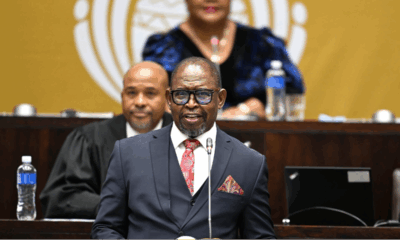
South African motorists will receive temporary relief from high fuel costs after Finance Minister Enoch Godongwana announced a reduction in the general fuel levy, offering some breathing room to households and businesses facing mounting transport expenses.
The measures, reportedly announced during the Medium Term Budget Policy Statement (MTBPS) in Parliament on Wednesday, 21 October, will take effect on 4 November 2026. The relief comes after petrol prices climbed above R30 a litre in October, putting additional pressure on already stretched household budgets.
Under the first phase, the fuel levy will be reduced by R1.50 per litre for petrol and R3 per litre for diesel until 1 December. A second phase will extend the relief until 5 January 2027, although the reductions will be smaller. From 2 December, the levy reduction will fall to R1 per litre for petrol and R1.50 per litre for diesel.
[BREAKING] Finance Minister Enoch Godongwana has announced a temporary cut to the fuel levy, reducing the levy by R3 per litre on diesel and R1.50 per litre on petrol from 4 November until 1 December 2026. Tune in to #eNCA, on #DStv403. https://t.co/1TkYwti8rT
eNCA (@eNCA) October 21, 2026
How much relief will motorists receive?
The temporary cuts are intended to cushion consumers against the impact of elevated international oil prices and rising fuel costs.
The first phase of fuel levy relief will run from 4 November to 1 December 2026, with the levy reduced by R1.50 per litre for petrol and R3 per litre for diesel. From 2 December 2026, the reductions will be smaller, dropping to R1 per litre for petrol and R1.50 per litre for diesel. The second phase will remain in place until 5 January 2027, when the temporary relief is scheduled to end.
The general fuel levy is a tax included in the price of fuel. Reducing it provides scope for lower prices at the pump than would otherwise apply, although the final retail price will also depend on other fuel-pricing factors.
Godongwana said the intervention was designed to ease pressure on consumers without undermining the country’s finances.
‘This intervention will help to ease cost of living pressures without compromising the sustainability of the budget.’
– Finance Minister Enoch Godongwana
The announcement follows a sharp run-up in petrol and diesel prices, driven in part by higher Brent crude oil prices amid conflict in the Middle East.
In October, a R3.33 per litre increase pushed 95-octane petrol above R30 for the first time. At the time of the announcement, the price stood at about R30.25 a litre inland and R29.38 at the coast.
The impact extends well beyond filling up a private vehicle. Higher fuel costs can increase the cost of transporting goods, operating commercial vehicles and delivering services, placing additional pressure on businesses and consumers.
These cuts do not mean fuel prices will necessarily fall overall, as international oil prices and other pricing adjustments continue to influence what motorists pay.
Where will the R10 billion come from?
The government expects the measures to provide R10 billion in support, with the same amount in revenue forgone as a result of the levy reductions. Reportedly, the funding will come from R10 billion previously transferred to the Central Energy Fund (CEF). The government will return that money to the National Revenue Fund to finance the relief.
The arrangement allows the government to fund the intervention using existing resources rather than leaving the full cost uncovered in the budget.
Relief is temporary as motorists face continued uncertainty
The November announcement follows an earlier intervention in April, when the Treasury reduced the general fuel levy by R3 per litre. The latest measures offer motorists some short-term protection against high fuel costs, particularly diesel users, who will benefit from the larger initial reduction.
But the relief has a defined end date. Unless the measures are extended or fuel-price pressures ease, motorists could face renewed pressure once the temporary reductions expire.
Be the first to know – Join our WhatsApp Channel for content worth tapping into! Click here to join!
Follow Joburg ETC on Facebook, Twitter, TikTok and Instagram
For more News in Johannesburg, visit joburgetc.com
Featured Image: Engin Akyurt / Pexels