News
IFP Expands Crackdown On Undocumented Foreign Nationals To KwaMashu Hostel
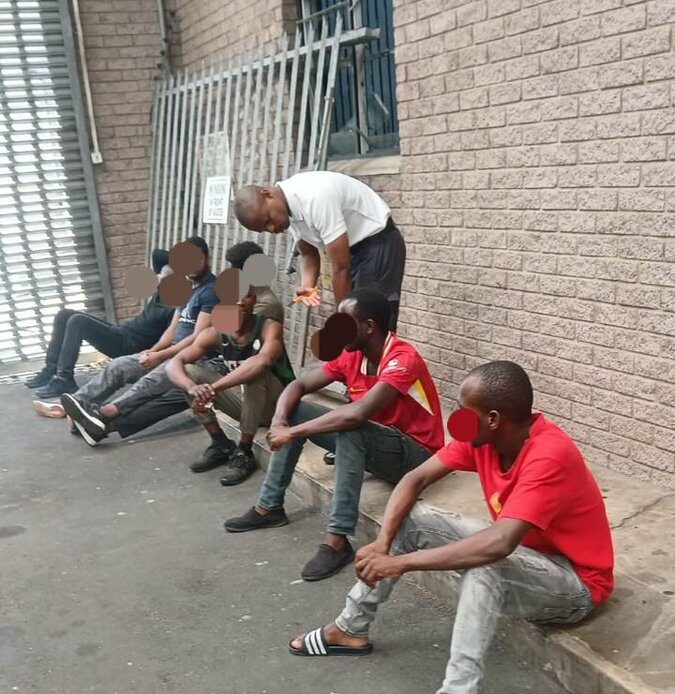
The Inkatha Freedom Party (IFP) in the eThekwini District has intensified its campaign targeting undocumented foreign nationals, shifting its focus away from the Durban Central Business District and into township communities where many residents say economic pressure is most severe.
On Monday, party members visited the KwaMashu Hostel north of Durban as part of what the IFP describes as an ongoing programme aimed at tackling illegal immigration and promoting local employment.
According to the party, the initiative forms part of a broader political commitment made during the last national elections and continues to shape its activities in communities across the region.
Campaign Moves From The Durban CBD To Townships
IFP eThekwini District secretary Joshua Mazibuko said the party had previously focused much of its attention on businesses operating in Durban’s CBD. However, the campaign is now expanding into residential townships where many residents live and work.
Mazibuko said the shift reflects concerns about unemployment and poverty in areas like KwaMashu.
“We have been focusing on those operating in the Durban CBD,” he explained. “But now we are looking at where people live because that is where poverty is most severe.”
The visit to the KwaMashu Hostel was intended to assess the presence of undocumented foreign nationals in local businesses and determine whether employment opportunities are being offered to residents.
Mazibuko said the party believes many jobs in small township businesses do not require specialised skills and could easily be filled by local workers.
Tuckshop Closed During Inspection
During the inspection, IFP members found that several tuckshops had already closed their doors, which Mazibuko suggested could be linked to advance knowledge of the visit.
One shop that remained open inside the hostel drew particular attention.
Mazibuko said party members discovered that the tuckshop did not have a valid trading licence when they questioned the workers inside. The individuals reportedly pointed to a manager who could not be reached at the time.
The inspection also raised questions about immigration documentation. According to Mazibuko, some of the workers’ permits had already expired, while another was set to expire later this year.
Based on these findings, the party instructed the business to shut down.
“We told them the shop must close because there is no trading permit, they cannot show proof that they entered the building legally to run the business, and the job being done can be performed by residents of the hostel,” Mazibuko said.
Information To Be Shared With Authorities
Mazibuko stressed that the party’s role is primarily to gather information and report it to relevant government departments.
He said the findings from the KwaMashu inspection would be passed on to authorities such as the Department of Home Affairs, which is responsible for enforcing immigration laws.
“The government must continue the work because they are the ones who have the authority to act,” he said.
Mazibuko added that some hostel residents welcomed the intervention. He shared an account from a woman who said she had previously worked in the area as a seamstress but was later replaced by foreign nationals.
He also noted that local property owners sometimes allow businesses run by foreign nationals to operate from their homes or properties, often due to financial pressures.
Immigration Debate Remains A National Issue
The debate around undocumented foreign nationals has become increasingly prominent in South African politics in recent years, particularly in communities grappling with unemployment and limited economic opportunities.
IFP leader and Minister of Cooperative Governance and Traditional Affairs, Velenkosini Hlabisa, recently raised the issue during an interview on the YouTube channel State of the Nation with Mike Sham.
Hlabisa said undocumented migration presents challenges for government planning and service delivery.
“You cannot account for them or budget for them because you do not know who they are,” he said. “But they receive services such as healthcare, schooling and housing.”
He added that the matter has already been discussed in Cabinet Lekgotla and is increasingly viewed as an issue requiring focused government attention.
As the debate continues nationally, initiatives like the one in KwaMashu highlight how the issue is also playing out on the ground in local communities.
{Source:IOL}
Follow Joburg ETC on Facebook, Twitter , TikTok and Instagram
For more News in Johannesburg, visit joburgetc.com