News
SAPS leadership crisis deepens as Ramaphosa suspends Masemola and appoints Dimpane amid widening scandal
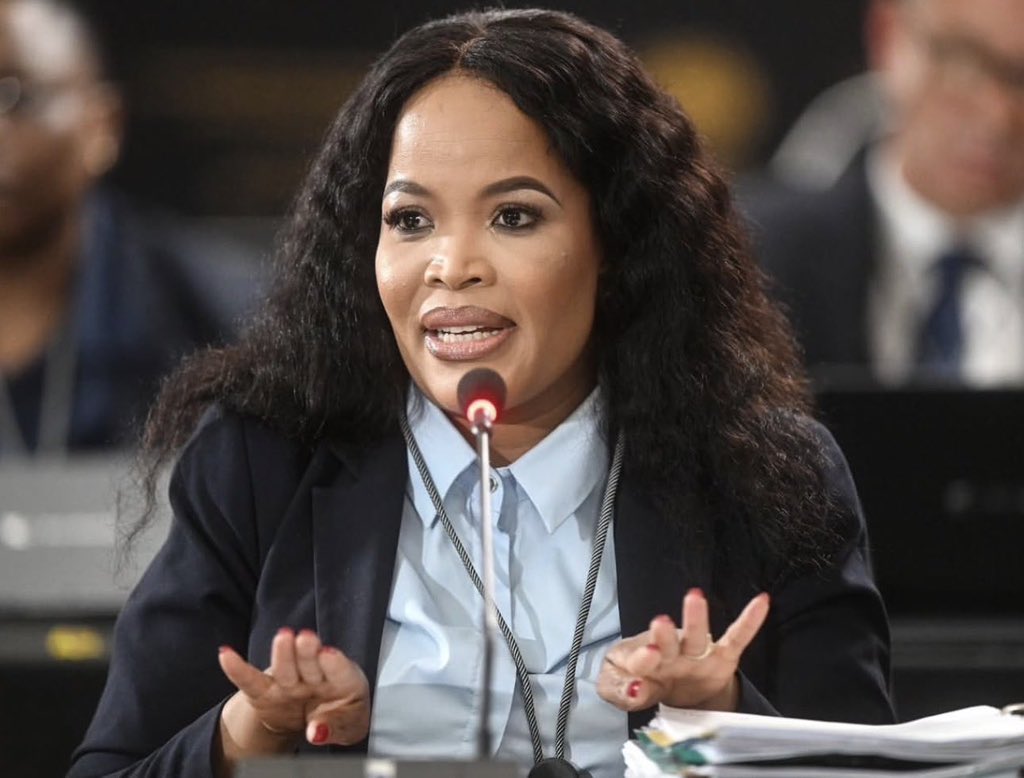
A police leadership shake-up that signals deeper instability in SAPS
South Africa’s policing leadership has once again been thrown into uncertainty after President Cyril Ramaphosa confirmed the precautionary suspension of National Police Commissioner General Fannie Masemola, alongside the appointment of Lt-Gen Puleng Dimpane as acting commissioner.
The announcement, made during a press briefing at the Union Buildings, marks yet another high-level disruption inside the South African Police Service (SAPS), an institution already under intense public scrutiny.
Dimpane, who previously served as Divisional Commissioner for Financial Management Services, now steps into one of the country’s most pressured security roles at a time when SAPS is grappling with allegations of corruption, tender irregularities, and political interference claims.
Masemola’s suspension linked to court case and tender allegations
Masemola’s precautionary suspension follows his appearance in the Pretoria Magistrate’s Court this week, where he faces four counts linked to alleged violations of the Public Finance Management Act.
The charges relate to a multimillion-rand SAPS health services tender that was reportedly awarded irregularly to Medicare24, a company connected to Vusimuzi “Cat” Matlala, who has been linked to criminal allegations.
The developments have intensified public concern about accountability within SAPS senior management, especially as more officials become entangled in ongoing legal processes.
A wider crisis already affecting the political and policing landscape
Masemola’s suspension does not stand in isolation. It comes amid a broader crisis that has already seen Police Minister Senzo Mchunu placed on suspension in July 2025 following allegations of links to organised crime networks.
Those allegations were triggered by KwaZulu-Natal Police Commissioner Lt-Gen Nhlanhla Mkhwanazi, who accused Mchunu of interference in sensitive policing matters, including the disbandment of the Political Killings Task Team (PKTT).
This controversy led to the establishment of the Madlanga Commission of Inquiry, which is now investigating criminality, corruption, and political interference within the criminal justice system.
President Ramaphosa has made it clear that Mchunu’s future will only be decided once the commission concludes its findings, saying he will not act on untested allegations.
Analysts divided: accountability or political delay?
Political analyst Professor Sipho Seepe argues that Ramaphosa has adopted a consistent approach of allowing formal processes to unfold before taking decisive action. However, he notes that this method also allows political uncertainty to linger.
According to Seepe, the president’s submissions to Parliament have already placed Mchunu’s position under significant pressure, particularly where accounts differ over the disbandment of the PKTT.
Another analyst, Zakhele Ndlovu, believes the president is deliberately delaying action, suggesting that Ramaphosa may be attempting to protect political allies while awaiting the commission’s final report.
Ndlovu has also questioned why decisive steps were not taken earlier and whether public exposure of internal SAPS disputes would have occurred without whistleblower intervention.
Opposition parties and civil groups raise alarm over “acting leadership cycle”
Political parties and civil organisations have responded sharply to Masemola’s suspension.
ActionSA has warned that the continued reliance on acting appointments in top SAPS positions risks undermining institutional stability. The party argues that repeated temporary leadership arrangements point to deeper governance failures within the policing system.
The Democratic Alliance, while supporting the suspension as a necessary accountability step, says it reflects years of weak leadership and deteriorating internal controls within SAPS.
Civil rights group AfriForum has gone further, describing the situation as evidence of long-standing institutional decline, pointing out that several previous SAPS leaders have left office amid allegations of corruption, misconduct, or incompetence.
A system under strain, not just individuals under fire
At the centre of the unfolding crisis is a pattern that has become increasingly familiar in South Africa’s policing landscape: allegations surface, suspensions follow, acting appointments are made, and investigations continue while uncertainty persists.
With Lt-Gen Puleng Dimpane now stepping into the acting role, SAPS once again finds itself led by temporary leadership during a period of intense political pressure, public distrust, and ongoing high-profile investigations.
Whether this approach restores stability or deepens uncertainty remains one of the most pressing questions facing South Africa’s criminal justice system.
{Source: IOL}
Follow Joburg ETC on Facebook, Twitter , TikTok and Instagram
For more News in Johannesburg, visit joburgetc.com