South Africa’s slow grind toward reform might finally be picking up pace and, somewhat surprisingly, it is the criminal justice system leading the charge.
Fresh data from Business Leadership South Africa paints a cautiously optimistic picture. The country’s reform programme is moving forward, with steady gains across key sectors that matter most to business and economic growth.
But the numbers landed on a day that reminded South Africans how fragile that progress still is.
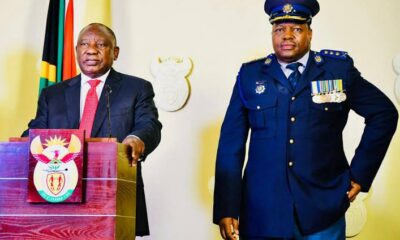
Just hours before the latest Reform Tracker results were released, Cyril Ramaphosa announced the precautionary suspension of National Police Commissioner Fannie Masemola, who is facing criminal charges linked to a controversial tender.
It was a moment that summed up the country’s current reality. Reform is happening, but accountability remains a work in progress.
A reform programme slowly finding its feet
According to BLSA’s latest quarterly tracker, which reviewed progress between January and March 2026, South Africa’s reform completion index has climbed to 71.75. That is a notable jump from where things stood two years ago.
The tracker monitors hundreds of reform targets across economic policy, governance and the justice system. These are not abstract goals. They are the building blocks investors watch closely when deciding whether to back South Africa or look elsewhere.
BLSA CEO Busisiwe Mavuso says the trend is clear. The direction is positive, even if the pace is uneven.
For a country that has spent years battling policy delays, corruption scandals and rolling blackouts, even incremental progress carries weight.
Criminal justice emerges as the surprise leader
The standout performer is criminal justice, a sector many South Africans have long associated with backlogs, weak prosecutions and public frustration.
Instead, it is now showing the strongest reform gains.
Progress in this space has been linked to improvements in financial crime oversight, particularly through the Financial Intelligence Centre. That work has played a role in helping South Africa step away from the greylisting pressure that once threatened investor confidence.
In simple terms, it signals that the country is getting better at tracking illicit money flows and tightening compliance. For global investors, that matters just as much as GDP growth figures.
The Masemola moment
Still, the timing of the report could not have been more telling.
The suspension of Masemola has dominated headlines, raising fresh concerns about governance at the highest levels of policing. It also adds another chapter to South Africa’s long-running struggle with accountability in public institutions.
On social media, reactions have been split. Some South Africans see the move as overdue action that proves no one is above the law. Others question whether it is yet another case of acting only when pressure mounts.
Either way, it places the spotlight firmly on whether reform efforts are translating into real consequences for wrongdoing.
Energy progress brings hope and frustration
Beyond justice, the energy sector remains a mixed story.
There have been signs of progress, particularly around government efforts to reshape the electricity system and improve transmission independence. These steps are seen as crucial for unlocking private sector investment and stabilising supply.
But delays in launching a fully functional wholesale energy market are causing concern. For businesses still dealing with the aftershocks of load shedding, progress that feels too slow can be just as frustrating as no progress at all.
Reform laws welcomed, but questions remain
Government has also introduced changes aimed at tightening public administration, including updates to laws governing the public service.
While these reforms are broadly welcomed, there is growing debate about whether they go far enough to root out inefficiency and political interference.
It is a familiar pattern in South Africa. Policy changes are announced, but the real test lies in implementation.
A country in transition
Taken together, the latest Reform Tracker tells a story of a country in transition.
There is movement. There is measurable progress. And in areas like criminal justice, there are even signs of real improvement.
But the suspension of a national police commissioner on the same day as that progress is celebrated is a reminder that South Africa’s reform journey is far from complete.
For many South Africans, the question is no longer whether reform is happening. It is whether it will happen fast enough and deeply enough to change daily life.
Right now, the answer sits somewhere in between cautious optimism and hard-earned scepticism.