Business
SAA gets R1bn government guarantee despite earlier assurances
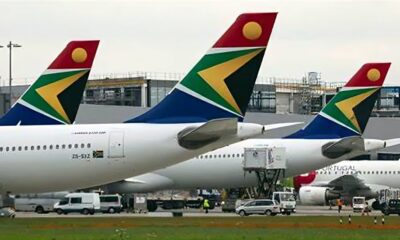
A R1bn government guarantee for SAA in August casts doubt on earlier claims of independence and raises fresh questions about taxpayer exposure.
What was disclosed and how it came to light
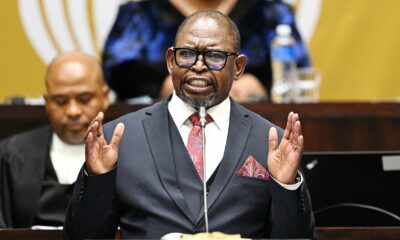
The guarantee was listed in the MTBPS, which Finance Minister Enoch Godongwana presented this week. According to reporting, the guarantee was granted in August specifically to support SAA’s working capital requirements, and National Treasury director-general Duncan Pieterse later confirmed the arrangement.
Contradictions with earlier assurances
Transport Minister Barbara Creecy and SAA executives had previously presented a different picture. In her July 2025 budget vote speech, Creecy told Parliament that SAA was “now operating independently and no longer reliant on government guarantees.” Former SAA chief executive John Lamola made similar assurances the previous year, saying the airline would not depend on shareholder contributions or bailouts and that its business plan would fund operations.
Those assurances are now in tension with the MTBPS disclosure that a government-backed guarantee was provided in August.
Political and public responses
Organised public watchdog OUTA’s chief executive Wayne Duvenage criticised the situation, saying
“It’s leaderless now. It’s rudderless.”
Duvenage told reporters the government had repeatedly promised the airline would not become a drain on the fiscus and described the new guarantee as “just unacceptable.”
Duvenage also framed the difference between a bailout and government-backed borrowing as semantic, saying in reported comments:
“It is a bailout, whether it’s a backing. Whichever way you want to couch it, it is money that’s going to come out of the public.”
Where the airline stood publicly
SAA publicly acknowledged that it had been engaging commercial banks on matters of working capital, liquidity management and operational requirements. Group corporate affairs executive Mphilo Dlamini issued a statement on 9 July rejecting claims that SAA had received a bailout, saying in clear terms:
“SAA states unequivocally that it has not applied for, nor received, a government bailout.”
Acting group chief executive Matshela Seshibe said material developments would be communicated through appropriate statutory, shareholder and regulatory channels.
Parliamentary briefing and bank reluctance
During a parliamentary briefing in May, SAA board chair Sedzani Mudau acknowledged that commercial banks were reluctant to extend financing to the airline without government guarantees. Parliament was told SAA had approached its shareholder and National Treasury for guarantees and working capital assistance.
Financial background provided in SAA accounts
SAA’s 2025 annual report drew heavy criticism and highlighted how reported profitability had been aided by extraordinary transactions. The accounts recorded a R1 billion share issue involving its government shareholder; former chief executive John Lamola described that transaction as the settlement of legacy obligations rather than a fresh operational bailout.
The 2025 accounts also showed that profitability had benefited from transactions such as the sale of a Heathrow slot and the revaluation, to the upside, of properties and assets. How sustainable the airline’s operations are without further government backing remains unclear from the accounts and public statements.
Sources, questions and outstanding answers
According to reporting, the Department of Transport previously told The Citizen that SAA last received state funding in April 2023 and that Treasury had provided no money since Barbara Creecy became minister; that response did not address the use of government guarantees. The Citizen has contacted the Minister of Transport, SAA and National Treasury for an explanation; According to The Citizen, their responses will be published once received.
According to The Citizen, the publication had reported in July that SAA was pursuing a R1 billion government-backed commercial banking facilityan account that now appears closely linked to the MTBPS disclosure of an August guarantee.
Why the guarantee matters
Government guarantees shift potential financial risk from the borrower to the state, meaning that taxpayers can be exposed if the borrower defaults. While a guarantee is not direct cash outflow today, it creates a contingent liability on the public balance sheet. That connection is central to the criticism raised by watchdogs and the scepticism voiced by some airline staff and observers.
Key implications readers should note
- Contingent taxpayer exposure: a guarantee creates potential obligations for the state if SAA were unable to meet its borrowing terms.
- Credibility of turnaround claims: earlier statements that the airline no longer needed guarantees are now at odds with a disclosed government-backed arrangement.
- Banking market response: reluctance from commercial banks to lend without a guarantee was publicly acknowledged during a parliamentary briefing, underlining persistent financing concerns.
What remains unresolved
The MTBPS disclosure and confirmations raise practical and political questions about SAA’s financial trajectory and the government’s longer-term plan for the airline. Public statements from SAA and government representatives have left gaps: the airline denied a bailout in July, yet the August guarantee exposes taxpayers to risk should the borrowing be drawn upon or defaulted on.
Beyond the accounting entries in SAA’s 2025 report and the MTBPS disclosure, the public record as reported does not yet fully explain how the guarantee will be used on a day-to-day basis, what conditions accompany it, or whether additional support might follow.
The MTBPS confirmation of an August R1 billion government guarantee has reopened debate over whether SAA’s recovery is self-sustaining or still reliant on state-backed support. For now, watchdogs, some airline personnel and parliamentarians are left to weigh assurances against the practical reality of a government-backed financing arrangement and the contingent exposure it places on taxpayers.
The Citizen has been asked to publish responses from the Transport Minister, SAA and National Treasury when they are received.
Follow Joburg ETC on Facebook, Twitter, TikTok and Instagram
For more News in Johannesburg, visit joburgetc.com
Source: citizen.co.za