Business
Milkor signs MoU with Safran to explore UAV upgrades as defence demand grows
Milkor has signed an MoU with Safran to explore integrating optronics and navigation into the Milkor 380 and future UAVs, prompting questions on localisation.
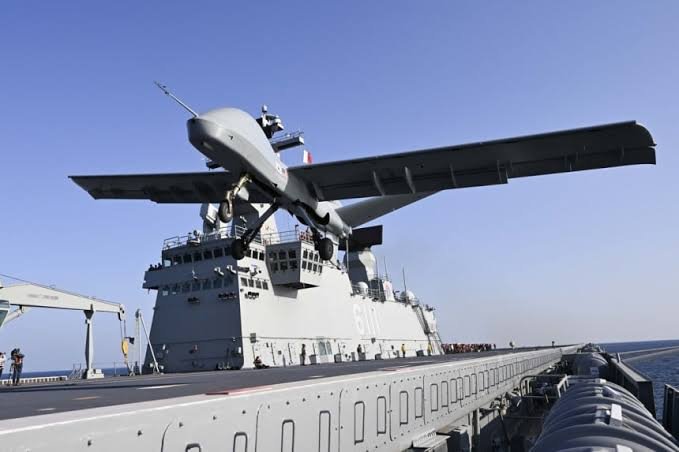
South African manufacturer Milkor and France’s Safran sign MoU to explore drone upgrades
On 19 October 2026, South African defence manufacturer Milkor announced a memorandum of understanding with French aerospace group Safran Electronics & Defence to explore upgrades for Milkor’s unmanned aerial vehicles (UAVs). The agreement focuses on integrating Safran’s optronics and navigation systems into the Milkor 380 and potential future platforms, including a planned Milkor 780, at a time when demand for advanced surveillance and targeting platforms is rising.
What the MoU covers
The companies say the collaboration aims to assess how Safran systems could enhance Milkor’s UAVs. According to Milkor Africa vice-president Daniel du Plessis, the work is focused on improved surveillance, targeting and navigation capabilities.
“Safran’s EUROFLIR optronics payloads can give the platform sharper, longer-range day and night surveillance and targeting capability, while Safran’s navigation expertise can improve positioning accuracy and keep the aircraft operating reliably even where GNSS signals are jammed or unavailable,” he said.
Milkor also described the partnership as an opportunity for engineers to gain exposure to European technologies and for the two firms to collaborate on systems integration.
“The partnership with Safran Electronics and Defence will expose South African engineers to some of the leading technologies Europe has to offer and create opportunities for the two entities to work together,” he said.
Capabilities Milkor says it has built
Milkor said it has spent years developing its in-house manufacturing capability for the Milkor 380 and its subcomponents, while making sure the platform can accept sensors and payloads from multiple suppliers. The company also said the Milkor 380 is already operating in the Middle East and that it is moving towards full-scale production as it develops additional UAV systems.
Questions raised by the agreement
Despite the collaboration, Milkor has not announced any formal technology-transfer agreements, local production targets or commitments to localise the advanced Safran systems. That omission has prompted questions about how much the domestic defence industry will benefit from the partnership.
Observers highlighted several specific areas of concern and interest that the MoU touches on:
- Technology transfer and localisation: whether advanced components and know‑how will be produced locally or remain dependent on imported systems.
- Industry benefit: how many South African engineers and manufacturers will gain long-term work or capability improvements.
- Export and regulatory constraints: how international controls and export rules might affect the ability to integrate and export upgraded platforms.
Wider context: market pressure and national policy
The MoU comes as the global UAV market becomes more competitive and faces greater scrutiny, including export restrictions and regulatory requirements. At the same time, South Africa has been signalling a push to strengthen its defence manufacturing base.
Defence and Military Veterans Minister Angie Motshekga has indicated the government is developing a defence industry policy as part of the national industrial policy action plan and is seeking increased public‑private collaboration to build strategic capabilities.
Domestic security demand and border surveillance
Security agencies are increasingly turning to technology to secure borders and monitor activity. The Border Management Authority has expanded its use of surveillance and detection systems to tackle illegal migration, smuggling and cross‑border crime, a trend the MoU indirectly addresses by pointing to demand for aerial monitoring platforms.
What an MoU typically means and next steps
As a matter of general practice, a memorandum of understanding is an exploratory step rather than a binding contract. It usually establishes intent to study collaboration areas, set technical trials or begin joint engineering work. Formal agreements that would bind parties to technology transfer or local production commitments typically follow further negotiation and separate contracts.
In this case, Milkor and Safran have set out objectives for systems integration and capability improvement, but no formal transfer, localisation or production commitments have been publicly announced. Stakeholders and industry observers are therefore likely to watch for subsequent announcements that would spell out manufacturing plans, timelines or export arrangements.
Potential benefits and limitations
If deeper collaboration proceeds, the integration of advanced optronics and navigation could offer broadly applicable benefits to UAV operations:
- Improved day-and-night surveillance and targeting through higher-performance sensors.
- Enhanced positioning and resilience against navigation interference when alternative navigation techniques are applied.
- Opportunities for skills development if engineering and systems‑integration work is carried out locally.
At the same time, the degree to which these benefits materialise for South Africa’s defence industry will depend on any future decisions about manufacturing location, technology sharing and export permissions.
Why this matters locally
The MoU is notable for South Africa’s defence sector because it ties a local manufacturer to a major European supplier at a moment when defence technology and surveillance capabilities are in higher demand. For policymakers, the collaboration intersects with ongoing efforts to shape a defence industry policy and to expand the industrial base through public‑private partnerships.
Where things stand
As of the announcement, the partnership remains at an exploratory stage. The MoU sets out a framework for examining technical integration but does not, by itself, alter production arrangements or guarantee local manufacture of the advanced systems Safran could supply. Observers will be looking for follow‑up agreements that clarify technology transfer, localisation targets and any commercial or export terms.
In the meantime, Milkor says the collaboration could accelerate capability improvements for its UAVs while exposing South African engineers to new technologies. How that promise translates into concrete industry gains will depend on the substance of any future contracts and the regulatory environment governing defence technology trade.
Follow Joburg ETC on Facebook, Twitter, TikTok and Instagram
For more News in Johannesburg, visit joburgetc.com
Source: citizen.co.za