News
Kubayi wants improperly registered SIM cards deactivated amid crime concerns
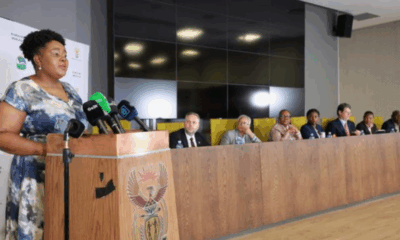
Mmamoloko Kubayi says improperly registered SIM cards should be deactivated as government plans biometric tracking and modernised border systems.

Kubayi said the government was also working on a longer-term plan to modernise systems at the country’s ports of entry and introduce stronger identification measures, including biometric registration. The proposed changes are intended to improve the tracking of people entering the country while addressing concerns about the use of mobile phones and SIM cards in crime.
Government targets improperly registered SIM cards
Kubayi said the government had raised the issue with mobile network operators and wanted SIM cards that were not properly registered to be terminated. She expressed concern about cases in which large numbers of SIM cards were registered under one person’s name and then sold to other users.
“You don’t have to have SIM cards that are just registered by one person, 10,000 of them, and they’re sold in Marabastad, and anyone can buy,” Kubayi said.
In her view, this practice makes it harder for authorities to identify the people actually using the numbers. She also said the planned measures would assist investigators in tracing people using small mobile phones that are difficult to track.
The proposal places SIM card registration within a broader discussion about accountability and traceability. A number registered to one person but used by someone else can complicate investigations, particularly when authorities are trying to establish who controlled a device at a specific time. Deactivating improperly registered cards would therefore be aimed at closing a gap between the person recorded during registration and the person using the service.
Biometric registration forms part of border system overhaul
Kubayi said the government planned to modernise systems at airports, seaports and land borders. Under the proposed system, travellers would be registered electronically, with information such as visa details and telephone numbers recorded as part of the process.
The system would also be designed to send reminders before a visa expired. Kubayi gave the example of an SMS being sent 24 or 48 hours before a departure date to remind a traveller that their visa was ending and that they were required to leave the country.
She said foreign nationals applying for SIM cards would be expected to use their passports during registration. This would allow authorities to trace their details even if they later changed telephone numbers.
The proposals would also link asylum seekers’ registration details, locations and fingerprints to strengthen identification and tracking. Kubayi described these measures as long-term interventions that would complement the government’s immediate response to concerns raised by communities.
Briefing follows violent protests
The Pretoria engagement took place after violent protests in KwaZulu-Natal and Gauteng. During the unrest, several cars and houses were set alight, shops were looted, and foreign nationals were assaulted and killed.
The delegation included Zulu royal chancellor iNkosi Malusi Zondi, representatives of the Black Business Forum, Binca Nation president Ngizwe Mchunu and leaders of Hlangana Mzansi, among others.
The presence of community representatives and organisers reflected the pressure on government to respond to public concerns about illegal immigration, crime and the management of people entering and remaining in South Africa. At the same time, the violence highlighted the risks of allowing disputes over immigration and criminality to become a source of attacks against individuals and businesses.
Calls to reclaim hijacked buildings
Kubayi said the delegation had also expressed an interest in working with government to reclaim state-owned buildings allegedly hijacked by illegal occupiers and landlords.
She said the buildings were allegedly being used for activities including drug dealing, human trafficking and other illicit conduct. The groups wanted to participate in ongoing court proceedings involving asylum seekers and immigration enforcement.
The issue of hijacked buildings adds another layer to the government’s response. Reclaiming buildings is not only a question of ownership or occupation; it also involves law enforcement, court processes and the protection of people who may be living in unsafe or unlawful conditions. Any intervention must therefore operate within the legal framework governing evictions, immigration enforcement and access to justice.
Asylum seeker protections remain part of the debate
The engagement also comes after a Constitutional Court judgment in July that upheld an earlier Western Cape High Court ruling declaring parts of the Refugees Act unconstitutional and invalid.
The judgment strengthened procedural protections for asylum seekers. It made clear that administrative requirements could not automatically prevent people from accessing the asylum system.
The case was brought by the Scalabrini Centre of Cape Town and Lawyers for Human Rights. They challenged practices that had prevented some new asylum seekers from accessing the system and had resulted in some people being arrested, detained and deported without refugee status determination interviews.
The organisations argued that those practices undermined access to asylum procedures and the principle of non-refoulement, which prohibits returning people to countries where they could face persecution or serious harm.
Kubayi said the delegation wanted to be involved in matters including the Scalabrini case and work by a panel assembled by the Gauteng judge president. That panel is dealing with contradictory judgments on whether people who are in the country illegally and have applied for asylum should be detained.
The IMC has previously indicated that it would approach the Constitutional Court for a supervisory order to oversee implementation of the judgment. The committee said the move was intended to address concerns about how the ruling is being implemented while the government continues managing asylum applications and immigration enforcement.
Balancing enforcement with legal safeguards
The proposed SIM card and biometric measures will need to operate alongside existing legal protections and court decisions. Stronger identification systems may assist authorities in tracing people and enforcing visa conditions, but their effectiveness will depend on accurate registration, proper oversight and lawful use of personal information.
For communities, Kubayi’s announcement signals that government intends to address concerns through both immediate enforcement and longer-term administrative reforms. The focus on improperly registered SIM cards, modernised border systems and biometric records forms part of an effort to make people and documents easier to trace.
For asylum seekers and other foreign nationals, the ongoing court proceedings remain significant because immigration enforcement must still comply with the procedural protections recognised by the courts. The challenge for government will be to pursue action against crime and unlawful activity without treating immigration status alone as proof of criminal conduct.
Follow Joburg ETC on Facebook, Twitter, TikTok and Instagram
For more News in Johannesburg, visit joburgetc.com
Source: iol.co.za