News
Somali Refugee Loses Johannesburg High Court Bid Over Fraudulent Papers and Visit to Home Country
A Somali man’s refugee status was revoked by the Johannesburg High Court due to a fraudulent certificate and a three-month visit to Hargeisa, Somalia.

High Court Upholds Withdrawal of Refugee Status
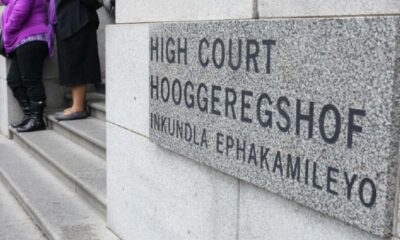
The South Gauteng High Court in Johannesburg has dismissed an attempt by a Somali national to overturn the loss of his refugee status in South Africa, following revelations of both a fraudulent certificate used in a permanent residence application and a three-month visit to Hargeisa, Somalia.
The matter centred on Ahmed Mohammed Ali, who had sought to reverse a decision by the Standing Committee for Refugee Affairs to revoke his status. The court found that Ali had voluntarily re-availed himself to protection from his home country, which disqualified him under the Refugees Act.
Sequence of Events Leading to Status Withdrawal
Ali, originally from Somalia, entered South Africa in 2008 after fleeing persecution by the group Al-Shabaab. He was granted refugee status that same year and later pursued indefinite refugee status, aiming to eventually qualify for permanent residence.
During his efforts to secure a permanent residence permit, Ali acquired a certificate through an alleged immigration agent who claimed to facilitate the process. On December 15, 2017, he formally applied for permanent residence using this certificate.
However, the Department of Home Affairs discovered the certificate was fraudulent while processing his application. As a result, on July 9, 2018, Ali’s permanent residence application was rejected, and authorities initiated proceedings to withdraw his refugee status based on the fraudulent documentation.
Discovery of the Return Visit to Somalia
The process intensified when authorities uncovered Ali’s three-month stay in Hargeisa, Somalia, from March to May 2017. These details emerged on November 7, 2024, during an official interview, prompting a review of his eligibility under the Refugees Act. According to the Act, voluntary return to one’s country of origin for protection can nullify refugee status.
Ali was issued notice of the potential withdrawal of his status on March 5, 2024, and invited to submit his account explaining the circumstances of his travel abroad.
Legal Arguments and Humanitarian Claims
Ali and his legal representative argued that the visit was not voluntary in the strict legal sense and that he did not seek protection from Somali authorities during the trip. Additionally, Ali asserted that Hargeisa is in what he described as “no-man’s land” within Somaliland, implying a distinction from Somalia proper.
In later court papers, Ali stated he had travelled to Hargeisa to visit his terminally ill father, who passed away in May 2017. He contended that the purpose of his three-month stay was humanitarian and should not be interpreted as re-availment of Somalia’s protection.
The legal team further argued that the authorities had not met the requirements for withdrawal on these grounds, and questioned the rationality and fairness of the administrative decisions. They also raised the principle of non-refoulement, which prohibits sending refugees back to countries where they might face harm.
Judicial Findings and Final Judgment
Judge Mokate Victor Noko emphasized that Ali had not mentioned his father’s illness as a reason for the trip in his explanations submitted to the authorities in May 2025. This account only appeared in court submissions nearly a year later. The judge described this omission as an afterthought, possibly intended to fit legal requirements under international refugee guidance.
“Without more, this cannot be viewed as an occasional visit; it appears opportunistic and indefensible,” Noko wrote in the judgment.
The court underscored that Ali’s three-month return to Hargeisa did not qualify as a brief or incidental visit. The judge concluded there was no evidence of administrative bias, and that the withdrawal decision was well-founded and adequately supported by the available information.
The finding reinforced that, by returning and remaining in Hargeisa for an extended period, Ali had voluntarily accessed the protection of his home region, thereby ceasing to qualify as a refugee in South African law.
Wider Implications
This case highlights the importance of compliance with legal conditions for refugee status, especially concerning travel and documentation requirements. The withdrawal of refugee status can have significant impacts on an individual’s right to remain in the host country, underscoring the legal and humanitarian complexities that often arise in refugee and asylum matters.
While individual humanitarian circumstances may be considered, courts may give primacy to procedural accuracy and evidence presented at the appropriate stages in administrative processes.
Follow Joburg ETC on Facebook, Twitter, TikTok and Instagram
For more News in Johannesburg, visit joburgetc.com
Source: iol.co.za