News
New municipal councils face pressure to restore trust and improve service delivery
South Africa’s 2026 local government elections will bring more than a change in political leadership. For communities dealing with service delivery frustrations, ageing infrastructure and struggling municipal finances, the real test will be whether newly elected councillors can turn campaign promises into meaningful improvements.
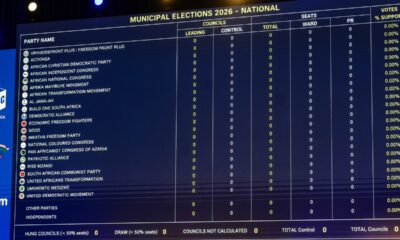
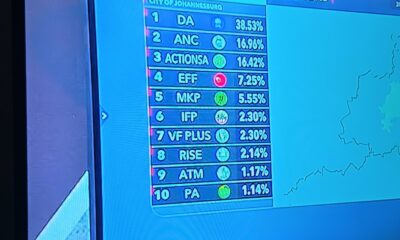
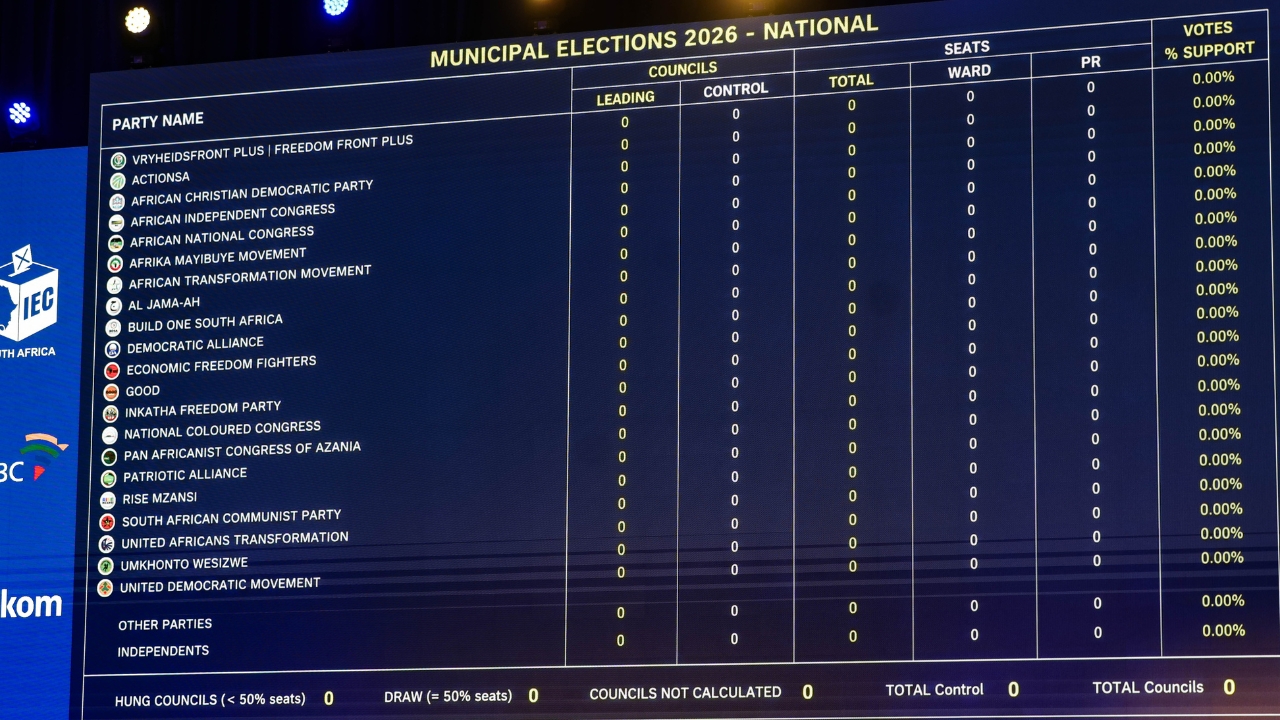
With the Electoral Commission of South Africa (IEC) expected to announce the final election results on Sunday, 8 November, attention is shifting towards the formation of new municipal councils and the responsibilities awaiting incoming political leaders.
The Department of Cooperative Governance (DCoG), National Treasury and the South African Local Government Association (SALGA) have already outlined what municipalities must prioritise during the transition.
Their joint guidelines, signed on 30 September 2026, provide a framework for establishing councils, managing coalition arrangements, handing over municipal responsibilities and strengthening financial and administrative accountability.
The message is clear: political changes must not come at the expense of essential services.
The first test begins with establishing new councils
Once the IEC formally declares the election results, municipalities will need to move quickly to establish their new leadership structures.
Under the Local Government: Municipal Structures Act, 1998, the municipal manager must convene the first council meeting within 14 days after the council has been declared elected. Where there is no municipal manager, the provincial MEC responsible for local government may designate someone to perform this responsibility.
District municipalities must hold their first meetings within 14 days after all appointed representatives from local councils have been confirmed.
These meetings will determine who takes up key political positions, including Speakers, mayors, executive mayors and deputy mayors, where applicable.
Municipalities will also establish their executive and mayoral committees in accordance with the relevant legislation.
The guidelines allow first council meetings to take place physically, virtually or through hybrid arrangements, provided legal requirements and council rules are followed.
Local councils must also appoint their representatives to district municipalities within the prescribed 14-day period.
Coalition politics must not disrupt service delivery
Coalition negotiations are likely to be an important part of the post-election process in municipalities where no political party secures an outright majority.
South Africa experienced the complications of coalition governance following the 2021 elections, when 76 municipalities were governed through coalition arrangements.
The experience highlighted how political disagreements and unstable governing partnerships can affect municipal decision-making.
The new guidelines therefore encourage political parties to conclude coalition agreements as early as possible to avoid prolonged uncertainty.
However, coalition agreements cannot override the Constitution or existing legislation governing municipalities, including the Municipal Systems Act and Municipal Finance Management Act (MFMA).
An important safeguard is that municipal officials must remain politically impartial.
Municipal managers and other employees cannot participate in or influence coalition negotiations. Public resources, including municipal vehicles, facilities, communication systems and funding, may also not be used for political party activities or coalition discussions.
The intention is to keep municipal administrations functioning independently, regardless of which political parties eventually form governing arrangements.
Incoming councillors must know what they are inheriting
A major responsibility during the transition will be ensuring that newly elected leaders understand the condition of the municipalities they are taking over.
The guidelines call for two separate handover reports covering the political and administrative state of each municipality.
The political report, led by the Speaker and outgoing mayoral leadership, should document the previous council’s performance, governance arrangements, political challenges and outstanding matters.
Municipalities previously governed through coalitions must also provide information about their political arrangements, including lessons learnt and risks encountered.
The administrative report will be prepared by the municipal manager, Chief Financial Officer and senior management team.
It must provide a detailed picture of municipal operations, including finances, infrastructure projects, service delivery programmes, staffing and outstanding commitments.
Incoming councillors should also receive information about municipal budgets, Integrated Development Plans (IDPs), annual reports, audit outcomes and service delivery targets.
This information is particularly important in municipalities where residents have experienced prolonged water interruptions, infrastructure problems, poor roads or unreliable waste collection.
Without a clear understanding of existing problems, new administrations risk repeating previous mistakes rather than addressing the issues affecting communities.
Financial accountability moves into the spotlight
Municipal finances will be another major test for incoming councils.
The guidelines emphasise that municipal budgets must be credible, funded and based on revenue that municipalities can realistically expect to collect.
Municipalities struggling with unfunded budgets, poor audit outcomes or persistent financial difficulties may face interventions and funding-related measures in terms of applicable legislation.
Particular attention must also be given to outstanding payments to creditors, including Eskom and water boards, as unpaid accounts can contribute to financial instability and interruptions in essential services.
New councils will be expected to monitor audit action plans and address outstanding findings rather than allowing financial problems to carry over into another municipal term.
The handover process must also document unauthorised, irregular, fruitless and wasteful expenditure, as well as outstanding financial misconduct and criminal proceedings where applicable.
The three institutions have stressed that fraud, corruption, maladministration and governance failures must be addressed decisively and reported to the relevant authorities.
Municipal money must also remain dedicated to public responsibilities. Using municipal funds to finance political party activities, including caucuses and other political operations, is prohibited.
Development plans must reflect community priorities
Once the new councils are established, they will have an opportunity to review the development plans and administrative systems guiding their municipalities.
One of the key responsibilities will be reviewing the municipal system of delegations, which determines how decision-making powers and responsibilities are distributed between political leadership and municipal administration.
New councils must review this system within one year of taking office. Existing delegations will remain in place until the review is completed to avoid disrupting municipal operations.
The Integrated Development Plan will also require attention.
The IDP serves as the municipality’s central development framework, linking community needs with budgets, infrastructure projects and service delivery priorities.
Incoming councillors can retain the existing plan or initiate amendments if they believe its priorities no longer reflect the needs of residents.
Any changes must follow the relevant legislative and planning requirements.
Community participation will also remain important, particularly through ward committees.
Local and metropolitan municipalities have 120 days after the elections and first council meetings to establish these structures.
Ward committees provide residents with an opportunity to raise local concerns and participate in municipal planning, making them an important connection between communities and elected representatives.
Building stronger municipal administrations
Beyond political appointments, the guidelines place considerable emphasis on the people responsible for keeping municipalities operational.
Municipalities are encouraged to strengthen their organisational structures, recruitment processes, staff development and performance management systems.
The Municipal Staff Regulations of 2021 provide standards for improving municipal administration and ensuring that appointments and management practices support effective service delivery.
Municipal staff establishments must also be reviewed within 12 months of the election where the applicable legislative conditions are met.
New councillors will receive support through an Integrated Councillor Induction Programme being developed by SALGA, DCoG, National Treasury and the National School of Government.
The programme will cover councillors’ responsibilities, financial management, oversight, ethical leadership, municipal legislation and strategic planning.
The aim is to ensure that elected representatives understand both their political responsibilities and the legal frameworks governing local government.
Government wants better coordination across municipalities
The transition will also take place within the broader framework of the District Development Model (DDM), introduced by Cabinet in 2019.
The model promotes cooperation between national, provincial and local government through its ‘One District, One Plan, One Budget’ approach.
It covers South Africa’s 44 district municipalities and eight metropolitan municipalities.
Its purpose is to improve planning, coordinate public spending and address challenges such as poverty, unemployment and inequality.
Incoming councils are expected to align their development plans and budgets with approved DDM plans.
Municipalities already facing serious governance or financial problems will also remain subject to existing intervention arrangements under Section 139 of the Constitution and Chapter 13 of the MFMA.
DCoG and National Treasury are expected to provide further guidance on municipalities placed under intervention before the elections.
The real measure will be what residents experience
While the establishment of councils, coalition negotiations and administrative handovers are necessary parts of the electoral process, residents will ultimately judge the new leadership by what happens in their communities.
Reliable water, functioning electricity infrastructure, maintained roads, effective waste collection and responsible management of public money remain among the everyday concerns that shape people’s experiences of local government.
The guidelines provide incoming councils with a framework to address inherited problems and strengthen municipal administration.
However, their success will depend on whether political leaders and officials translate those commitments into practical improvements.
Be the first to know – Join our WhatsApp Channel for content worth tapping into! Click here to join!
Follow Joburg ETC on Facebook, Twitter, TikTok and Instagram
For more News in Johannesburg, visit joburgetc.com