News
Malawi ends government-funded repatriation after 56,723 nationals return from South Africa
Malawi’s government-funded repatriation programme has ended after 56,723 nationals returned from South Africa; those still wishing to leave must fund their own travel.
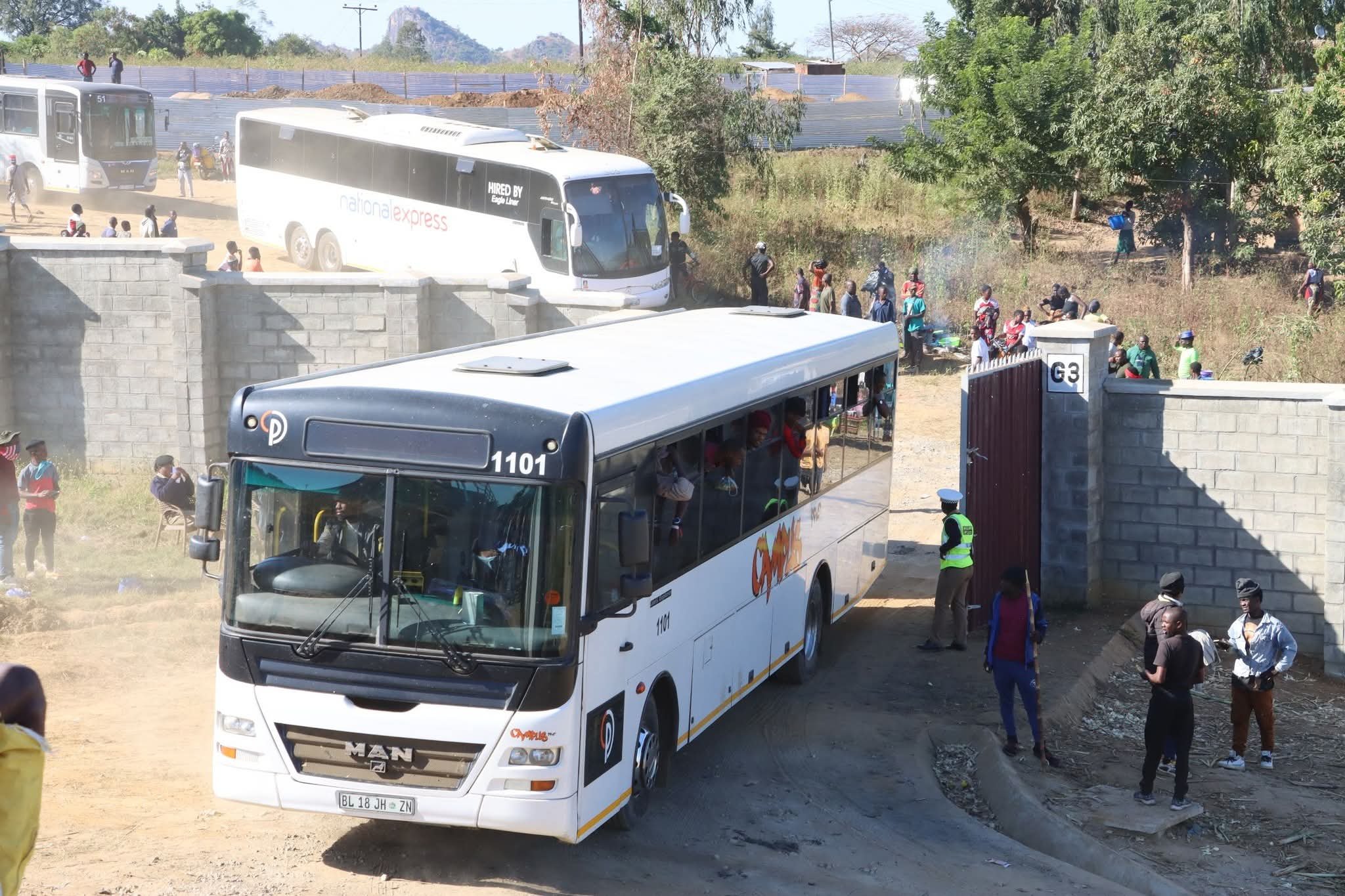
Malawi’s government-funded voluntary repatriation programme for nationals affected by anti-foreigner violence in South Africa has concluded after the return of 56,723 people. The Department of Disaster Management Affairs (DoDMA) said the final buses left the Malawi Consulate in Johannesburg and the Malawi High Commission in Pretoria at noon, and that the reception centre in Mwanza will be decommissioned.
Who returned and what ends with the programme
DoDMA reported that the programme facilitated the return of 56,723 Malawian nationals, comprising 38,866 men and 17,857 women. The government-funded phase of the operation has now closed.
Consular support continues; travellers must pay
DoDMA said the end of the government-funded programme does not mean Malawians will be left without consular assistance. Those who still wish to return home will now be required to make their own travel arrangements, while the Malawi High Commission in Pretoria and the Malawi Consulate in Johannesburg will continue to provide services such as emergency travel documents.
Strain at reception sites and human cost
The scale of the operation reflected months of mounting tensions and xenophobia towards migrants in South Africa, particularly in KwaZulu-Natal. DoDMA said seven deaths were recorded during the exercise and conveyed condolences to the families of those who died.
The situation at the Sherwood reception site became overcrowded as thousands sought to return, putting pressure on sanitation, food supplies and processing capacity.
Voices from the site
“I haven’t bathed in seven days.”
According to IOL, a 25-year-old Malawian man interviewed on June 18 described the conditions at the overcrowded site and said there were problems with sanitation despite the availability of some water and food.
Processing challenges and official interventions
IOL reported that at the height of the crisis more than 10,000 undocumented foreign nationals were awaiting processing. The backlog prompted intervention by eThekwini Mayor Councillor Cyril Xaba, who on June 17 engaged senior government stakeholders to increase processing capacity.
Xaba explained that deportation could not be carried out en masse and noted that, under South African immigration law, each undocumented foreign national must be processed individually, including identity verification, issuing legal documentation and appearing before a court to ensure due process and protection of constitutional rights.
What happens next
With the government-funded repatriation programme closed and the Mwanza reception centre decommissioned, Malawians in South Africa who still want to return will need to arrange and pay for their own travel. Consular offices in Pretoria and Johannesburg will continue to provide emergency travel documents and other services.
Follow Joburg ETC on Facebook, Twitter, TikTok and Instagram
For more News in Johannesburg, visit joburgetc.com
Source: iol.co.za