Gulf chaos leaves South Africans grounded as Middle East conflict spirals
What started as a distant geopolitical standoff has quickly become a very real travel nightmare for dozens of South Africans.
Flights cancelled. Airspace shut. Phones buzzing with frantic messages from family back home.
As tensions exploded in the Middle East over the weekend, South Africans travelling or working in Gulf nations found themselves stranded, watching history unfold from hotel rooms and airport terminals.
Airspace closed, flights halted
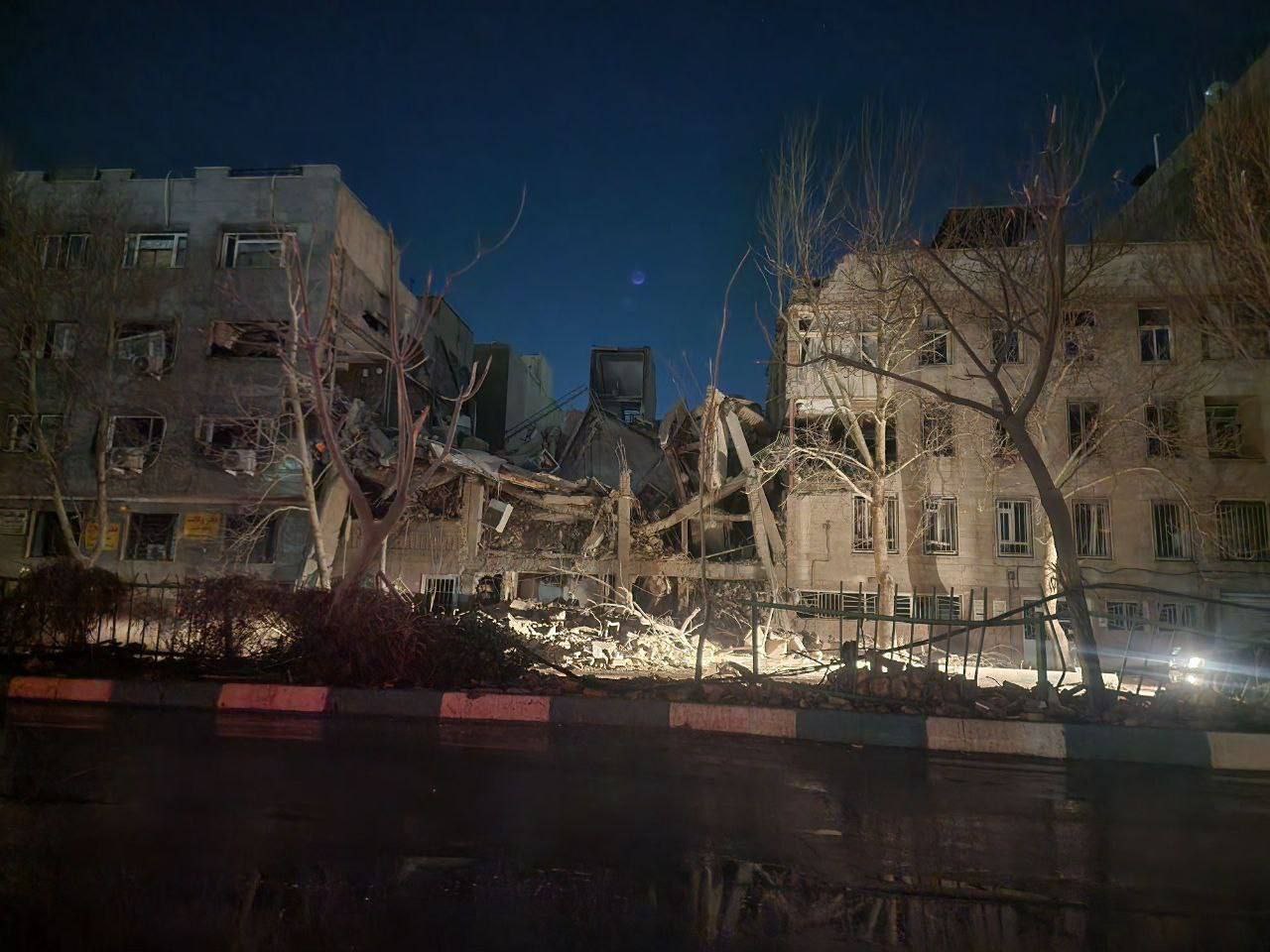
The chaos followed a massive military operation launched on Saturday by the United States and Israel against Iran. The US reportedly named its operation “Epic Fury,” while Israel called its campaign “Lion’s Roar.” Airstrikes were carried out across at least 24 of Iran’s 31 provinces, hitting military airfields, missile and drone launch sites, and facilities linked to the Islamic Revolutionary Guard Corps (IRGC) in cities including Tehran, Isfahan, Qom and Karaj.
Both Donald Trump and Benjamin Netanyahu confirmed that Iran’s Supreme Leader, Ayatollah Ali Khamenei, was killed in a strike on his compound in Tehran a claim later confirmed by Iranian state media, which declared 40 days of national mourning. Several senior officials, including the Chief of Army Staff and the Defence Minister, were also reportedly killed.
Iranian authorities have reported at least 201 deaths and 747 injuries so far, with internet services largely down for more than 24 hours.
The IRGC responded swiftly, launching retaliatory missile and drone strikes targeting 27 US bases and allied positions across the Middle East. Targets reportedly included Israel, Qatar’s Al Udeid Air Base, airports in Dubai and Abu Dhabi in the UAE, Bahrain’s 5th Fleet headquarters, and Jordan.
The result? A ripple effect across global aviation.
South Africa joined several countries in cancelling international flights to avoid the conflict zone, citing safety concerns amid massive airspace closures over parts of the UAE and Qatar.
South Africans accounted for, but stuck
The Department of International Relations and Cooperation (DIRCO) confirmed on Sunday that it is in contact with South Africans in the affected region.
Spokesperson Chrispin Phiri said no citizens have reported being in distress. Deputy Director-General Clayson Monyela added that all known South Africans in the area are accounted for.
The problem, however, is practical.
With airports either closed or operating under heavy restrictions, evacuations are currently impossible. “It is not possible to move people out to those places because there is no means to do that,” Monyela said, explaining that contingency plans are under review but no extraction can happen while bombing continues.
It’s a sobering reminder of how quickly international crises can trap ordinary travellers.
Local airports feel the impact
Back home, the disruption is visible on departure boards.
The Airports Company South Africa (ACSA) confirmed that at least 14 international flights were cancelled from 1 March 2026 until further notice due to Middle East airspace closures.
At OR Tambo International Airport, eight flights were cancelled seven outbound and one inbound. Cape Town International Airport saw four outbound cancellations, while King Shaka International Airport cancelled two outbound flights.
ACSA has urged passengers to contact airlines and embassies directly for updates.
Globally, major carriers are scrambling. Air India and IndiGo suspended Middle East routes and began rerouting flights to Europe and the US. Pakistan International Airlines also halted Gulf services.
A public plea from Dubai
Among those stranded is South African socialite and reality TV personality Eva Modika, who revealed on social media that she is stuck in Dubai.
She has publicly appealed to Cyril Ramaphosa and DIRCO for urgent assistance, saying flight suspensions including the grounding of Emirates and Etihad have left her unable to return home. Modika claims she has lost approximately R250,000 due to cancelled DJ bookings and media engagements.
Her appeal sparked debate online. Some social media users expressed sympathy, arguing that government support should extend to all citizens abroad during crises. Others questioned whether the state can realistically intervene when commercial airspace is effectively shut down.
It’s a familiar South African conversation what exactly should government responsibility look like when citizens travel to volatile regions?
Ramaphosa calls for restraint
President Ramaphosa has expressed “deep concern” over the escalating conflict, urging all parties to exercise maximum restraint and adhere to international law.
He referenced Article 51 of the UN Charter, noting that self-defence applies only in cases of armed invasion and that “anticipatory self-defence” is not recognised under international law.
The criticism was echoed by Antonio Guterres, Secretary-General of the United Nations, who condemned both the US-Israeli strikes and Iran’s retaliatory attacks for violating international law and the sovereignty of multiple nations.
The United Nations and the African Union have both called for urgent de-escalation.
A bigger question for BRICS
Beyond the immediate travel chaos lies a larger geopolitical question.
International relations expert Professor Theo Neethling warns that Iran could descend into prolonged instability, similar to the turmoil that followed interventions in Iraq and Libya. Leadership succession in Tehran is now a critical issue, who steps in next, and with what authority?
The spotlight may also fall on BRICS. With Iran’s future uncertain and tensions drawing in global powers, observers will watch how the bloc responds, particularly African members Egypt and Ethiopia, alongside China.
Is BRICS a cohesive political force capable of unified positioning, or simply a loose alliance of countries with diverging interests?
For South Africans stuck in airport lounges, those debates may feel distant. But they matter.
When global politics becomes personal
South Africans are no strangers to travel disruptions, from pandemic lockdowns to airline collapses and visa rule changes. But this moment feels different. It’s a stark reminder that international travel carries geopolitical risk, even when destinations seem stable.
For now, DIRCO says everyone known to be in the region is safe. That’s the good news.
The bad news? Until the skies reopen and the bombing stops, those grounded will have no choice but to wait caught between global power plays far beyond their control.