Business
Ramaphosa hits back at Elon Musk over South Africa’s BEE laws
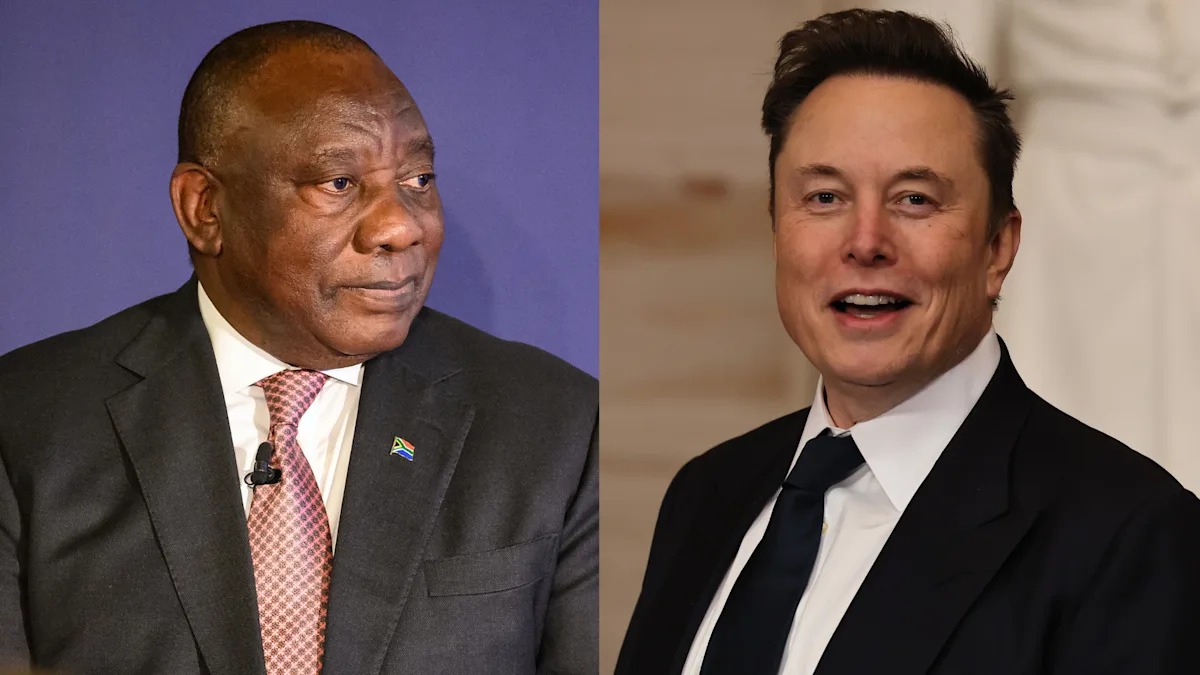
President Cyril Ramaphosa has hit back at Elon Musk’s claims that South Africa’s Black Economic Empowerment laws are racist, saying the country’s laws are meant to empower people who were excluded and discriminated against in the past.
Speaking near OR Tambo International Airport during the 2026 National Local Economic Development Summit, Ramaphosa dismissed the social media row and said South Africa’s laws are not racist. He said the measures are intended to empower people who were discriminated against, including Black South Africans and women.
Why this row has drawn attention
This is not just another online clash involving a high-profile billionaire. In South Africa, arguments around BEE quickly tap into deeper questions about history, redress, and economic access.
Musk’s criticism came as he complained about Starlink’s path to being licensed in South Africa. His comments sparked a strong reaction online and reopened a familiar national debate about fairness, regulation, and who should benefit from economic reform.
Ramaphosa’s message on empowerment
Ramaphosa made it clear that he sees empowerment laws as part of correcting the imbalances of the past, not as racist legislation. That is in line with the government’s long-stated position that redress measures are rooted in the Constitution and aimed at addressing historic exclusion.
He also defended Equity Equivalent Investment Programmes, which allow multinational companies to meet empowerment objectives through alternatives such as enterprise development, education, and community upliftment. South Africa’s trade and industry framework recognises EEIPs as a route for qualifying multinationals that cannot follow conventional ownership structures.
Where the Starlink issue gets more complicated
This is where the debate becomes more contested.
ICASA’s current rules for nationally operating telecommunications licensees include a 30% ownership requirement for historically disadvantaged groups. That means EEIPs may exist within the broader empowerment system, but they do not automatically remove every regulatory obstacle facing a company like Starlink under the current licensing framework.
That tension is what keeps the story alive. The government points to empowerment and policy flexibility, while critics argue that the regulatory reality remains more difficult than the political defence suggests.
More than a clash of big names
At the heart of this story is a bigger South African argument about how the country balances investment, regulation, and economic redress. Ramaphosa’s position is clear: empowerment laws remain necessary. The ongoing reaction to the Starlink debate shows how contested that question still is in South Africa.
Follow Joburg ETC on Facebook, Twitter, TikT
For more News in Johannesburg, visit joburgetc.com
Source: MyBroadband
Featured Image: Yahoo