News
Inside Unisa’s rise: how the university rewrote distance learning across Africa
From a 19th-century examining body to a global Open Distance and e-Learning leader, Unisa has expanded access to higher education for more than 370,000 students.
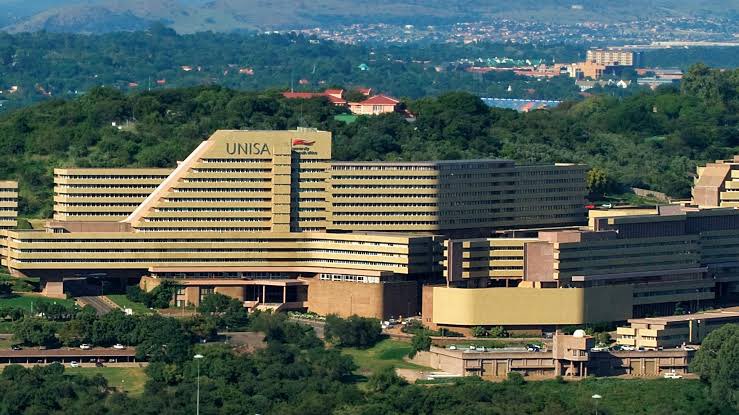
The University of South Africa (Unisa) has grown from a 19th-century examining body into one of the world’s largest distance-learning institutions, educating more than 370 000 students across South Africa, the continent and beyond.
Origins as an examining body
Unisa traces its roots to 1873, when it was founded as the University of the Cape of Good Hope (UCGH). Established through an Act of the Cape Colony Parliament and modelled on the University of London, the institution initially functioned as an examining body, setting academic standards and conducting examinations for affiliated colleges.
Transition to a teaching university
Over the following decades the institution evolved from a colonial examining authority into a university that taught students directly. The transformation included a formal renaming to the University of South Africa in 1916, and a relocation to Pretoria in 1918.
Distance education and the Division of External Studies
A pivotal change came in 1946 with the establishment of the Division of External Studies. That move made Unisa the first public university in the world to teach exclusively through distance education, fundamentally changing how higher education could reach students regardless of where they lived.
Operating within South Africa’s complex history
Unisa’s expansion unfolded during South Africa’s apartheid era, creating a complex legacy. While the university regulated syllabi and examinations for racially segregated colleges, historians note that Unisa also enrolled students of all races throughout apartheid because its distance-learning model operated outside traditional residential systems.
Becoming a modern comprehensive university
On 1 January 2004 Unisa merged with Technikon South Africa and incorporated the distance-education campus of Vista University, forming the modern comprehensive university that brings together university, technikon and distance-learning traditions.
Scale, structure and continental reach
Today Unisa is Africa’s leading Open Distance and e-Learning (ODeL) institution. It awards nearly 13% of degrees conferred by South Africa’s 26 public universities and universities of technology. The university operates a network that includes seven regional campuses, 28 learning centres across South Africa and an international campus in Ethiopia.
The Ethiopia Regional Learning Centre
Unisa’s Ethiopia Regional Learning Centre in Addis Ababa, established in 2007, will have produced more than 1 160 graduates including more than 600 doctoral graduates by the end of 2025. The university has identified the centre as a strategic hub for growth in Eastern Africa.
Leadership and recent developments
Professor Puleng LenkaBula became Principal and Vice-Chancellor in January 2021, the first woman to hold the post. In December 2024 the university council reappointed her for a second five-year term effective 1 January 2026.
Reflections on Unisa’s role
Retired research professor Andrew Manson described the 1916 transformation into the University of South Africa as “one of the defining moments in its history”. He highlighted how the institution evolved to respond to changing educational needs in the region.
More than 150 years after its founding, Unisa’s history mirrors South Africa’s passage through colonialism, apartheid and democracy. From its beginnings as an examining body to its emergence as a global distance-learning leader, the university continues to adapt while preserving a legacy of broadening access to higher education.
Follow Joburg ETC on Facebook, Twitter, TikTok and Instagram
For more News in Johannesburg, visit joburgetc.com
Source: iol.co.za